

Industrial Gearbox Types: A Buyer's Guide to Selection
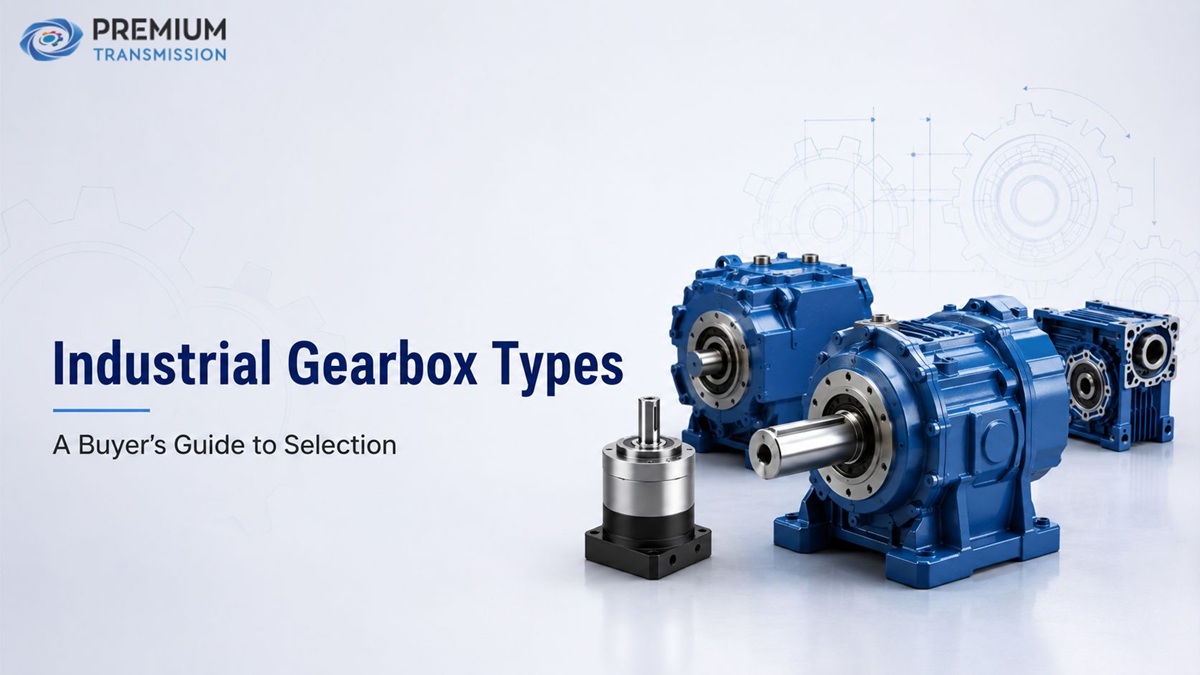
Choosing among the many gearbox types on the market is one of the most important decisions an industrial buyer makes. A gearbox sits at the heart of every drive train, and it quietly determines how much uptime, energy cost, and maintenance spend you deal with for years to come. Helical, worm, planetary, and bevel helical units all reduce speed and multiply torque, but each one does this through a different mechanical principle, so each suits a different combination of load, space, and duty cycle. If you want a deeper, application by application breakdown of these designs, the Types of Gearboxes Explained: A Practical Guide for Industrial Buyers on Premium Transmission's website is one of the most complete references available. This article builds on that guide and should help you narrow down the right option for your plant.
Why Gearbox Selection Deserves Real Attention
A gearbox transfers power from a motor to a driven machine, converting rotational speed and torque to match what the application actually needs. A motor spinning at 1450 RPM, for instance, may only need to drive a conveyor at 50 RPM, and the gearbox handles that reduction while carrying the load safely. Because a gearbox is often one of the costliest items in a drive train, specifying the wrong unit can lead to higher energy consumption, premature wear, and unplanned downtime. Working with experienced gearbox manufacturers from the earliest stage of a project, rather than treating gearbox selection as an afterthought, is often what separates a drive train that runs smoothly for decades from one that needs constant intervention.
A Quick Look at the Main Industrial Gearbox Types
There is no single best gearbox. There is only the type that is best suited to a given load, ratio, and orientation. The full buyer's guide covers each of these designs in depth, but here is a quick summary of what buyers should know before requesting a quotation.
Helical Gearbox:
This is the most common configuration in industrial power transmission. A Helical Gearbox uses angled teeth so that multiple teeth stay in contact at once, which gives smooth, quiet running and efficiencies that commonly fall in the 96 to 99 percent range per stage. It is usually the default choice for continuous duty equipment such as conveyors, mixers, fans, and agitators.
Worm Gearbox:
A Worm Gearbox transmits motion through a worm screw meshing with a worm wheel at 90 degrees, and it can achieve very high reduction ratios, up to 70:1 in a single stage and as high as 4900:1 in double stage units, all in a compact footprint. Many configurations are self-locking, so the output cannot back drive the worm, which makes this type a natural fit for lifting equipment, screw feeders, and load holding conveyors, even though sliding contact makes it somewhat less efficient than helical gearing.
Planetary Gearbox:
Built around a central sun gear, orbiting planet gears, and an outer ring gear, Planetary Gearboxes distribute load across multiple gears at the same time, which delivers high torque density and precise, torsionally stiff performance in a compact, coaxial package. This is why they are so often specified for centrifuges, printing equipment, robotics, and heavy duty applications like sugar mills, cement mills, and coal pulverisers, wherever space and torque density genuinely justify the added manufacturing complexity.
Bevel Helical Gearbox:
A Bevel Helical Gearbox combines helical gearing with a bevel stage to transmit power at a right angle. Because contact between the bevel gears is rolling rather than sliding, this design reaches higher efficiency than a worm gearbox at the same 90 degree configuration, typically 95 to 98 percent, which makes it the standard choice for sugar mills, cooling towers, and heavy conveyor drives that need both high torque and an angular output.
Fluid Couplings:
These are not gearboxes in the strict sense, but Fluid Couplings are a close companion to them in the power transmission family. By transferring torque through hydraulic fluid instead of mechanical gear contact, they provide a smooth, controlled start and protect motors and driven equipment from shock loads. This makes them a standard specification on belt conveyors, crushers, and any application prone to high peak starting currents.
Matching Gearbox Types to Your Industry
Industry context matters just as much as the mechanical principle behind each design. Cement and steel plants typically rely on heavy duty helical and bevel helical units for kiln drives, mills, and conveyors under continuous high torque loads. The cement industry solutions page shows how Premium Transmission configures gearboxes for exactly this kind of demanding process. Sugar mills tend to favour helical designs for their efficiency across long operating cycles, material handling operations often choose modular helical units for their flexibility and low noise, and lifting or packaging equipment commonly specifies worm gearboxes for their self-locking, high ratio characteristics. Planetary units dominate precision manufacturing and robotics, while oil, gas, mining, and other outdoor applications call for sealed, ruggedised gearboxes rated for contamination and temperature extremes.
Choosing the Right Manufacturer
Understanding the mechanical differences between gearbox types is only half the job. The other half is choosing a manufacturer with the engineering depth and manufacturing consistency to build to those specifications reliably, year after year. Among gearboxes manufacturers in India, Premium Transmission has built a reputation over more than six decades for helical, worm, planetary, and bevel helical gearboxes, along with Industrial geared Motors and fluid couplings, serving cement, steel, sugar, mining, and material handling industries across India and international markets. Their homepage gives a good overview of the full product range, from standard and heavy duty helical units to modular and special worm gearboxes.
Final Thoughts
There is no real shortcut to selecting the right gearbox. It comes down to matching reduction ratio, torque density, orientation, and duty cycle to the application, and then verifying that the manufacturer can build to the tolerances the job demands. For a more detailed, side by side breakdown of efficiency ranges, reduction ratios, and industry specific recommendations across every Industrial Gearbox Types covered here, take a few minutes.