

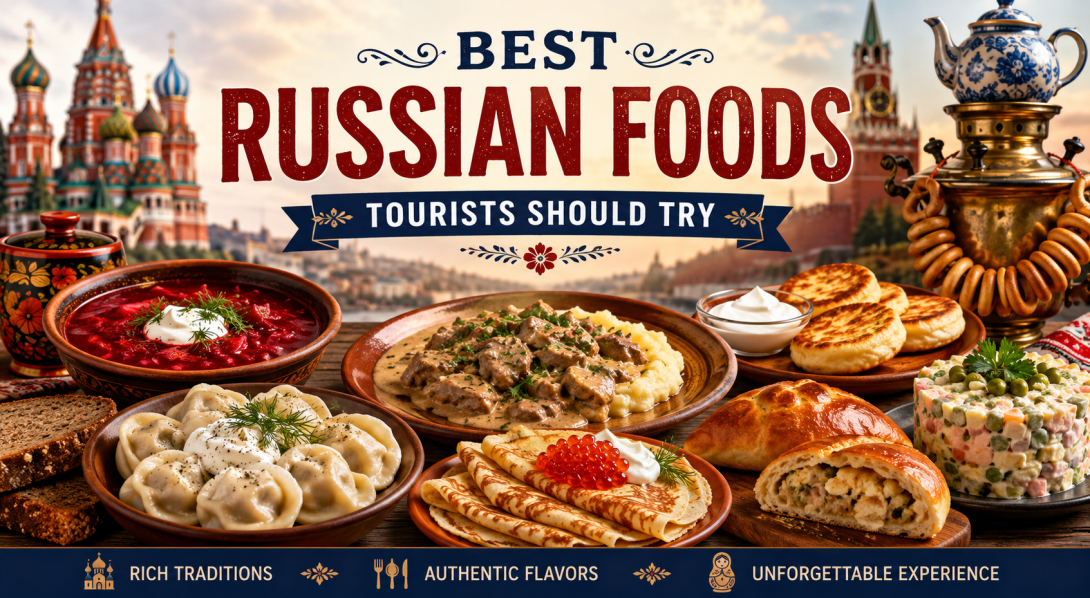
When most people think of Russian cuisine, they think of hot soups on freezing winter days, plates of mysterious meat, and perhaps a dollop of caviar. But there is so much more to Russia's food culture. Spanning eleven time zones and blending European, Asian, and Siberian influences, Russian food is hearty, comforting, and surprisingly diverse.

If you are planning a trip to Russia, food is going to be a massive part of your adventure. Before you can begin your culinary journey, making sure you have your Russia tourist visa sorted out is the most important step. To help you navigate the menus once you arrive, here is a complete guide to the best Russian foods you absolutely have to try.
1. What is the most popular food in Russia?
Without a doubt, Pelmeni is the ultimate comfort food of Russia. These are bite-sized, tender dumplings packed with minced meat (usually a blend of pork, beef, and sometimes lamb), seasoned simply with onions, garlic, and black pepper.
Originating in the icy regions of Siberia, pelmeni were historically frozen outdoors in the snow to keep them preserved for long journeys. Today, you will find them in almost every home and restaurant. They are boiled and typically served piping hot with a big spoonful of sour cream (smetana) or melted butter.
2. Why is Borscht so popular in Russia?
Though Borscht originally comes from Ukraine, it has been a staple of Russian dinner tables for centuries. This vibrant, deep-purple soup gets its color and sweet-and-sour flavor from red beetroots.
A traditional Russian borscht is slow-cooked with a rich beef or pork broth, cabbage, potatoes, carrots, and onions. It is always served hot, usually alongside a slice of dark rye bread smeared with garlic, and topped with a generous dollop of sour cream. It is the perfect antidote to a chilly day of sightseeing.
3. What do Russians eat for breakfast?
If you love sweet, cozy breakfasts, you are in luck. One of the most beloved breakfast options in Russia is Syrniki.
Syrniki are small, thick pancakes made from tvorog (a type of dry cottage cheese or quark). They are lightly fried in a pan until the outside is golden and slightly crisp, while the inside remains warm, soft, and creamy. Russians love to eat them with honey, condensed milk, or varenye (traditional whole-fruit jam).
4. What is the difference between Russian Blini and French crepes?
At first glance, Blini look exactly like French crepes. They are thin, round pancakes, but traditional Russian blini are made with a yeasted batter, which gives them a slightly lighter, fluffier texture and a mild, tangy flavor.
Blini hold a special place in Russian history; they represent the sun and are the star of Maslenitsa, a spring festival celebrating the end of winter. You can eat them sweet (with berries, honey, or chocolate) or savory (folded around smoked salmon, minced meat, or even luxurious sturgeon caviar).
5. Is Beef Stroganoff actually a Russian dish?
Yes! Beef Stroganoff was created in the 19th century by a French chef working for the wealthy Russian noble family, the Stroganovs.
This world-famous dish consists of thin strips of tender beef sautéed with onions and mushrooms, all smothered in a rich, velvety sauce made from sour cream and white wine. In Russia, you will rarely see it served with pasta. Instead, it is traditionally served over a bed of fluffy mashed potatoes or roasted potato wedges, allowing the potatoes to soak up all that delicious gravy.
6. What does Kvass taste like?
If you visit Russia during the summer, you will see street vendors selling a dark bubbly drink from giant tanks on wheels. This is Kvass, often called the "Russian Coca-Cola."
Kvass is a mildly fermented beverage made from black or rye bread. It has a tiny amount of natural alcohol (usually less than 1%, making it safe for kids), and tastes like a cross between a fizzy herbal cider, sweet soda, and sourdough bread. It is incredibly refreshing on a hot afternoon.
7. What is the cold Russian soup eaten in summer?
Speaking of summer, Russians have a unique way of cooling down: Okroshka.
Okroshka is a cold soup made by chopping up raw cucumbers, radishes, spring onions, boiled potatoes, hard-boiled eggs, and cooked ham. This mixture is then flooded with cold, sour Kvass or kefir (a fermented milk drink). It might sound unusual to pour bread soda over salad, but the tangy, crunchy, and icy combination is incredibly refreshing once you give it a try.
8. What are the small stuffed buns you see everywhere?
If you need a quick, cheap, and delicious snack while walking around Moscow or St. Petersburg, look for Pirozhki.
Pirozhki are individual-sized, yeast-risen buns that are either baked or deep-fried. They come with a wide variety of fillings. Savory versions are packed with minced meat, mashed potatoes, sautéed cabbage, or boiled eggs with green onions. If you have a sweet tooth, look for pirozhki stuffed with apples, cherries, or sweet cottage cheese.
9. What is Russian "Herring Under a Fur Coat" salad?
This is perhaps the most famous—and visually striking—salad in Russian cuisine. Known locally as Selyodka Pod Shuboy, it is a mandatory dish at Russian New Year parties.
It is a layered salad. The bottom layer is salted herring fish, which is then covered with layers of finely chopped onions, boiled potatoes, carrots, hard-boiled eggs, and boiled beetroot. Each layer is brushed with mayonnaise, and the bright purple beetroot on top gives the salad its signature vibrant color. It sounds like an odd combination, but the salty, sweet, and creamy layers work beautifully together.
10. What is Solyanka soup and what does it taste like?
While borscht is famous, many locals will tell you that Solyanka is the true king of Russian soups.
Solyanka is a thick, hearty soup that features a unique salty, sour, and slightly spicy profile. It is made by boiling multiple types of meat (such as beef, ham, and smoked sausages) with pickles, olives, capers, onions, and tomato paste. It is served with a slice of fresh lemon bobbing in the broth, which adds an extra punch of bright acidity.
11. What is the famous Russian honey cake?
If you only try one dessert in Russia, make it Medovik.
This legendary cake consists of anywhere from 8 to 15 paper-thin layers of honey-infused sponge cake. Between each layer is a generous spreading of sweet, tangy sour cream frosting. As the cake sits, the sponge layers absorb the moisture from the frosting, creating a melt-in-your-mouth texture that is sweet, caramelized, and utterly addictive.
12. Why is Russian bread so dark and sour?
Bread is sacred in Russia. Historically, welcoming guests with "bread and salt" is the ultimate sign of hospitality.
While you can find white bread, the pride of the country is its heavy, dark rye bread—especially Borodinsky bread. It is spiced with coriander seeds and molasses, giving it a rich, slightly sweet, aromatic, and sour flavor. It is dense, filling, and pairs perfectly with a bowl of hot soup or a slice of salted pork fat (salo).
13. What is Kasha and why do Russians eat it daily?
There is an old Russian proverb: "Kasha is our mother." Kasha is a general term for any warm grain porridge, but in Russia, it almost always refers to buckwheat (grechka).
Buckwheat is naturally gluten-free, highly nutritious, and has a distinct nutty, earthy flavor. Russians eat it for breakfast with milk and sugar, or serve it savory with butter, mushrooms, and onions alongside meat for dinner. It is the ultimate feel-good, healthy staple of the country.
14. What is Russian meat jelly called?
If you want to try something adventurous, ask for Kholodets.
Kholodets is a traditional cold meat jelly. To make it, meat bones (usually pork or beef) are simmered slowly for many hours until the natural gelatin is released into the broth. Shredded pieces of meat and garlic are placed in a dish, covered with the strained broth, and cooled in the fridge until it solidifies. It is sliced like cake and eaten cold, usually with a strong kick of spicy Russian mustard or horseradish.
Ready to Explore Russia? Let Us Help With Your Travel Visa!
Sipping hot borscht in Moscow or enjoying fresh blini in St. Petersburg is an unforgettable experience. However, before you can pack your bags, you will need to secure your travel documents. Navigating international visa requirements can feel overwhelming, but we are here to make it effortless.
Why Choose Us?
- Reliable Travel Visa ServicesOur global approach and deep industry expertise have successfully assisted numerous travelers in obtaining their visas with zero hassle.
- Round-the-Clock AssistanceGot a question in the middle of the night? Reach out to us 24/7, and our dedicated experts will respond within 72 hours to keep your travel plans on track.
- Experienced Visa ConsultantsAvoid minor mistakes that lead to rejection. Receive expert, step-by-step guidance to ensure the complete accuracy and acceptance of your application.
- Efficient Visa Application ProcessForget complicated paperwork. You can complete your online Russian visa application in just a few minutes using our simplified, user-friendly forms.
Don't let paperwork stand between you and the culinary trip of a lifetime. Apply for your Russia Tourist Visa today and get ready to taste Russia for yourself!