

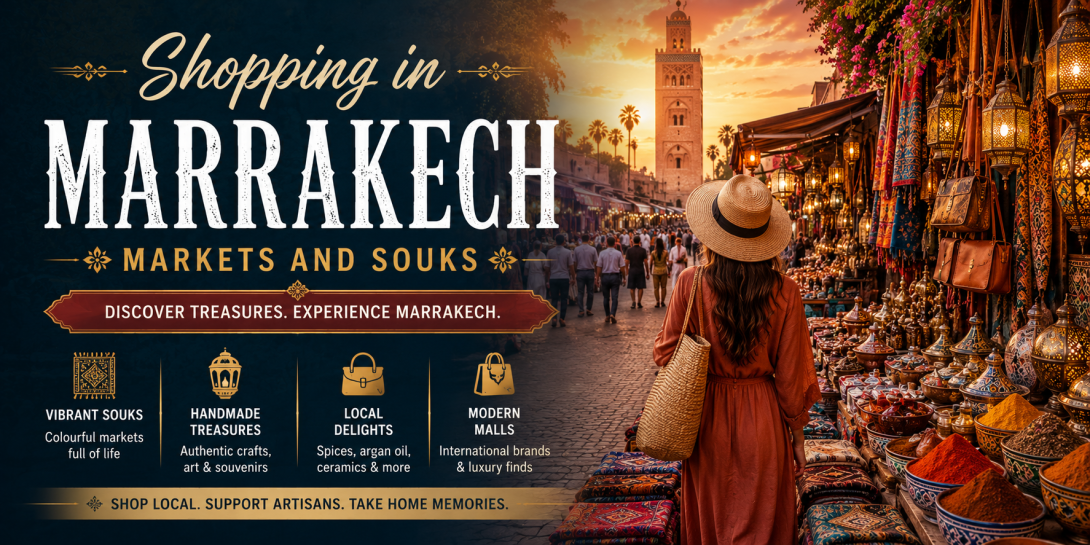
Walking into the heart of Marrakech is like stepping into a living, breathing history book. The moment you leave the open expanse of the famous Jemaa el-Fnaa square, you are pulled into a labyrinth of narrow alleys. The air is thick with the scent of ground cumin, fresh mint, and cured leather. Sunlight streams through slatted bamboo roofs, casting long shadows across piles of colorful spices, glittering brass lanterns, and handwoven carpets.
For many travelers, shopping in Marrakech is the highlight of their trip. However, the sheer energy of the markets can feel overwhelming if you do not know what to expect. This comprehensive guide answers the most common questions travelers ask about exploring, haggling, and shopping in the magical souks of Marrakech.
What is the difference between a medina and a souk?
If you are researching your trip, you will see the words "medina" and "souk" used constantly. While they are closely related, they refer to different things:
- The Medina: This is the historic, fortified heart of the city. Enclosed by massive clay and stone walls, the medina is a residential and commercial area dating back centuries. It is filled with homes, riads (traditional courtyard houses), mosques, and historical sites.
- The Souk: A souk is simply an Arabic word for a marketplace or commercial quarter. Within the Marrakech medina, you will find dozens of individual souks. Historically, these souks were organized by trade, with leather workers in one section, blacksmiths in another, and spice merchants nearby.
Where are the best souks to visit in Marrakech?
While the entire market area feels like one giant, interconnected maze, it is actually made up of distinct zones. If you are looking for specific treasures, here are the best souks to look out for:
- Souk Cherratine: This is the leather district. If you want high-quality bags, belts, wallets, or shoes, the smell of genuine leather will lead you directly here.
- Souk El Attarine: Famous for its bright colors and rich aromas, this market specializes in spices, dried herbs, perfume oils, and beautiful brass work.
- Souk Haddadine: This is the metalworkers' market. Here, you can hear the rhythmic clanging of hammers hitting metal. It is the absolute best place to buy hand-forged iron lanterns and silver trays.
- Souk Zrabi: Known as the carpet market, this open courtyard is where gorgeous Berber rugs and kilims are sold, often via traditional auctions.
- Souk Ableuh: Located right near the entrance to Jemaa el-Fnaa, this small but vibrant market is famous for its towering displays of olives, pickled lemons, and fresh herbs.
What is the most famous souk in Marrakech?
The most famous and widely visited market is Souk Semmarine. Serving as the main artery of the market system, it is a wide, covered street protected by a massive arched iron trellis roof.
Because of its prominent location right off Jemaa el-Fnaa, Souk Semmarine is highly tourist-friendly. It features a mix of everything: traditional pottery, fine leather bags, embroidered clothing, and massive antique shops. While it is incredibly beautiful and a must-visit, keep in mind that prices here tend to be higher because of the prime location and heavy foot traffic.
What is the best thing to buy in Marrakech souks?
Moroccan craftsmanship is legendary. Local artisans spend years mastering traditional techniques passed down through generations. When exploring the stalls, keep an eye out for these highly authentic souvenirs:
- Handwoven Berber Rugs: Made from pure sheep’s wool, these rugs feature geometric tribal designs. Each pattern tells a unique story of the weaver’s life and family.
- Babouche Slippers: These traditional, pointed-toe leather slippers are incredibly comfortable. They come in every color imaginable, decorated with intricate embroidery or sleek, minimalist leather.
- Spices and Ras el Hanout: Moroccan cuisine relies heavily on fresh spices. Buy some vibrant saffron, sweet cinnamon, or a bag of Ras el Hanout (a complex blend of up to 30 different spices).
- Moroccan Lanterns: Made of copper, brass, or iron, these lanterns feature tiny, hand-carved perforations that project stunning geometric light patterns onto your walls at home.
- Pure Argan Oil: Often called "Moroccan liquid gold," pure argan oil is fantastic for cosmetic use on skin and hair, or as a culinary oil for dipping bread.
How much do items typically cost in Marrakech markets?
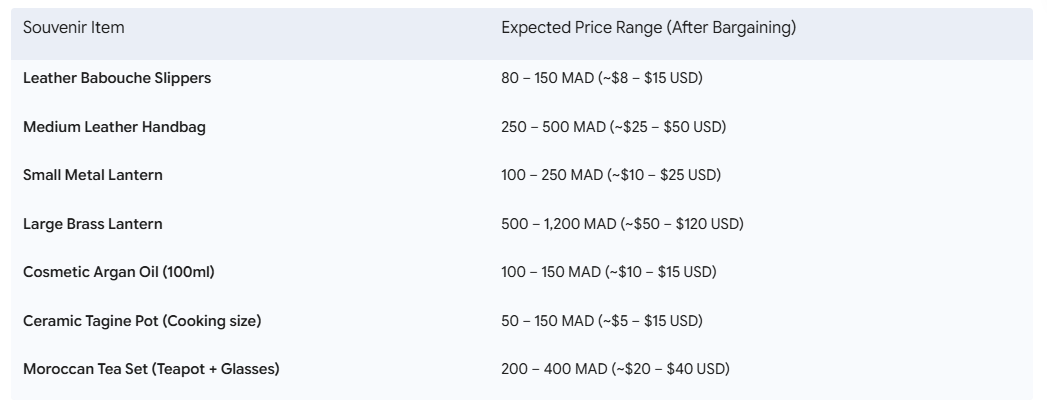
Because almost nothing in the traditional markets has a price tag, knowing what represents a fair price can be tricky. While prices fluctuate based on the quality of materials and the vendor's initial quote, here is a general, realistic price guide in Moroccan Dirhams (MAD) to help you set your expectations:
Is bargaining expected, and how do you haggle in Marrakech?
Yes, bargaining (or haggling) is a fundamental part of Moroccan business culture. It is not considered rude; rather, it is viewed as a social interaction and a friendly game. If you pay the first price a seller quotes, you will likely overpay by double or triple the actual value.
Here is how to haggle like a seasoned traveler:
- Do your research first: Before you buy, stroll around different stalls to get a general sense of what things cost.
- Let the seller name the first price: Never state your budget or what you are willing to pay upfront. Let them set the starting point.
- Counter with 30% to 40% of their opening price: This gives both of you plenty of room to negotiate.
- Keep it light and friendly: Smile, laugh, and joke with the seller. A polite, warm attitude will get you a much better deal than being aggressive or demanding.
- Use the "walk-away" technique: If the seller will not meet you at a reasonable price, say “shukran” (thank you) and walk away. Nine times out of ten, they will call you back with a much lower offer.
- Only start bargaining if you actually want to buy: It is considered poor etiquette to spend fifteen minutes negotiating a price, reach an agreement, and then decide not to buy the item.
What are the most common scams in the Marrakech souks?
While Marrakech is generally a very safe destination for tourists, you should keep an eye out for a few common market scams:
- The "Closed Road" or "Fake Guide" Scam: Friendly locals on the street might tell you that a certain road is closed, or that the souk is shut for a special holiday. They will then offer to lead you to an alternative "authentic Berber market." In reality, they are leading you to a relative’s high-pressure shop to earn a commission. Politely decline and keep walking.
- Unsolicited Directions: If you look lost and a local offers to show you the way back to Jemaa el-Fnaa, they will almost certainly demand a tip once you arrive. If you need directions, always ask a shopkeeper inside their store, as they cannot leave their business to follow you.
- The "Henna" Trick: Women offering henna tattoos near the entrance of the souks may grab your hand playfully and start drawing without your permission, demanding a large payment afterward. Keep your hands close and clearly say "no" if you are not interested.
How do I avoid getting lost in the maze of Marrakech?
Getting lost in the winding, unmarked alleys of the medina is practically a rite of passage. Don't panic—it is all part of the adventure! However, to keep your bearings, use these simple tips:
- Download offline maps: Standard GPS can struggle in the deep, covered alleys of the souk. Download an offline map of Marrakech on Google Maps or Maps.me before you head out.
- Use landmarks instead of street names: Look up. Use tall minarets (like the Koutoubia Mosque) or specific, recognizable shops to figure out which direction you are walking.
- Carry your hotel’s business card: Keep a physical card with your riad's address and phone number. If you get completely turned around, you can hand it to a taxi driver outside the medina gates or show it to a local shopkeeper.
- Follow the crowds: If you want to get back to the main square, simply walk in the direction of the heaviest foot traffic or look for the hand-painted signs pointing toward Jemaa el-Fnaa.
When is the best time of day to visit the souks?
Your experience in the markets will vary wildly depending on what time of day you decide to visit:
- The Morning (9:30 AM – 11:30 AM): This is the quietest and coolest time of day. Shopkeepers are just opening up, sweeping the pathways, and setting up their displays. If you want a relaxed, crowd-free shopping experience, go early. Many sellers believe that making a quick, easy first sale of the day brings good luck, so you might get a great bargain!
- The Evening (6:00 PM – 9:00 PM): The markets become incredibly lively, loud, and bustling after dark. While it is crowded, the atmosphere is electric. Vendors looking to hit their daily sales goals before closing up might also be more flexible with their pricing.
- Note on Fridays: Friday is the holy day in Islam. Many stalls in the souks close down between 12:00 PM and 3:00 PM for afternoon prayers, and some may remain closed for the rest of the day.
Can I use credit cards, or is cash required in the markets?
Cash is king in the souks of Marrakech. While a few larger, high-end carpet showrooms and modern boutiques accept Visa or Mastercard, the vast majority of local artisans and stall owners only accept cash.
Make sure to carry Moroccan Dirhams (MAD) with you. It is incredibly helpful to carry small denominations (such as 20, 50, and 100 Dirham notes). If you try to pay for a 30 MAD bag of spices with a 200 MAD bill, the vendor may claim they do not have any change, making it much harder to close the deal.
How should you dress when shopping in Marrakech?
The souks are busy, dusty, hot, and culturally conservative. When planning your outfit, keep comfort and local customs in mind:
- Dress Modestly: To respect the local culture and avoid unwanted attention, both men and women should wear clothing that covers their shoulders and knees. Loose, breathable fabrics like linen or light cotton are perfect for staying cool in the Moroccan heat.
- Wear Comfortable Shoes: You will end up walking thousands of steps over uneven cobblestones, dirt paths, and slick stone floors. Leave the sandals at home and opt for comfortable, closed-toe walking shoes or sneakers.
Do I need a visa to visit Morocco for a shopping trip?
Before you book your flights and dream about filling your suitcases with beautiful lanterns and rugs, it is important to check the entry requirements. Many passport holders from countries like the US, Canada, the UK, Australia, and EU nations can enter Morocco visa-free for up to 90 days.
However, visa regulations can change, and requirements vary depending on your nationality. To avoid any surprises at the airport, it is highly recommended to read this guide on understanding Morocco visa policy before you travel. Having your travel documents prepared ensures a smooth, stress-free entry into this magical North African country.
Why Choose Us?
Planning an international trip should be exciting, not stressful. We take the hassle out of your travel preparation so you can focus on the adventure ahead. Here is why travelers trust us:
-
Reliable Travel Visa Services
Our proven global approach has assisted numerous travelers from all over the world in successfully obtaining their travel visas without the headache.
-
Round-the-Clock Assistance
We are here for you whenever you need us. Reach out to our customer support team 24/7, and our dedicated experts will respond to your queries within 72 hours.
-
Experienced Visa Consultants
Navigating international paperwork can be confusing. Receive expert, step-by-step guidance from our professional consultants to ensure the accuracy and acceptance of your application.
-
Efficient Visa Application Process
Forget about endless lines and complicated government websites. Apply for your travel visa in just minutes using our highly simplified and intuitive online form.