

Egypt is a land where the ancient world meets modern life on every single corner. One of the best ways to experience this beautiful contrast is through shopping.
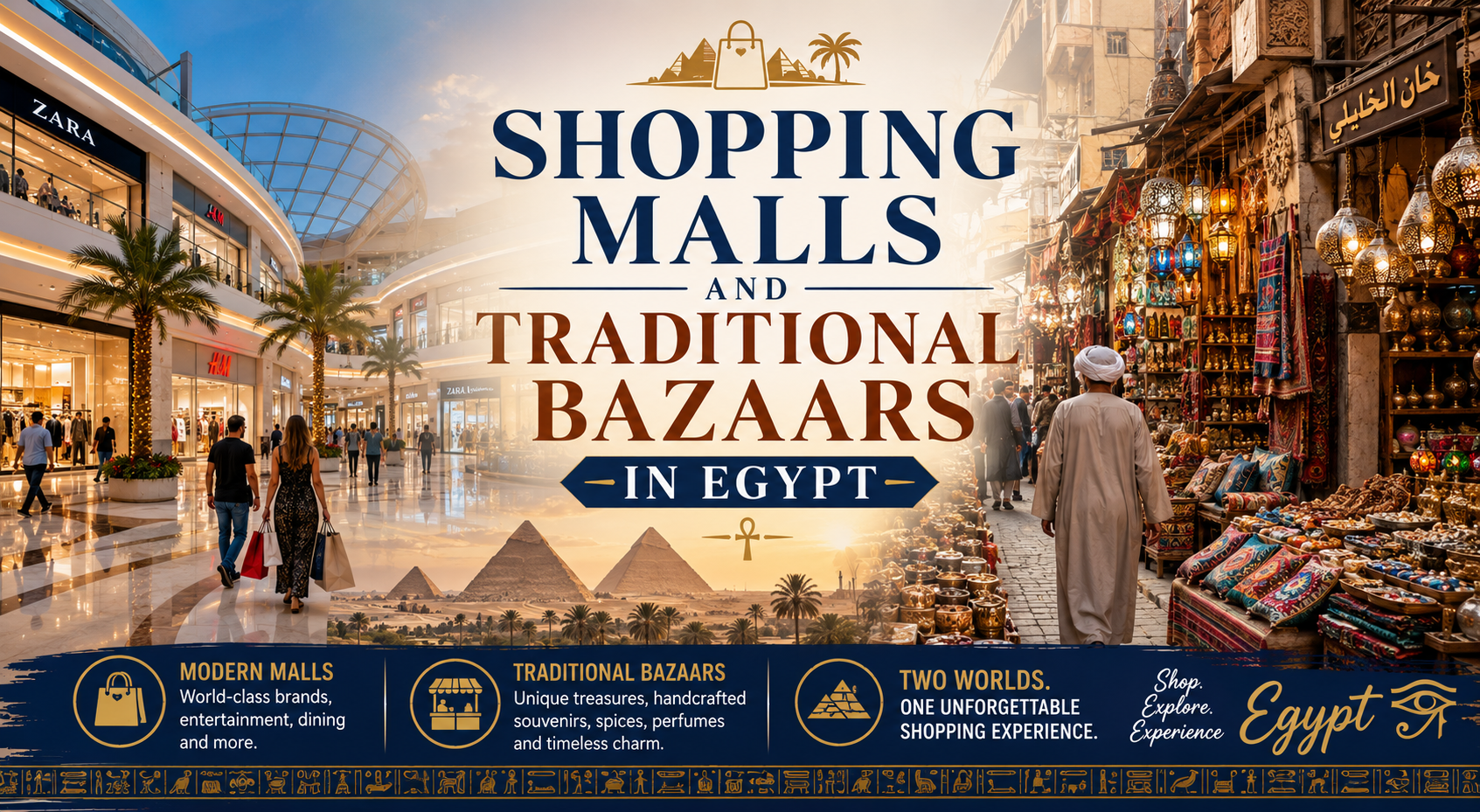 In Egypt, shopping is not just about spending money or collecting souvenirs. It is a sensory adventure. You can spend your morning walking through a medieval, narrow alleyway smelling rich spices, and spend your evening in a massive, air-conditioned mall with an indoor ski slope.
If you are planning a trip to Egypt, this guide will help you navigate both worlds: the historic, lively traditional bazaars and the gleaming, ultra-modern shopping malls.
What is the difference between shopping in Egypt's traditional bazaars and modern malls?
The difference comes down to the atmosphere, the way you pay, and how you interact with people.
Traditional bazaars—locally called souks—are open-air, historic, and wonderfully chaotic. In a souk, you are expected to bargain, chat with shopkeepers over a cup of mint tea, and pay with cash. It is noisy, colorful, and deeply cultural.
Modern malls, on the other hand, offer a familiar Western-style shopping experience. They are clean, cool, and feature fixed prices. You can use your credit card, eat at international fast-food chains, and shop for global brands like Zara or H&M. Malls are where Egypt’s modern middle class hangs out to escape the summer heat.
What are the most famous traditional bazaars in Egypt you must visit?
If you want to experience authentic Egyptian culture, you cannot miss these historic markets:
- Khan el-Khalili (Cairo): This is the king of Egyptian souks. Established in the 14th century, this historic maze of alleys in Islamic Cairo is packed with lamps, spices, silver jewelry, and souvenirs.
- The Luxor Souq (Luxor): Located close to the Luxor Temple, this market is a bit more relaxed than Cairo. It is highly famous for high-quality alabaster stone items, leather goods, and hand-painted papyrus.
- Aswan Souk (Aswan): This is one of the friendliest markets in Egypt. Because Aswan is close to Sudan and home to the Nubian people, you will find unique Nubian handicrafts, colorful spices, and Hibiscus tea (karkade) here.
- The Old Market (Sharm El Sheikh): A more modern, curated version of a traditional market. It is cleaner, easier to navigate, and features the breathtaking Al Sahaba Mosque as its backdrop.
Where can you find the best modern shopping malls in Egypt?
If you need a break from the busy streets and the desert heat, Cairo has some of the biggest and most luxurious malls in the Middle East:
- Mall of Egypt (6th of October City): Famous for hosting "Ski Egypt," an indoor snow park where you can see real penguins. It features hundreds of international fashion brands and a massive cinema.
- City Stars Heliopolis (Cairo): One of the oldest mega-malls in Egypt. It is huge, easy to get lost in, and has everything from high-street fashion to traditional Egyptian boutiques.
- Cairo Festival City Mall (New Cairo): This mall features a beautiful outdoor dining area built around a dancing fountain. It is home to Egypt’s only IKEA and many premium brands.
What are the best unique souvenirs to buy in Egypt?
Do not waste your money on cheap plastic pyramids. Instead, look for these authentic Egyptian treasures:
- Handmade Alabaster: This translucent stone is mined near Luxor. Artisans carve it into beautiful vases, small statues, and candle holders that glow softly in the dark.
- Egyptian Cotton: Famous worldwide for its incredible softness and durability. Look for 100% Egyptian cotton towels, bedsheets, or casual shirts.
- Spices and Herbs: Egyptian spices are fresh and highly aromatic. Buy some cumin, saffron, or dried hibiscus flowers to take the taste of Egypt back home.
- Perfume Oils: Many world-famous perfumes use Egyptian essential oils as their base. You can buy pure jasmine, lotus, or musk oils in historic glass bottles.
- Silver Cartouche Jewelry: You can order a personalized silver or gold pendant where your name is written in ancient hieroglyphics.
How do you bargain like a local in Egyptian souks?
Bargaining (haggling) is a game, and it is part of the local shopping culture. It is never meant to be aggressive. Here is how to do it politely:
- Rule of Half: When a seller gives you the first price, politely offer about 50% to 60% of that price.
- Keep it Friendly: Smile, joke, and stay relaxed. If the seller offers you tea, accept it! It does not mean you are forced to buy.
- The Walk-Away Method: If the price is too high, politely say "Shukran" (Thank you) and start walking away. Nine times out of ten, the seller will call you back with a much better price.
- Do Your Research: Walk around 3 or 4 shops first to understand the average price of the item before you start bargaining.
Are credit cards accepted, or should you carry cash when shopping in Egypt?
For modern malls, large hotels, and high-end restaurants, credit cards are widely accepted.
However, for traditional bazaars, street food vendors, and local taxis, cash is king. Always carry Egyptian Pounds (EGP) in small denominations (10, 20, 50, and 100-pound notes). Vendors in crowded souks rarely have change for large bills.
What is the best time of day to go shopping in Cairo's markets?
Timing is everything when shopping in Egypt.
Avoid shopping in the afternoon, especially during the hot summer months. Most traditional markets do not really wake up until after 5:00 PM. The best time to visit Khan el-Khalili is at night when the lanterns are lit, the air is cooler, and the locals come out to socialize at cafés.
Note: Most shops in bazaars are closed on Friday mornings for prayers, and some remain closed all day on Sundays.
What should you wear when visiting traditional Egyptian bazaars?
Egypt is a conservative country, and traditional markets are located in historic neighborhoods. To show respect and avoid unwanted attention, dress modestly.
- For Women: Keep your shoulders and knees covered. Loose, breathable trousers or maxi skirts paired with a simple t-shirt are ideal.
- For Men: Avoid wearing short gym shorts. T-shirts and jeans or chinos are perfect.
- Shoes: Wear comfortable, closed-toe walking shoes. The historic streets can be dusty, uneven, and crowded.
How can you spot authentic Egyptian souvenirs vs cheap fakes?
Because Egypt attracts millions of tourists, cheap mass-produced replicas are common. Here is how to check for quality:
- The Papyrus Test: Fake papyrus is made from banana leaves and cracks easily when folded. Real papyrus is flexible, tough, has visible crisscross fibers, and can be rolled up without breaking.
- The Alabaster Test: Genuine hand-carved alabaster has a matte finish, feels heavy, and has natural color variations. Fakes are often made of cast plastic or plaster and look perfectly uniform.
- Jewelry Stamps: Real Egyptian silver and gold are stamped with an official government hallmark. Always ask the seller to show you the stamp and weigh the piece in front of you.
Where do locals shop in Cairo for authentic prices?
If you want to escape the tourist crowds and see where everyday Cairenes shop, check out these hidden gems:
- Souq el-Ataba: Located in downtown Cairo, this is a massive, chaotic market where locals buy fabrics, clothing, and household items at rock-bottom prices.
- Wekalet el-Balah: The ultimate spot for vintage clothing, surplus goods, and affordable Egyptian cotton fabrics sold by the meter.
- Souq el-Gomaa (The Friday Market): A giant flea market held under the Al-Shafi'i bridge. It is chaotic and rustic, but great for finding genuine antiques, old books, and unique vintage items if you arrive early in the morning.
Do you need a visa to travel and shop in Egypt?
Yes, most international travelers need a visa to enter Egypt and explore its historic shopping districts. Luckily, the process is now incredibly simple thanks to the online e-Visa system.
Before you book your flights to explore the bazaars of Cairo and Luxor, you should check your eligibility. You can easily view the list of eligible countries for Egypt e-Visa online to see if you qualify for a quick digital application.
Why Choose Us for Your Egypt Travel Needs?
Navigating international travel requirements can feel overwhelming, but we are here to make your journey to Egypt completely stress-free.
- Reliable Travel Visa Services: Our global, highly-tested approach has successfully assisted thousands of travelers in obtaining their official Egypt travel visas without any hiccups.
- Round-the-Clock Assistance: Travel plans don't wait, and neither do we. You can reach out to our customer support team 24/7, and our dedicated visa experts will respond to your queries within 72 hours.
- Experienced Visa Consultants: Get personalized, expert guidance throughout your application to ensure all details are correct, significantly reducing the risk of application rejection.
- Efficient Visa Application Process: Skip the long embassy queues. You can apply for your official Egypt Visa in just a few minutes using our simplified, user-friendly online form.