

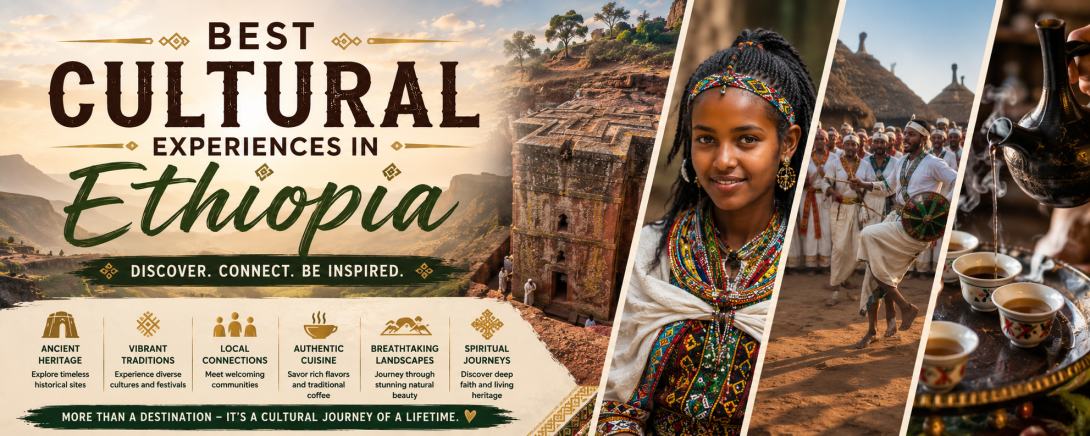
Have you ever wanted to visit a place that feels completely different from the rest of the world? If so, Ethiopia should be at the very top of your travel list.
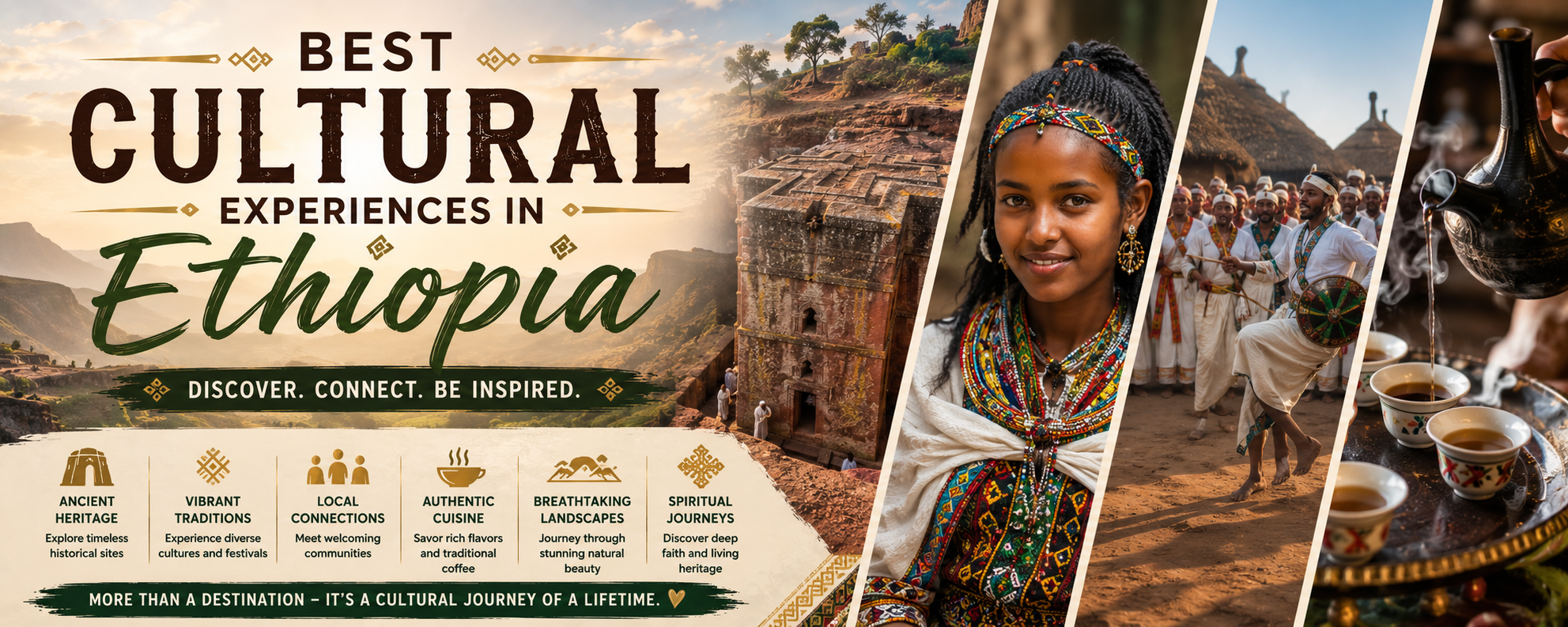
Ethiopia is unlike any other country in Africa. It is a place where ancient traditions are still part of daily life. From churches carved out of solid rock to deep-rooted coffee rituals and unique tribal customs, every day here offers a new cultural discovery.
If you are planning an adventure, here are the absolute best cultural experiences you can have in Ethiopia, framed around the questions travelers ask most.
1. Why is Ethiopia considered a land of completely unique cultural experiences?
When you step off the plane in Ethiopia, you are not just entering a new country—you are almost stepping into a different time. Literally! Ethiopia uses its own unique calendar, which is about seven to eight years behind the Western calendar. Even their clock is different, starting at sunrise rather than midnight.
But the uniqueness goes much deeper than time. Ethiopia is one of the oldest independent nations in the world and was never colonized by European powers. Because of this, its native cultures, languages, and ancient Ge'ez script have remained beautifully intact. With over 80 different ethnic groups living together, the country is home to an incredible variety of music, clothing, and customs that you cannot find anywhere else on Earth.
2. What makes the Lalibela Rock-Hewn Churches so spiritually significant?
High in the dusty hills of northern Ethiopia lies Lalibela, a town famous for its 11 medieval monolithic churches. What makes them mind-blowing is that they were not built from the ground up. Instead, they were carved downward directly into the red volcanic rock in the 12th and 13th centuries.
King Lalibela wanted to build a "New Jerusalem" for Christian pilgrims who could not make the dangerous journey to the Holy Land. Today, these churches are not just museums; they are living places of worship. Walking through the narrow, dark stone tunnels and seeing white-robed Orthodox Christian priests chanting in the candlelight feels like traveling hundreds of years back in time.
3. Why should you experience a traditional Ethiopian coffee ceremony?
Did you know that Ethiopia is the birthplace of coffee? According to local legend, a young goat herder named Kaldi discovered the plant when he noticed his goats got hyper after eating red berries from a specific bush.
In Ethiopia, drinking coffee is not a quick caffeine fix; it is a vital daily social ritual. A traditional coffee ceremony can take over an hour. The host washes fresh green coffee beans, roasts them over hot coals in a small pan, grinds them by hand, and brews the coffee in a beautiful black clay pot called a jebena.
The coffee is served hot and strong in small cups, often accompanied by popcorn. It is a beautiful symbol of hospitality and friendship, and sitting down for one is the best way to chat with locals.
4. What is the famous coming-of-age bull jumping ceremony in the Omo Valley?
In the south of Ethiopia, the Omo Valley is home to isolated tribal communities that still live much as they have for centuries. One of the most famous cultural events here is the Ukuli Bula, or the bull-jumping ceremony, practiced by the Hamar people.
This is a rite of passage for young men transitioning into adulthood. To prove his bravery and readiness for marriage, a young man must run across the backs of several bulls lined up side-by-side, four times, without falling. The ceremony is filled with singing, traditional dancing, and vibrant body decoration. It is an intense, raw, and unforgettable cultural event to witness.
5. How do the women of the Mursi tribe maintain their lip plate tradition?
Also located in the Omo Valley, the Mursi people are famous worldwide for the large clay plates worn by the women in their lower lips.
When a young woman reaches puberty, her lower lip is pierced, and a small wooden peg or clay disc is inserted. Over time, larger and larger plates are used to stretch the lip. While this practice might seem unusual to outsiders, for the Mursi, it is a powerful symbol of beauty, cultural identity, and female strength. Visiting a Mursi village offers a fascinating look at how ancient body modification traditions survive in the modern world.
6. Why do people feed wild hyenas at night in Harar?
If you head to eastern Ethiopia, you will find Harar, a historic walled city with over 80 mosques and narrow, labyrinth-like alleys. But Harar's most famous attraction happens just outside the city walls after dark.
For decades, local "Hyena Men" have called wild hyenas from the surrounding hills and fed them scraps of meat by hand—and even from their mouths! This tradition began as a way to keep the hyenas from attacking livestock. Today, it has become a peaceful relationship between humans and wild predators. If you are feeling brave, the Hyena Man will even let you feed them yourself!
7. What are the giant bee-hive huts of the Dorze people?
High up in the cool hills near Arba Minch live the Dorze people, famous for two things: their incredible cotton weaving skills and their towering homes.
Dorze houses are built entirely out of bamboo and organic materials, shaped like massive bee-hives. They can stand up to 12 meters tall! Interestingly, these houses are built to last for generations, but because termites slowly eat away at the bottom of the structure, the entire house gets shorter over the years. Inside, these homes are surprisingly spacious, often featuring a fireplace and even a small area for livestock.
8. What is the Timkat festival and why is it so colorful?
If you want to experience Ethiopia's religious culture at its most vibrant, try to visit during Timkat. Held every year in January, Timkat is the Ethiopian Orthodox celebration of Epiphany, which commemorates the baptism of Jesus in the Jordan River.
The festival features massive, joyous processions. Priests carry holy replicas of the Ark of the Covenant, wrapped in rich, colorful silks, on their heads. Tens of thousands of pilgrims dressed in pure white cotton clothes sing, dance, and play traditional instruments. The atmosphere is ecstatic, filled with joy, music, and holy water.
9. How is Ethiopian food eaten, and what on earth is Injera?
No cultural trip to Ethiopia is complete without talking about the food. Ethiopian cuisine is served on a large, spongy, slightly sour flatbread called injera, made from a tiny grain called teff.
Instead of plates and utensils, the injera itself acts as both. Various stews, known as wats (which can be made of lentils, beef, chicken, or vegetables), are ladled on top of the bread. You tear off a piece of injera with your right hand and use it to scoop up the food. Eating is highly communal—everyone shares from the same large platter, reflecting the close-knit, family-focused nature of Ethiopian society.
10. What makes the Konso Cultural Landscape a UNESCO World Heritage site?
The Konso people live in a dry, hilly region in the south. To survive in this harsh environment, they developed a brilliant system of stone terraces to prevent soil erosion and collect precious rainwater.
Their stone-walled villages, built on high peaks, are organized in complex circles that have protected them for over 400 years. The Konso are also famous for waka—wooden statues carved to honor dead heroes and leaders, placed on top of their graves. It is a beautiful example of how humans can live in perfect harmony with a difficult natural landscape.
11. How do you safely plan a trip to experience Ethiopia's rich culture?
Traveling to Ethiopia is an adventure of a lifetime, but it does require some simple planning.
- When to go: The dry season, from October to April, is the most comfortable time for trekking and sightseeing.
- What to pack: Pack modest clothing, especially for religious sites where shoulders and knees must be covered. Comfortable walking shoes are a must for historic stone paths.
- Respect local customs: Always ask for permission before taking photos of people, particularly in the Omo Valley, and be respectful of religious spaces.
Most importantly, you will need to arrange your travel documents before you leave. Securing your Ethiopia tourist visa early ensures that your arrival at the airport is smooth, quick, and completely stress-free.
12. How do you apply for an Ethiopia tourist visa online?
Getting your travel papers ready is now easier than ever. Instead of visiting a physical embassy, you can easily apply for an Ethiopia visa online to save time and effort.
By using a dedicated visa assistance service, you can skip the bureaucratic stress and focus entirely on planning your incredible cultural itinerary.
Why Choose Us?
-
Reliable Travel Visa Services
Our global approach has assisted numerous travelers in obtaining their Visa.
-
Round-the-Clock Assistance
Reach out to us 24/7, and our experts will respond within 72 hours.
-
Experienced Visa Consultants
Receive expert guidance to ensure the acceptance of your application.
-
Efficient Visa Application Process
Apply for your Visa in minutes with our simplified form.
Ready to start your Ethiopian adventure? Head over to our Ethiopia Tourist Visa Portal to submit your application today and take the first step toward an unforgettable cultural journey!