
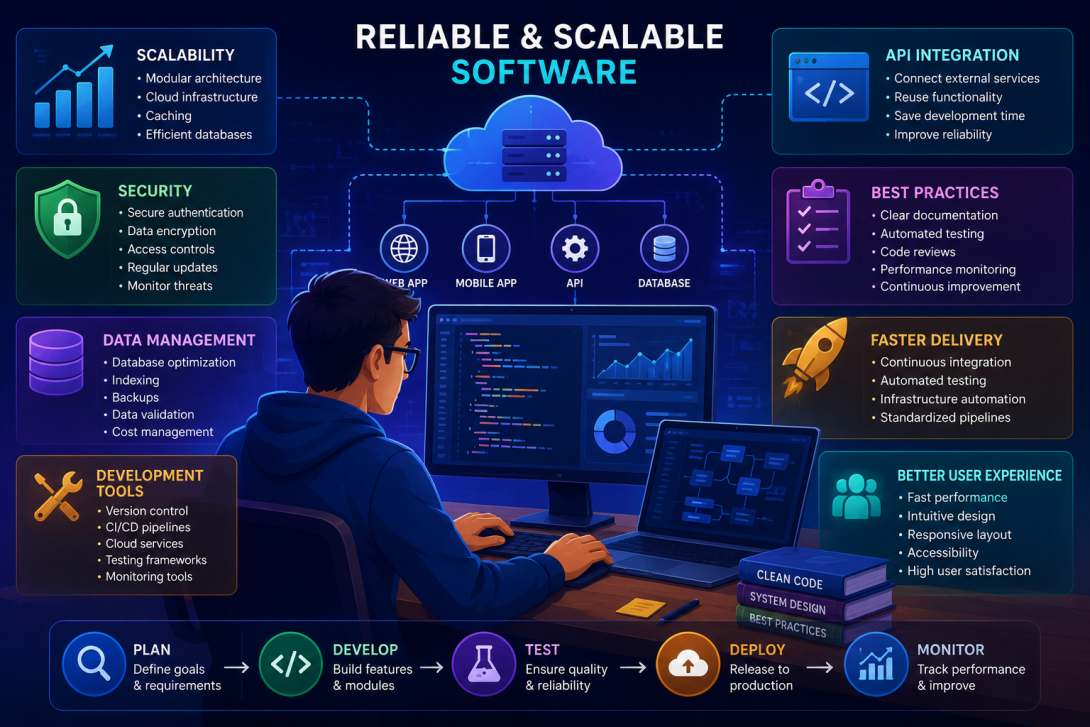
Software powers nearly every industry today. From online stores and banking platforms to mobile apps and business management systems, organizations depend on reliable digital solutions to serve customers and streamline operations. As user expectations continue to rise, developers must focus on creating systems that are secure, scalable, and easy to maintain.
Successful software development is not only about writing code. It involves planning architecture, managing data efficiently, integrating external services, and ensuring applications can grow alongside business needs. Understanding these fundamentals can help teams build products that remain effective for years.
Why Scalability Matters in Software Development
Scalability refers to an application's ability to handle increasing workloads without sacrificing performance. As businesses grow, the number of users, transactions, and data requests often increases significantly.
Applications that are not designed with scalability in mind may experience:
- Slow response times
- Increased downtime
- Higher maintenance costs
- Poor user experiences
- Limited growth opportunities
Developers can improve scalability by using modular architectures, cloud infrastructure, caching systems, and efficient database designs. These approaches allow applications to adapt to changing requirements without requiring major redesigns.
The Role of API programming in Modern Systems
Modern applications rarely operate in isolation. Most software products interact with payment gateways, communication tools, analytics platforms, mapping services, and many other external resources.
This is where API programming becomes valuable. APIs allow different systems to exchange information securely and efficiently. Instead of building every feature from scratch, development teams can integrate specialized services that accelerate project delivery.
Some common examples include:
- Currency conversion services
- Geolocation tools
- Weather information providers
- Email verification systems
- News and content feeds
Using APIs enables businesses to focus on their core products while leveraging trusted external services for supporting functionality.
Designing Software for Long Term Success
Many projects begin with a small user base and limited requirements. However, successful products often evolve rapidly. Designing software with future growth in mind can reduce technical debt and simplify future enhancements.
Key considerations include:
Modular Architecture
Breaking applications into smaller components improves maintainability. Individual modules can be updated without affecting the entire system.
Clear Documentation
Well documented systems make onboarding easier for new developers and reduce confusion during maintenance.
Automated Testing
Automated tests help identify issues early in the development process. They also provide confidence when releasing new features.
Performance Monitoring
Monitoring tools provide visibility into application health and allow teams to identify bottlenecks before they impact users.
Improving Security Across Applications
Security should be considered from the earliest stages of development. Even minor vulnerabilities can expose sensitive information and damage customer trust.
Important security practices include:
- Encrypting sensitive data
- Using secure authentication methods
- Implementing access controls
- Validating user input
- Monitoring suspicious activity
- Applying regular security updates
Organizations that prioritize security reduce risk while maintaining compliance with industry standards and regulations.
The Importance of Efficient Data Management
Data is one of the most valuable assets within any software system. Effective data management ensures applications remain responsive and reliable as usage increases.
Developers should focus on:
- Database optimization
- Efficient indexing strategies
- Backup and recovery planning
- Data validation procedures
- Storage cost management
Well structured data systems contribute significantly to application performance and long term stability.
Choosing the Right Development Tools
The tools used during development can influence productivity and project outcomes. Modern teams typically rely on a combination of technologies for coding, testing, deployment, and monitoring.
Popular categories include:
- Source control platforms
- Continuous integration tools
- Cloud infrastructure services
- Monitoring solutions
- Testing frameworks
- Documentation platforms
Selecting tools that align with project goals can simplify workflows and improve collaboration among team members.
Supporting Faster Development Cycles
Businesses frequently release updates to meet customer expectations and stay competitive. Faster development cycles require efficient workflows that minimize manual effort.
Strategies that support rapid delivery include:
- Continuous integration
- Automated testing
- Infrastructure automation
- Code review processes
- Standardized deployment pipelines
These practices help teams release features more frequently while maintaining software quality.
Evaluating External Services Before Integration
External services can save significant development time, but careful evaluation is important before implementation.
Consider factors such as:
- Reliability
- Documentation quality
- Response speed
- Security standards
- Pricing structure
- Technical support availability
Selecting dependable service providers reduces operational risks and contributes to a more stable application environment.
Businesses often look for providers that offer a Free API key during evaluation. This allows development teams to test functionality, assess performance, and determine whether a service meets project requirements before committing to larger deployments.
Building Better User Experiences
Technical excellence alone does not guarantee success. User experience plays a critical role in adoption and retention.
Applications should focus on:
- Fast loading times
- Intuitive navigation
- Responsive design
- Accessibility standards
- Consistent interfaces
When users can accomplish tasks quickly and easily, they are more likely to continue using the product and recommend it to others.
FAQs
1. Why is scalability important in software development?
Scalability allows applications to handle increasing traffic, users, and data without major performance issues. It helps businesses grow without constantly rebuilding their systems.
2. What factors should developers consider before integrating external services?
Developers should evaluate reliability, security, documentation quality, support availability, response times, and overall compatibility with project requirements.
3. How can teams improve software reliability?
Reliability can be improved through automated testing, performance monitoring, strong security practices, efficient architecture design, and regular maintenance procedures.