

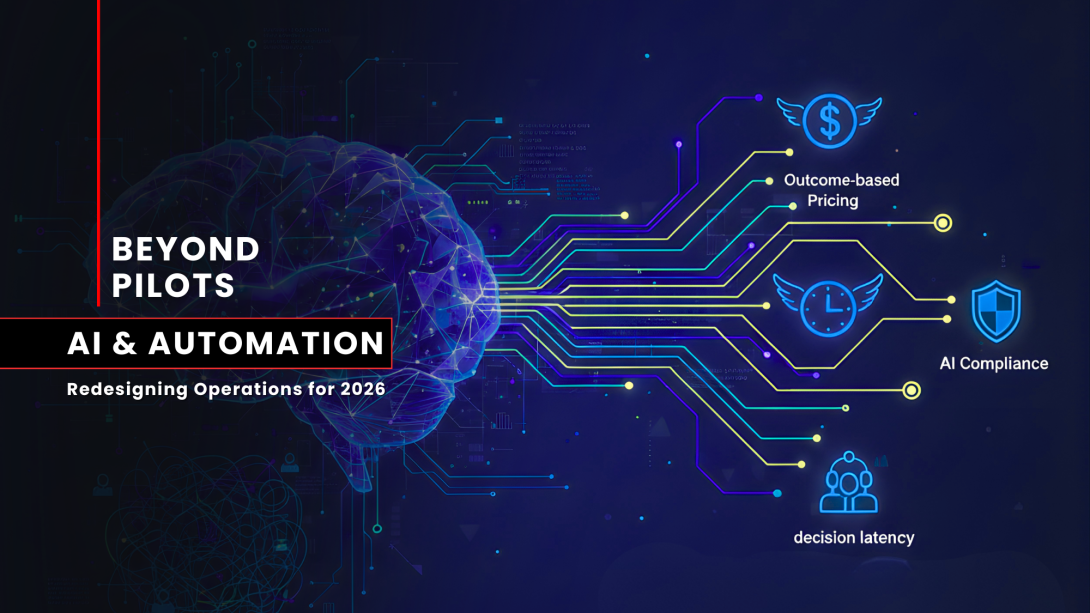
AI adoption is no longer experimental — but scaling it successfully still is.
In 2026, most businesses are using AI in some form. Yet only a small fraction have operationalized it beyond pilots. The difference between experimenting with AI and engineering AI-native execution layers is now creating a measurable competitive divide.
This article explores the most critical AI and automation trends shaping business operations in 2026, including:
• The rise of AI-native competitors built around automation-first architecture
• The shift from rule-based RPA to agentic AI systems that reason and adapt
• Why most AI pilots fail — and how to scale beyond them
• Outcome-based pricing models changing AI economics for SMBs
• The growing compliance pressure around Shadow AI and governance
• Hyperautomation strategies that integrate AI across workflows
• The highest-ROI automation entry points for technical leaders
For RPA Developers, Automation Architects, and CTOs, this isn’t a tooling discussion. It’s an operating model decision.
If your organization is experimenting with AI but not redesigning workflows around it, the competitive gap may already be forming.
Read the full breakdown and explore how to operationalize AI strategically.