

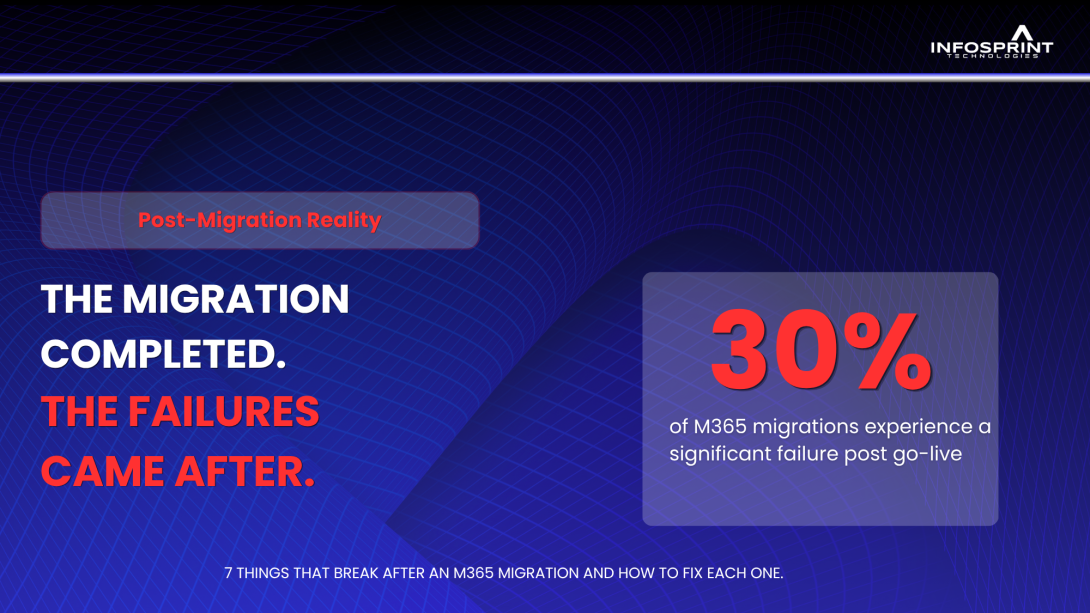
Most Microsoft 365 migrations are declared successful the moment the cutover finishes.
The dashboard turns green. Mailboxes move. Teams signs in. Leadership gets the update.
Then Monday morning starts.
Employees lose SharePoint access. Shared mailboxes stop receiving emails. MFA policies lock out remote users. Teams meetings disappear from calendars. Helpdesk tickets triple within days.
The biggest Microsoft 365 migration failures rarely happen during migration itself. They happen after go-live — when organizations begin relying on the new environment for real business operations.
In this breakdown, Infosprint Technologies explores the 7 most common Office 365 migration problems organizations face after cutover, including:
- Broken SharePoint permissions
- Email routing and SPF/DKIM failures
- MFA and identity lockouts
- Teams and calendar migration issues
- User adoption collapse
- Security misconfigurations
- Compliance and data residency gaps
The article also explains:
- Why post-migration stabilization matters
- How hybrid Microsoft environments fail
- What IT leaders should validate within the first 5 days
- How to reduce operational disruption after migration
- Why governance and security configuration matter as much as the migration itself
Whether your organization is planning a Microsoft 365 migration, tenant consolidation, hybrid modernization, or post-migration audit, this guide outlines the operational risks most IT teams discover too late — and how to prevent them before they escalate.