

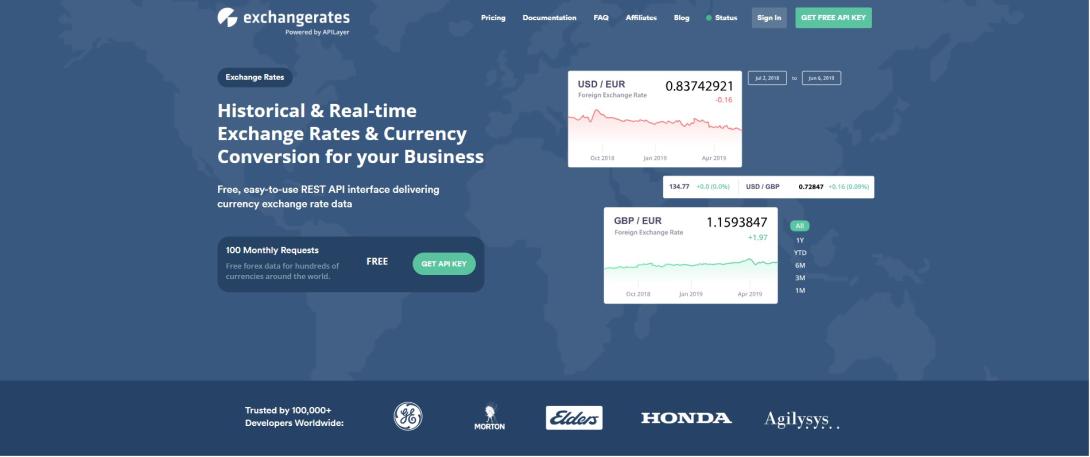
International payments, travel platforms, ecommerce stores, and financial applications often need current exchange rate information. A developer may need to convert USD into EUR, calculate prices in several currencies, or display an exchange rate before a customer completes a transaction. The challenge is finding reliable data and delivering it to an application in a format that is easy to process.
Building a currency data system from scratch can quickly become complicated. Exchange rates change continuously, different data sources use different formats, and applications may need historical as well as current information. Developers therefore need to consider data freshness, API reliability, supported currencies, response formats, authentication, and request limits before selecting an approach.
A currency api can simplify this process by allowing applications to retrieve exchange rate information through standard HTTP requests. Instead of manually collecting rates from different sources, developers can connect their applications to an API and work with structured data.
Why do applications need currency exchange rate APIs?
The main reason is convenience. Currency exchange rates are not static values. They fluctuate because of market activity, economic events, interest rate changes, and other financial factors. An application that relies on manually entered rates can therefore become outdated.
An API provides a programmatic way to request currency information when an application needs it. For example, an ecommerce platform can retrieve an exchange rate before calculating the price of an international order. A travel application can use currency data to help users understand expenses in another country.
Another advantage is consistency. Rather than maintaining separate currency data sources for different parts of an application, developers can create a common integration and use the returned data throughout their systems.
However, an API does not automatically solve every currency related requirement. Developers still need to evaluate how frequently data is updated, which currencies are supported, how requests are authenticated, and whether the service fits the application's usage requirements.
What are the main ways to obtain exchange rate data?
There are several approaches, and each has advantages and limitations.
The simplest approach is manually maintaining exchange rates inside an application. This can work for demonstrations or applications where currency values rarely change. The major disadvantage is maintenance. Someone must regularly update the values, and outdated information can lead to incorrect calculations.
A second option is obtaining data from a financial data provider and storing it locally. This gives developers more control over caching and application performance. It can also reduce repeated external requests. However, developers become responsible for managing data updates, storage, synchronization, and error handling.
A third approach is using a dedicated exchange rate API. This generally reduces the amount of infrastructure required because the application can request structured data when needed. Developers can focus on integrating the response into their application instead of building an entire currency data collection system.
The appropriate choice depends on the application. A small internal tool may not require frequent updates, while an international ecommerce application may need a more structured and automated solution.
How should developers choose a currency data service?
Data freshness should be one of the first considerations. Developers should understand whether the service provides current rates, historical data, or both. The required update frequency depends on the application's purpose.
Currency coverage is another important factor. An application supporting international customers may need more currencies than a simple USD and EUR converter. Checking the available currencies before development can prevent integration problems later.
The API response format also matters. JSON is commonly used because it can be processed easily by languages such as JavaScript, PHP, Python, Java, and many others.
Developers should also review authentication requirements, request limits, documentation, pricing, and error responses. A technically capable service may still be inconvenient if its documentation is unclear or its limitations do not match the application's expected traffic.
Caching should also be considered. Applications that repeatedly request the same currency data may benefit from storing responses temporarily, depending on the freshness requirements. This can reduce unnecessary requests and improve response times.
Can developers use an API for currency conversion?
Yes. Currency conversion can be implemented by retrieving a rate and applying it to an amount.
For example, suppose an application receives an amount in USD and needs to display its equivalent in EUR. The application can request the relevant exchange rate, read the EUR value from the response, and multiply it by the amount being converted.
The basic calculation is straightforward:
Converted amount = Original amount × Exchange rate
The more important consideration is how the application obtains and manages the rate. Developers should handle failed requests, unexpected responses, missing currencies, and temporary service interruptions.
It is also useful to separate currency data retrieval from the user interface. A backend service can retrieve the rate and provide the required value to the frontend. This approach can make authentication, caching, logging, and error handling easier to manage.
For applications handling financial transactions, developers should also distinguish between displaying an indicative conversion and calculating an actual settlement amount. The rate shown to a user may not always represent the final rate applied by a bank, payment provider, or financial institution.
What makes Exchange Rates API useful for developers?
Once the requirements are clear, developers can evaluate dedicated services such as Exchange Rates API. The service provides programmatic access to exchange rate data through an API, allowing developers to integrate currency information into websites, applications, and backend systems.
One useful aspect of an API based approach is that developers can request the information they need instead of maintaining a separate database of manually collected rates. The service can therefore become one component of a broader currency conversion workflow.
Exchange Rates API can be considered when an application needs structured exchange rate information and a straightforward integration process. Developers can review its available endpoints, supported currencies, authentication method, and usage conditions before deciding whether it matches their requirements.
For developers looking for a free api for currency conversion, checking the available plan and its current limitations is important. Free access can be useful for testing, prototypes, learning projects, and applications with modest requirements, but production applications should always be evaluated against their expected request volume and data requirements.
The larger lesson is that selecting a currency service should begin with the application's technical requirements rather than the provider's name. Developers should first determine how frequently rates are needed, which currencies are required, how the data will be cached, and how errors will be handled.
What should developers consider before integrating currency data?
A successful integration requires more than sending an API request. Developers should design the application around possible failures and changing requirements.
First, the application should have appropriate error handling. If an exchange rate request fails, the application should not blindly use an empty or invalid value.
Second, developers should consider caching where appropriate. Repeatedly requesting identical information may be unnecessary when the application's freshness requirements allow temporary storage.
Third, API credentials should be handled securely. Keys should not be unnecessarily exposed in client side code when they are intended for server side use.
Finally, developers should test calculations with multiple currencies and amounts. Decimal precision can become important when currency values are used in financial calculations. The implementation should therefore use suitable numerical handling rather than relying on assumptions about floating point behavior.
Currency data is ultimately one part of a larger application architecture. A well designed integration combines a suitable data source with sensible caching, validation, error handling, and calculation logic.
Frequently Asked Questions
What is a currency exchange rate API?
A currency exchange rate API is a web service that allows applications to retrieve currency exchange rate data programmatically. Developers can use the returned information for currency conversion, pricing, financial applications, ecommerce systems, and other software projects.
How does an application convert one currency into another?
An application normally retrieves an exchange rate for the required currency pair and multiplies the original amount by that rate. Developers should also account for rounding, decimal precision, unavailable currencies, and failed API requests.
Is a free currency API suitable for a production application?
It depends on the application's requirements. A free service may be appropriate for development, testing, prototypes, or applications with limited usage. Production systems should review request limits, data freshness, supported currencies, reliability, authentication, and the provider's current terms before deployment.