

Your financial statements tell the story investors want to hear, but only when organized properly.
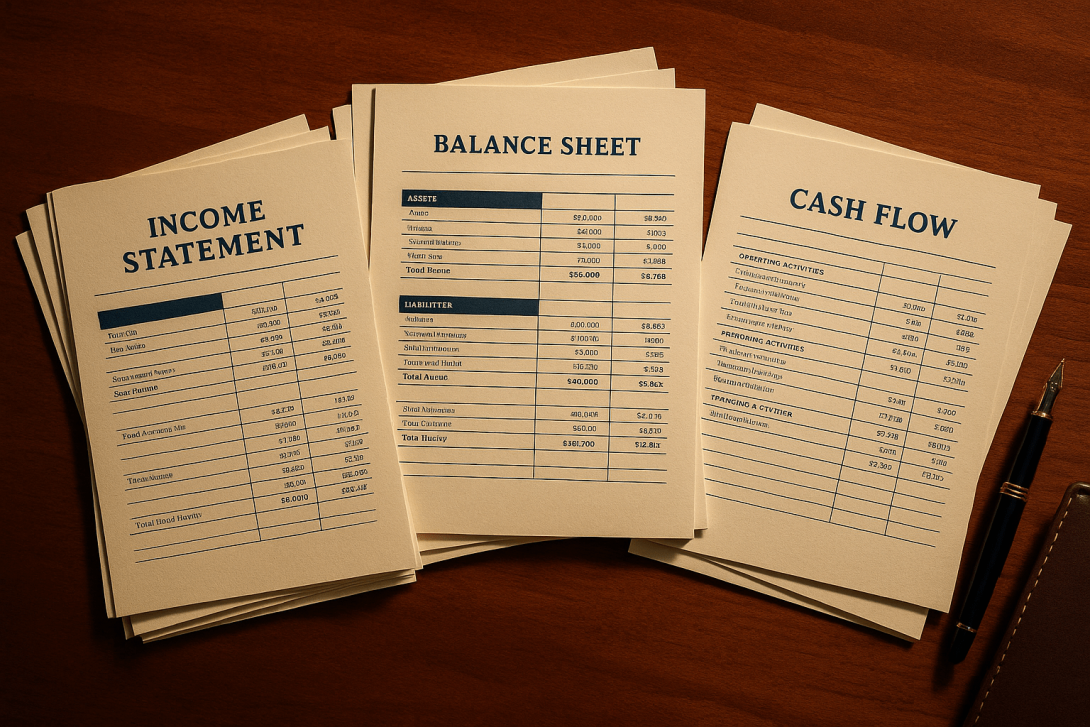
Start with three core reports covering the last 12 to 24 months: your income statement, balance sheet, and cash flow statement. These show how you earn revenue, manage expenses, and maintain stability over time. Add bank reconciliations and payroll records to prove consistency.
Beyond the numbers, investors need context. Your cap table shows ownership changes and equity dilution. Contracts with clients, suppliers, and employees demonstrate operational consistency. Bank statements and loan agreements provide underlying proof that your financials reflect real activity.
Compliance documents bring your numbers to life. Tax filings, incorporation documents, CRA registration, and current business licenses form your legal foundation. For tech startups, privacy policies and security compliance records show you're building with data protection in mind.
An organization separates prepared founders from scrambling ones. Create a summary index listing every document by category: financials, legal, operations, compliance, and people. Use consistent file names like "2024-Q3-Income-Statement" and clearly label current versions.
Most importantly, build your due diligence package before investors ask. Having 80% ready at least three months before pitching prevents delays when timing matters most. Using cloud accounting solutions keeps your data centralized and current, so you can provide investor-ready information whenever opportunities arise.
For a complete framework on preparing your financials for investor review, see our guide on Preparing Your Financials for Canadian Investor Due Diligence.
When your data answers for you, conversations move from verification to strategy. That's when founders gain leverage.
Ready to prepare your due diligence package? Book a free consultation with EIM Services to ensure your financial records tell a clear, confident story about your business.