

If you’ve ever compared what you earned this summer to last summer, you’ve already done a YoY (Year-over-Year) comparison. It’s that straightforward. But in business and finance, the term carries a lot more weight. Investors, analysts, and entrepreneurs all swear by YoY because it paints a truer picture of growth than most other methods.
So, what exactly does YoY mean? Why is it so widely used? And how can you apply it to your own business decisions? Let’s break it down in plain English.
What Does YoY (Year-over-Year) Mean?
YoY stands for Year-over-Year, a way of measuring change by comparing one period of a year with the same period from the previous year. Think of it as putting two snapshots side by side:
- This year’s March vs. last year’s March
- This quarter vs. the same quarter last year
- This holiday season vs. last year’s holiday season
By doing this, you cancel out seasonal quirks and get a cleaner view of whether things are really growing, shrinking, or staying flat.
Why YoY Matters More Than You Think?
Let’s imagine you run an ice cream shop. Sales in July always skyrocket because of the summer heat. If you compare July to June, you’ll see a huge jump - but that’s not because business strategy suddenly worked wonders, it’s just summer doing its thing.
Now, compare this July to last July, and you’ll know if your shop actually grew year over year. Maybe sales are up 12% - that means your marketing, flavors, or customer base expanded beyond the usual seasonal bump.
That’s the magic of YoY. It strips out noise and gives you insight you can actually trust.
Common Ways YoY Is Used
You’ll see YoY everywhere - from Wall Street to small businesses. Here are the most common applications:
- Company Growth Reports
Public companies report quarterly results with YoY numbers front and center. Headlines like “Earnings up 15% YoY” tell investors the company isn’t just coasting - it’s outperforming its past self.
- Marketing Performance
Digital marketers love YoY to prove whether campaigns are improving. For instance, “Website traffic grew 20% YoY” means this year’s audience is significantly larger than last year’s, not just seasonally boosted.
- Economic Indicators
Governments report YoY inflation, GDP, or unemployment rates. These give citizens and policymakers a clear idea of long-term economic health.
- Personal Finance
Even individuals use YoY comparisons. Maybe you spent $2,000 more on travel this year compared to last year. That’s YoY in action at a personal scale.
How to Calculate YoY (Without Overthinking It)?
Don’t worry - the formula is simple:

Example:
Last November, your online store made $50,000. This November, it made $60,000.
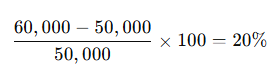
That’s a 20% YoY increase, which tells you your business is moving in the right direction.
The Benefits of Using YoY
So, why not just stick to month-over-month comparisons? Here’s what makes YoY special:
- Removes Seasonal Distortion - It cancels out natural ups and downs like holidays or weather changes.
- Shows Sustainable Growth - Investors and stakeholders trust YoY more because it shows consistent performance.
- Makes Forecasting Easier - Past YoY trends help predict what the next year might look like.
- Simple to Communicate - It’s easy to explain to your team or clients without diving into complicated charts.
But Don’t Forget the Limitations
No metric is perfect, and YoY is no exception. Some things to keep in mind:
- Unusual Events Skew Results - A pandemic year, for example, can throw off comparisons.
- Doesn’t Explain “Why” - YoY tells you growth happened, but not the reason behind it. You’ll still need deeper analysis.
- Needs Context - A 30% jump looks great, but if it’s from $1,000 to $1,300, it may not be as impressive as it sounds.
YoY vs. MoM: The Dynamic Duo
People often ask: Should I track Year-over-Year or Month-over-Month (MoM)? The answer is both.
- MoM helps spot short-term trends. If sales suddenly dip in March compared to February, you know something unusual happened.
- YoY shows the bigger picture. If March 2025 outperformed March 2024, you’re still on a growth path even if MoM was shaky.
Together, they give you both the zoomed-in and zoomed-out perspectives.
A Real-World Example
Imagine you’re an investor looking at a company’s quarterly results. Revenue went from $200 million last year to $230 million this year in the same quarter. That’s a 15% YoY growth.
But then you notice revenue actually dropped compared to the last quarter. Without the YoY figure, you might think the company is struggling. With it, you see that, despite the dip, the long-term trend is still positive.
That’s why analysts rarely look at numbers without YoY context.
Final Thoughts: Why YoY is Your Best Friend in Business
At its core, YoY analysis is about perspective. It helps you step back from the daily ups and downs and ask: Am I really moving forward compared to where I was last year?
Whether you’re tracking your personal savings, running a startup, or analyzing global markets, YoY offers a reliable lens to measure progress. It’s not flashy, it’s not complicated, but it works - and that’s why it has stood the test of time.
So, the next time someone drops “YoY growth” in a conversation, you won’t just nod along. You’ll know exactly what it means - and why it matters.