

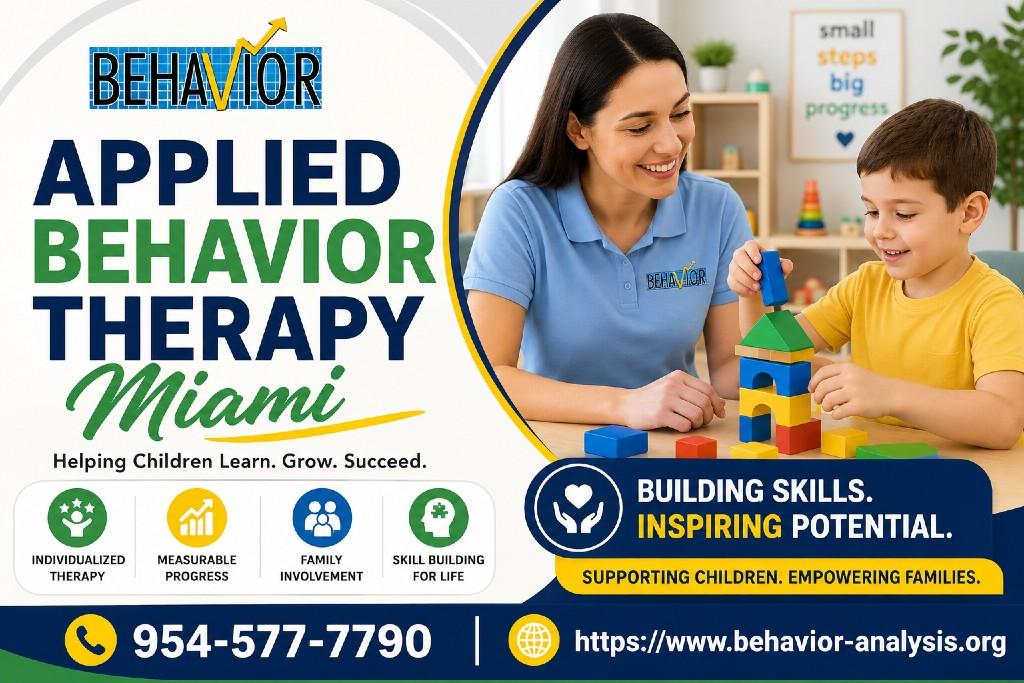
Autism Spectrum Disorder (ASD) affects how individuals communicate, learn, interact, and respond to their surroundings. Every child with autism has unique strengths and challenges, which is why personalized support is so important. Applied Behavior Therapy Miami has become a widely recognized approach for helping children develop meaningful skills, improve communication, and build greater independence. Through evidence-based strategies, Applied Behavior Analysis (ABA) therapy focuses on positive behavior changes that can support long-term growth.
This article explains how Applied Behavior Therapy Miami works, its benefits, and what families can expect when exploring therapy options for their child.
What Is Applied Behavior Therapy?
Applied Behavior Therapy, commonly known as ABA therapy, is a research-based method designed to help individuals learn new skills while reducing behaviors that interfere with everyday life. The therapy uses positive reinforcement to encourage desired behaviors and teach practical life skills.
Programs are individualized based on each child's needs, abilities, and goals. Therapists continuously assess progress and adjust strategies to ensure therapy remains effective as children grow and develop.
How Applied Behavior Therapy Miami Supports Children with Autism
Children with autism often experience challenges in communication, social interaction, emotional regulation, or adaptive skills. Applied Behavior Therapy Miami addresses these areas through structured and personalized interventions.
Some common goals include:
- Improving verbal and nonverbal communication
- Developing social interaction skills
- Increasing attention and focus
- Building daily living skills
- Encouraging independence
- Reducing behaviors that may interfere with learning
Rather than using a one-size-fits-all approach, therapists create individualized treatment plans that focus on each child's unique strengths and developmental needs.
The Principles Behind ABA Therapy
Applied Behavior Therapy is built around understanding how behavior is influenced by the environment. Therapists observe patterns and identify factors that encourage positive behaviors or contribute to challenging ones.
Core principles include:
Positive Reinforcement
Positive reinforcement rewards appropriate behaviors, making them more likely to occur again. Rewards may include praise, favorite activities, toys, or other meaningful motivators chosen for the child.
Data-Driven Decisions
Therapists carefully record progress throughout every session. This ongoing data collection allows them to measure improvement objectively and make informed adjustments to treatment plans.
Individualized Learning
Every therapy program is customized. Learning objectives are selected based on the child's developmental level, communication abilities, and family priorities.
Skills Commonly Taught During ABA Therapy
One of the greatest strengths of Applied Behavior Therapy Miami is its broad focus on functional skills that improve everyday life.
Communication Skills
Children may learn to:
- Request items appropriately
- Express needs and emotions
- Answer questions
- Follow instructions
- Improve conversational abilities
Social Skills
Therapy often helps children:
- Take turns during play
- Maintain eye contact when appropriate
- Share with peers
- Develop friendships
- Understand social cues
Daily Living Skills
Practical independence is another important focus, including:
- Dressing independently
- Personal hygiene
- Feeding skills
- Toilet training
- Organizing daily routines
Academic Readiness
Many therapy programs also strengthen skills needed for school success, such as:
- Following classroom instructions
- Completing tasks
- Remaining seated
- Paying attention
- Transitioning between activities
Where Therapy Can Take Place
ABA services are flexible and can be provided in different environments depending on the child's needs.
Common settings include:
- Home-based therapy
- Specialized autism centers
- Schools
- Community settings
Practicing skills in natural environments helps children generalize what they learn across multiple situations and people.
Family Involvement Matters
Parents and caregivers play an essential role in successful therapy outcomes. ABA providers often work closely with families to teach strategies that can be used at home.
This collaboration helps children practice newly learned skills consistently throughout their daily routines.
Families may receive guidance on:
- Reinforcing positive behaviors
- Managing challenging situations
- Supporting communication development
- Encouraging independence
- Tracking progress between therapy sessions
When therapy and home routines work together, children often have more opportunities to practice important skills in real-life settings.
What to Expect During the Assessment Process
Before therapy begins, most providers complete a comprehensive assessment. This evaluation helps identify strengths, challenges, developmental levels, and priority goals.
The assessment typically includes:
- Parent interviews
- Direct observation
- Skill assessments
- Behavior analysis
- Goal development
Using this information, therapists design an individualized treatment plan tailored to the child's specific needs.
Choosing the Right Applied Behavior Therapy Miami Provider
Selecting an ABA provider is an important decision for families. While every child has different needs, several factors can help guide the process.
Consider looking for providers that offer:
- Qualified and experienced clinical staff
- Individualized treatment planning
- Regular progress monitoring
- Family training opportunities
- Evidence-based practices
- Clear communication with parents
Asking questions during the initial consultation can help families understand how therapy is delivered and whether the program aligns with their goals.
Long-Term Benefits of ABA Therapy
Although every child's progress is unique, many families report meaningful improvements with consistent therapy.
Potential long-term benefits include:
- Greater independence
- Improved communication
- Better emotional regulation
- Stronger social relationships
- Increased confidence
- Improved readiness for school and community participation
Because therapy focuses on practical, measurable skills, progress can often extend into many areas of everyday life.
Conclusion
Understanding Applied Behavior Therapy Miami gives families valuable insight into one of the most widely researched interventions for autism. By focusing on individualized goals, positive reinforcement, and measurable progress, ABA therapy helps children develop skills that support learning, communication, and independence.
For families seeking autism support, learning about treatment options and working with experienced professionals can be an important step toward creating meaningful developmental opportunities for their child.
Frequently Asked Questions
What is Applied Behavior Therapy Miami?
Applied Behavior Therapy Miami refers to ABA therapy services offered in the Miami area that use evidence-based behavioral strategies to help children with autism develop communication, social, and daily living skills.
At what age can a child begin ABA therapy?
Many children begin ABA therapy during early childhood, but services can benefit individuals of various ages depending on their needs and treatment goals.
How long does ABA therapy usually last?
The duration varies based on each child's needs. Some children receive therapy for several months, while others participate in longer-term programs with goals that evolve over time.
Does ABA therapy involve parents?
Yes. Parent involvement is an important part of many ABA programs. Families often receive training to help reinforce skills outside of therapy sessions.
How is progress measured?
Therapists collect data during sessions to monitor skill development, evaluate treatment effectiveness, and adjust goals as needed.