

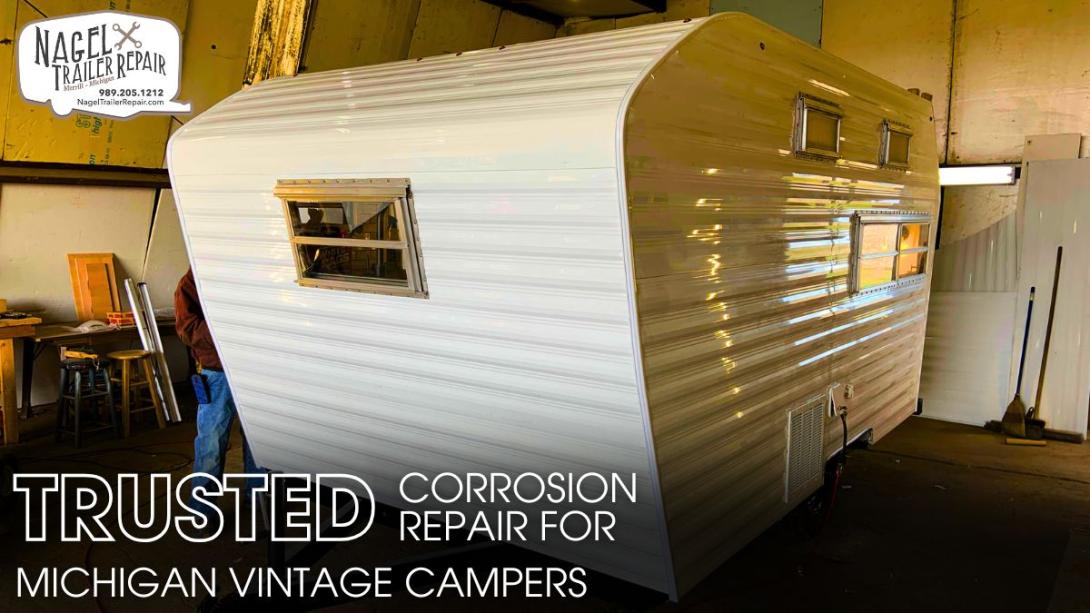
Michigan’s vintage campers hold timeless charm, but nothing threatens their beauty faster than hidden corrosion creeping through the frame, seams, and metal panels.
Left untreated, rust weakens structural components, compromises safety, and turns small repairs into costly restorations—especially in Michigan’s moisture-heavy, road-salt-prone climate.
In this guide, I’ll show you how trusted corrosion repair solutions protect your vintage camper, restore long-term durability, and keep your classic rolling safely through every Michigan adventure.
Why Corrosion Is a Big Threat?
Corrosion is one of the most destructive forces that vintage campers face, and it becomes even more aggressive in Michigan’s climate. Most older campers rely on steel frames, aluminum skins, metal fasteners, and sealants that naturally break down over the years. When these materials stay exposed to moisture, oxygen, and winter road salt, they begin to deteriorate quickly. What starts as a small rust spot can grow into a structural problem that affects towing safety and long-term durability.
Michigan’s environment accelerates this process. Lake-effect moisture, heavy snowfall, and dramatic temperature swings create constant opportunities for water to seep into cracks and begin oxidation. During winter travel, road salt sticks to the undercarriage and speeds up metal breakdown. When spring arrives, melting snow and humidity create ideal conditions for corrosion to spread even deeper.
If you’re planning vintage camper repair in Michigan, understanding how fast rust can advance helps you stay ahead of costly damage. Corrosion doesn’t just affect appearance—it weakens the frame, distorts load distribution, and increases the risk of unsafe towing behavior. For a vintage camper, corrosion is more than a cosmetic issue; it’s a threat to the camper’s structural integrity and the owner’s safety.
Signs Your Vintage Camper Has Rust:
Rust often starts in places you can’t easily see, which is why regular inspection matters. Catching early warning signs helps prevent the kind of structural deterioration that requires extensive—and expensive—repairs.
Look for clues such as:
- Paint lifting, bubbling, or flaking along seams
- Orange or reddish stains beneath windows or roof joints
- Rough, pitted, or scaly metal surfaces
- Musty or damp odors inside the camper
- Soft or sagging flooring near entry points
- Changes in towing stability or unusual creaking noises
Campers exposed to long Michigan winters show faster and more severe symptoms. Even when the exterior looks fine, the frame underneath may be quietly rusting away. This is a common discovery when owners bring their rigs in for camper repair, especially when the camper has been stored on grass or parked outdoors for long periods.
Handling issues are often the most overlooked signs of hidden corrosion. A rusty frame can shift or lose strength, causing the camper to sway, bounce unevenly, or place uneven pressure on the tires. These problems create a real safety concern during highway towing or emergency braking. Identifying the early symptoms helps you stop rust before it becomes a major hazard.
Common Corrosion Trouble Spots:
Vintage campers tend to rust in predictable locations, especially areas where water collects or protective coatings fail over time. Knowing these vulnerable spots helps you stay proactive and maintain a safer, stronger camper.
The frame is always the first place to inspect because it supports the entire structure. The tongue, axle mounts, and rear frame sections experience the most stress and exposure to moisture and road debris. If rust compromises any of these areas, the camper’s stability and towing performance suffer immediately.
Wheel wells are another problem area due to constant exposure to road spray—especially during Michigan’s salted winter months. Roof seams, corner joints, and window frames also deteriorate over time as old sealants lose flexibility and crack. Once these gaps open, water slips inside, causing corrosion beneath the exterior metal.
The lower exterior panels of a vintage trailer often trap moisture, and older insulation materials may hold dampness against the metal skin. Inside the camper, you may notice warped floors or soft wall panels caused by water intrusion from rusted seams or weakened metal.
Focus your inspections on areas such as:
- Tongue and hitch assembly
- Undercarriage cross-members
- Step brackets and entry door frames
- Roof edges, vent seams, and drip rails
- Bottom edge panels and wheel wells
These locations naturally collect moisture and road contaminants, so they tend to develop corrosion faster than other areas. A careful look at these problem spots helps you identify rust early and plan repairs before the damage spreads.
Proven Vintage Camper Repair Methods:
Effective corrosion repair goes beyond simply sanding down rusted areas. A professional restoration focuses on long-term strength, structural safety, and durable protection against future damage. Shops specializing in RV repair and vintage restorations use a detailed process to restore the camper correctly.
The repair begins with a complete inspection using tools that detect hidden moisture and internal rust damage. Once the rusted areas are identified, technicians remove all weakened or deteriorated metal. This might involve abrasive blasting, grinding, or mechanical stripping to expose solid material beneath the corrosion.
If the metal has lost significant thickness, the technician will cut out the damaged section and weld in a new steel plate or reinforcement. Skilled welders use techniques that ensure the repairs maintain the same strength and load-bearing capability as the original frame. This step is essential for safe traveling, especially for vintage campers with older steel structures.
After rebuilding damaged areas, the metal must be treated to prevent corrosion from returning. Rust converters neutralize any remaining oxidation, and high-quality epoxy primers seal the metal against moisture. Professional shops then apply industrial coatings or underbody sealants designed to withstand Michigan’s harsh weather conditions.
Many owners also choose upgrades during this process, such as:
- Heavy-duty epoxy undercoating
- Stainless-steel hardware replacements
- Improved seam sealing around weak points
- Enhanced drainage around roof and frame areas
- Additional corrosion-resistant coatings
These improvements give your vintage camper stronger long-term protection and help it remain sturdy for years of road adventures.
Choosing a Trusted Michigan Camper Repair Shop:
Finding the right expert is crucial because vintage campers require specialized knowledge that not every repair shop has. A trustworthy Michigan professional understands older construction methods, steel-to-aluminum compatibility, and proper restoration techniques that preserve both safety and authenticity.
A reliable repair provider will perform a thorough inspection and show you detailed photos of any rust issues they find. Clear communication helps you understand the severity of the damage and the steps needed to restore the camper correctly. Experienced shops that handle vintage restorations regularly have the tools and techniques needed to perform precise frame repairs and long-lasting corrosion protection.
Look for a professional who offers:
- Proven experience with vintage restorations
- Detailed corrosion assessments
- High-grade sealants and protective coatings
- Skilled metal fabrication and welding
- Transparent pricing and repair timelines
- Positive reviews from Michigan camper owners
Choosing the right specialist ensures your vintage camper repair in Michigan is done with care, precision, and long-lasting durability.
How to Prevent Future Rust?
Once your camper has been repaired, prevention becomes your most effective tool. Staying ahead of corrosion will protect your investment and keep your vintage rig ready for safe travels year after year.
Make seasonal maintenance a habit. Rinse the undercarriage after winter trips to remove salt and road chemicals. Inspect seams and joints regularly, resealing any areas that show cracks or gaps. Use a breathable cover during storage to block UV rays while allowing moisture to escape. Parking your camper on pavement or gravel also prevents moisture from accumulating underneath.
Create a simple annual routine such as:
- Washing and inspecting the undercarriage after winter
- Reapplying protective coatings every year or two
- Checking the roof and edges before heavy rain seasons
- Replacing cracked sealant along windows and vents
- Using interior moisture absorbers in humid months
- Examining the frame before long road trips
These small steps go a long way in safeguarding the structural integrity of your camper. With consistent attention, you can slow down corrosion dramatically and protect your vintage trailer from the elements.
The Role of Professional Maintenance:
Professional maintenance keeps your vintage camper safe, stable, and ready for travel. When experts handle corrosion repair, they inspect the frame, identify hidden rust, and use proper treatments that protect the metal long-term—something quick patch jobs can’t achieve. Their experience prevents small issues from becoming structural problems that affect towing safety. The same level of care matters for the suspension system.
A trained technician can spot worn bushings, cracked leaf springs, loose mounting points, or alignment issues that often go unnoticed. These parts directly affect how smoothly your trailer tows, how well it handles bumps, and how evenly it carries weight. Professional service ensures every component works together correctly, giving your vintage camper a safer, more reliable ride while preserving its long-term value.
Conclusion:
Corrosion may be one of the biggest challenges for older campers, but with proper repair techniques and ongoing maintenance, your classic can stay strong for years to come. Whether you’re restoring a family treasure or preparing for your next adventure across the state, working with trusted professionals ensures a safe and dependable result. With regular inspections and quality repairs, vintage camper repair in Michigan becomes a smooth and rewarding way to preserve both the beauty and the legacy of your beloved camper.