

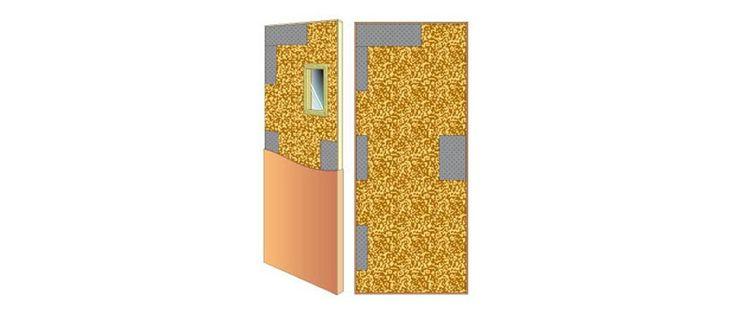
In our increasingly noisy world, acoustic doors serve a vital role: controlling sound transmission between rooms. Unlike regular doors, acoustic doors are designed to block or absorb noise, preserving privacy and reducing distractions. They are common in offices, studios, hospitals, and meeting rooms where sound insulation is critical.
The Physics Behind Sound Control
An acoustic door’s performance depends on basic acoustic principles and smart engineering:
- Mass and density: Heavier or denser materials resist sound transmission more effectively. In the STC (Sound Transmission Class) rating system, each point roughly corresponds to decibels of attenuation.
- Sealing and airtightness: Even a small gap lets sound leak through. Acoustic doors use high-quality seals, automatic door sweeps, and compression gasketing to close gaps around frames.
- Damping and absorption: Internal layers (like mineral wool or specialised cores) absorb residual energy, converting it to heat. This reduces reverberation or echo through the door.
- Decoupling and isolation: Some designs isolate door skins from the frame or use composite layers that prevent vibration transmission through rigid connections.
What STC Ratings Tell Us
The STC (Sound Transmission Class) rating is a key metric used to compare how well doors block airborne sound. A higher STC means better sound blocking. For example:
- STC 35 may muffle loud speech to an unintelligible murmur
- STC 45 or 50 handles music or aggressive noise
- Beyond STC 60 approaches very high sound insulation, suitable for studios or labs
When specifying acoustic doors, choose a target STC level based on the noise sources and privacy needs in the adjoining spaces.
Typical Construction Features
Acoustic doors incorporate several design elements to enhance their effectiveness:
- Solid or composite cores (e.g. mineral wool, dense fibreglass, multi-layer panels)
- Double or triple seals around the perimeter
- Automatic bottom sweeps that seal against the threshold as the door closes
- Laminated or acoustic glazing for doors with windows
- Heavy, rigid frames with vibration-resistant mounting
Key Applications and Benefits
Acoustic doors are especially useful in environments such as:
- Broadcast and recording studios
- Conference and meeting rooms
- Healthcare facilities (privacy between rooms)
- Hotels (sound isolation between guest rooms)
- Executive offices or boardrooms
Benefits they offer include:
- Enhanced privacy and confidentiality
- Reduced noise distractions, improving concentration
- Compliance with building acoustic standards
- Better occupant comfort and perception of quality
Challenges and Design Considerations
Acoustic doors are more complex than ordinary doors. Some challenges include:
- Added weight that demands stronger hardware and support
- Precisely aligned frames to maintain seal integrity
- Compatibility with fire ratings, egress codes, and aesthetics
Bottom-Line
Acoustic doors represent an intentional investment in comfort, productivity, and privacy. Their success lies in combining mass, damping, sealing, and isolation to stop noise from entering or escaping a space.