

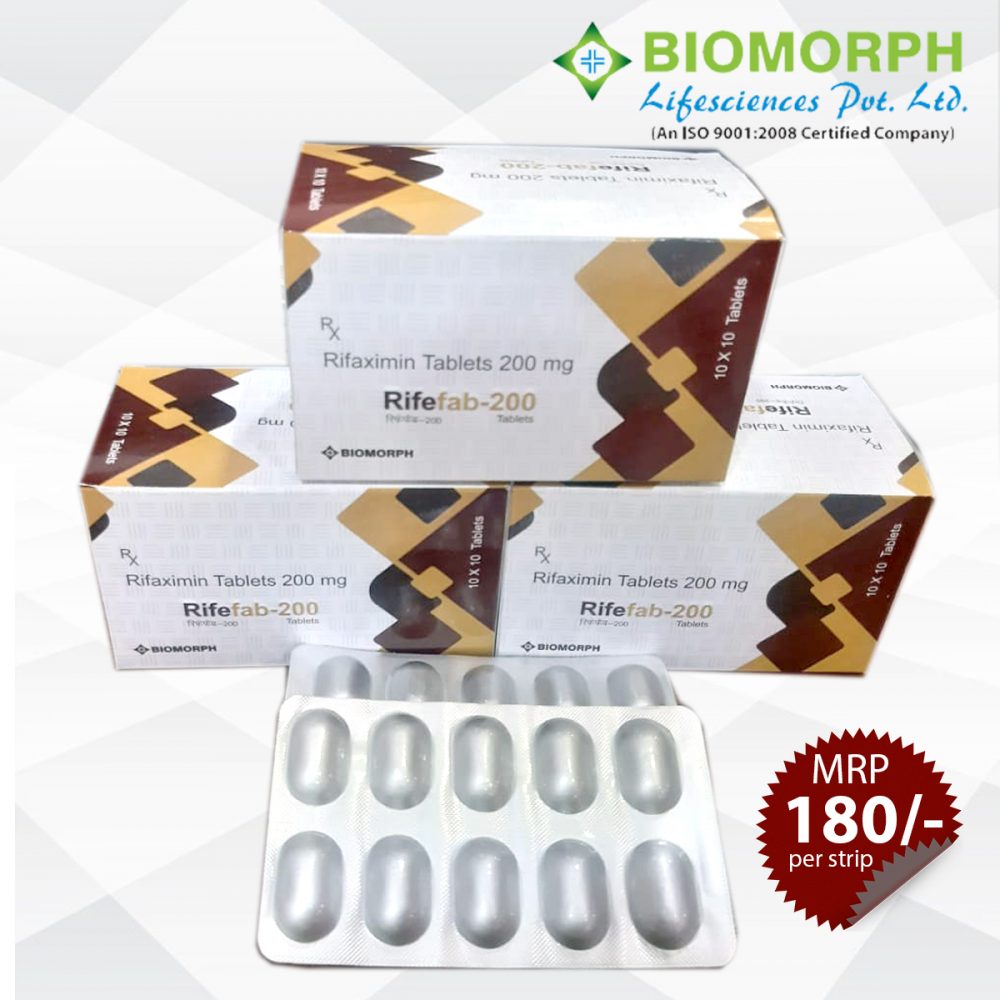
Introduction to Rifefab-200 (Rifaximin Tablets 200 mg)
Rifefab-200, containing Rifaximin 200 mg as the active ingredient, is a highly effective antibiotic specifically designed to act within the gastrointestinal tract. Unlike conventional antibiotics that are absorbed into the bloodstream, Rifaximin works locally in the intestines, offering targeted action against harmful bacteria. This unique characteristic makes Rifefab-200 particularly valuable in the management of infections and conditions linked to the digestive system. Manufactured in WHO-GMP certified facilities, Rifefab-200 ensures the highest standards of safety, efficacy, and quality for patients in need of reliable therapy.
Composition and Dosage Information
Each tablet of Rifefab-200 contains Rifaximin 200 mg, an oral formulation known for its minimal systemic absorption. The dosage and treatment duration are tailored according to the patient’s condition, age, and overall health status. Generally, the tablets are taken orally with water, either before or after meals. Physicians recommend strict adherence to prescribed dosages to achieve maximum therapeutic results. As an antibiotic, it is important that Rifefab-200 is taken for the full course of treatment to prevent bacterial resistance and recurrence of infection.
Mechanism of Action
Rifaximin, the active component of Rifefab-200, belongs to the rifamycin group of antibiotics. It acts by binding to the bacterial enzyme RNA polymerase, thereby inhibiting the synthesis of bacterial RNA. This action disrupts bacterial growth and multiplication, effectively eliminating harmful bacteria in the intestines. Since the medicine remains largely unabsorbed in the bloodstream, its effects are concentrated in the gastrointestinal tract. This localized action not only enhances its effectiveness against gut-related infections but also minimizes the risk of systemic side effects often associated with other antibiotics.
Indications and Therapeutic Uses
Rifefab-200 is widely prescribed for a range of gastrointestinal disorders. One of its primary indications is the treatment of traveler’s diarrhea caused by non-invasive strains of Escherichia coli. It helps reduce the duration and severity of diarrhea, allowing patients to recover more quickly. Rifefab-200 is also used as an adjunct therapy in the management of hepatic encephalopathy, a condition where toxins build up in the bloodstream due to liver dysfunction. By controlling bacterial overgrowth in the gut, it reduces the production of ammonia and other toxins, improving brain function and patient well-being.
Another significant use of Rifefab-200 is in the management of irritable bowel syndrome with diarrhea (IBS-D). Many patients with IBS-D experience relief in abdominal discomfort, bloating, and frequent loose stools with the use of Rifaximin. Its broad-spectrum action against intestinal bacteria makes it a versatile and dependable solution for multiple gastrointestinal problems.
Benefits and Key Features of Rifefab-200
Rifefab-200 offers several advantages over traditional antibiotics. Its local action in the intestines reduces the risk of systemic side effects, making it a safer option for long-term therapy in certain conditions. The medicine is effective against a wide range of intestinal pathogens, ensuring rapid relief from symptoms such as diarrhea and bloating. Patients often experience improved digestive comfort and overall quality of life when using Rifefab-200 under medical supervision.
Another key benefit is its minimal interaction with other medications, which allows it to be prescribed more safely to patients already on complex treatment regimens. The convenient tablet form ensures ease of use, while WHO-GMP certified manufacturing guarantees global quality standards.
Safety, Precautions, and Storage
Like all medicines, Rifefab-200 should be taken under the supervision of a healthcare professional. Although generally well tolerated, some patients may experience mild side effects such as nausea, abdominal pain, bloating, dizziness, or headache. These effects are usually temporary and subside with continued use. Patients with severe liver impairment or known hypersensitivity to rifamycin derivatives should avoid the use of Rifaximin.
It is important to inform the doctor about any ongoing medications or underlying health conditions to avoid drug interactions or complications. Rifefab-200 should be stored in a cool, dry place away from heat and direct sunlight. The tablets should be kept out of reach of children to prevent accidental ingestion.
Conclusion
Rifefab-200 (Rifaximin Tablets 200 mg) is a trusted and effective antibiotic that provides targeted relief for gastrointestinal infections. With its unique mechanism of local action, it ensures maximum efficacy in the intestines while minimizing systemic side effects. Its proven benefits in the treatment of traveler’s diarrhea, hepatic encephalopathy, and IBS-D make it an essential therapy in modern gastroenterology.
By combining safety, quality, and reliable therapeutic outcomes, Rifefab-200 stands out as a dependable choice for both patients and healthcare providers. For individuals struggling with gastrointestinal infections and related conditions, Rifefab-200 offers not just symptom relief but also improved overall well-being and comfort.