
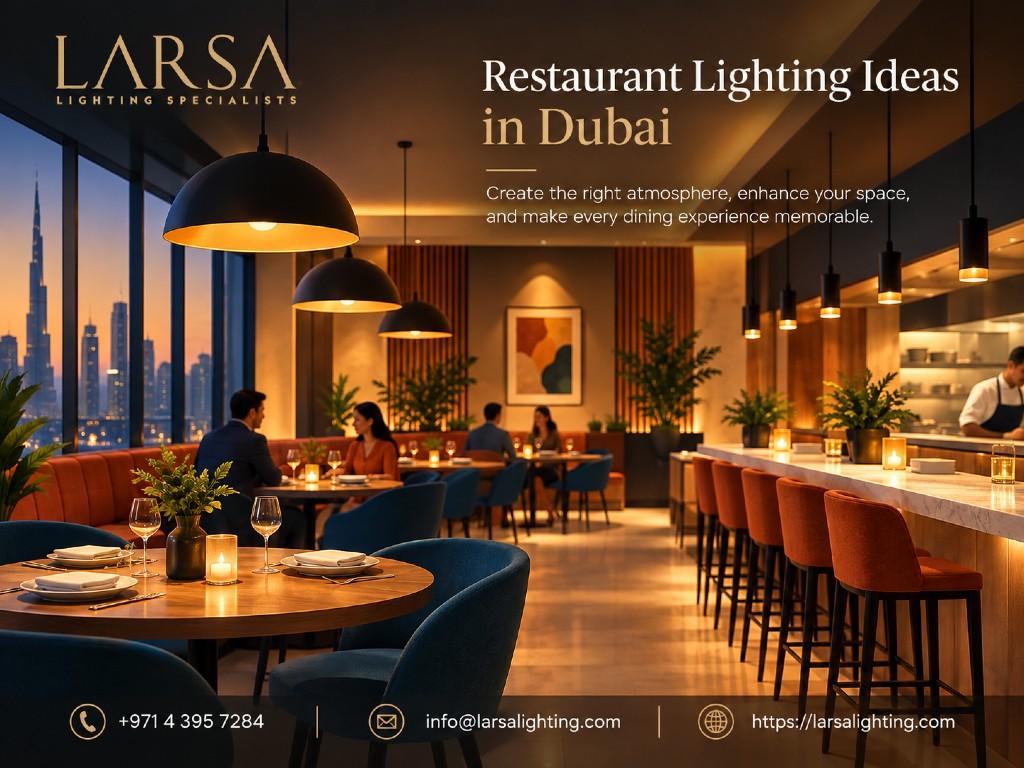
A restaurant can have beautiful interiors, comfortable seating, carefully selected materials, and an inviting menu, yet still feel incomplete when its lighting is poorly planned. Effective Restaurant Lighting Ideas in Dubai should do more than illuminate the room. They can highlight architectural details, enhance food presentation, support staff activities, and establish an atmosphere that suits the dining experience.
For hospitality projects, lighting works best when treated as a coordinated system rather than a collection of individual fixtures. Pendant lights, recessed luminaires, concealed LED strips, track spotlights, and emergency lighting may perform different functions, but together they should create a consistent experience from the entrance and waiting area to the dining room, restrooms, bar, kitchen, and outdoor spaces.
Start With the Restaurant’s Concept and Operation
Every restaurant has different lighting requirements. A fast-casual venue may need clear, energetic illumination that supports quick service and easy navigation. A fine-dining restaurant may benefit from softer ambient lighting, controlled contrast, and focused illumination around individual tables. Cafés that operate throughout the day need a scheme that can transition naturally from bright daytime conditions to a more relaxed evening atmosphere.
Before selecting fixtures, consider the restaurant’s operating hours, seating arrangement, ceiling height, menu presentation, daylight exposure, service style, and interior design. Decorative elements should complement these practical requirements.
Lighting should also establish a visual hierarchy. A feature bar, open kitchen, host desk, artwork, display shelf, or architectural wall may deserve greater emphasis than surrounding areas. Carefully directed light can guide attention without making the restaurant feel overly theatrical.
Create Layers of Light
One of the most useful Restaurant Lighting Ideas in Dubai is to combine multiple lighting layers. A single fixture type rarely provides sufficient flexibility for every activity and time of day.
Ambient Lighting for Overall Comfort
Ambient lighting provides general visibility and helps guests and staff move through the space comfortably. Recessed downlights, concealed coves, linear luminaires, and wall-mounted fixtures can all contribute to this layer.
The objective should not simply be to achieve a particular brightness level. The light should feel balanced and comfortable, without creating unnecessary glare or excessive brightness. Softly distributed light can also make dining areas feel more spacious.
Table Lighting for Intimacy
Dining tables need enough illumination for guests to read menus, appreciate food presentation, and interact comfortably. Pendant fixtures, adjustable downlights, and carefully positioned wall lighting can create focused pools of light around seating areas.
Fixture height is particularly important. A pendant that hangs too low may obstruct views and conversations, while one positioned too high can lose its visual impact. For flexible seating arrangements, adjustable or track-mounted fixtures can offer greater adaptability.
Accent Lighting for Interior Features
Accent lighting adds depth and directs attention toward selected design elements. It can highlight artwork, textured walls, shelving, architectural niches, bottle displays, or decorative materials.
Precise aiming is essential. An incorrectly positioned spotlight can produce unwanted shadows, uneven brightness, or glare for diners. Beam angle, shielding, fixture position, and the reflectance of the illuminated surface should all be considered during specification.
Task Lighting for Staff Areas
Restaurant staff require reliable lighting at host desks, cashier counters, bars, kitchens, preparation areas, and service stations. These spaces often need stronger and more consistent illumination than guest seating areas.
Task lighting should therefore be planned separately from the restaurant’s atmospheric lighting. Independent circuits and dimming zones can allow a bar to maintain a subdued appearance for guests while providing sufficient illumination for staff working behind the counter.
Select Color Temperature and Color Quality Carefully
Color temperature has a strong influence on the atmosphere of a restaurant. Warm white light around 2700K can create a comfortable and intimate environment, while 3000K may provide a slightly cleaner appearance while remaining welcoming. Cooler temperatures may be appropriate for selected service areas but can feel less relaxing when used extensively in dining spaces.
Color rendering is also important. High-quality LED sources with a CRI of 90 or higher can render food, finishes, fabrics, wood, artwork, and skin tones more naturally. This becomes particularly relevant in restaurants where presentation and material quality are important parts of the guest experience.
Contrast should also be carefully managed. Some variation between bright and subdued areas creates depth and visual interest, but excessive contrast can make circulation difficult and create visual discomfort.
Control Glare in Dining Areas
Glare is one of the most common problems in poorly planned restaurant lighting. Exposed LED points, unshielded lamps, reflective surfaces, and badly aimed spotlights can place bright sources directly within a guest’s field of view.
Recessed sources, deep baffles, appropriate shielding, diffusers, and precise optics can help control this issue. Designers should pay particular attention to polished stone, mirrors, glass, glossy furniture, and open kitchens, as these surfaces can reflect light toward diners.
Daylight should also be considered. Large windows may provide attractive natural illumination during the day but create reflections or uneven brightness after sunset. Window treatments and lighting controls can help the interior transition smoothly between changing conditions.
Introduce Flexible Lighting Controls
Restaurants operate through different stages of the day. Breakfast, lunch, dinner, private events, cleaning, and closing may all require different lighting conditions. Scene-based controls allow staff to change lighting levels consistently without adjusting every fixture individually.
Dimming compatibility should be checked during the specification stage. LED fixtures, drivers, and control systems need to work together correctly to avoid flickering, color shifts, or inconsistent performance.
For larger hospitality projects, centralized controls can support scheduled scenes and energy management. Smaller restaurants may benefit from straightforward zoned dimming. The appropriate solution depends on the restaurant’s size, operating model, maintenance requirements, and desired level of automation.
Balance Decorative and Technical Lighting
Decorative fixtures can become an important part of a restaurant’s visual identity. Pendant clusters, chandeliers, wall lights, and sculptural fixtures can define entrances, bars, or dining zones.
However, decorative fixtures should not always be expected to provide all the required illumination. Combining them with discreet architectural lighting allows the decorative elements to create visual character while recessed, linear, or concealed fixtures provide functional light.
Material selection should also be reviewed under the intended lighting conditions. Brass, smoked glass, fabric, black metal, stone, and other finishes can look significantly different under warm LEDs compared with daylight. Reviewing samples under proposed color temperatures can help avoid unexpected results after installation.
Consider Maintenance and Long-Term Performance
Good restaurant lighting should remain effective beyond opening day. Fixtures installed at high ceilings or difficult-to-access locations should be selected with maintenance requirements in mind. LED lifespan is important, but drivers, optics, controls, heat management, and cleaning access can also influence long-term performance.
Emergency lighting and illuminated exit signage should be incorporated into the design from the beginning. Integrating these requirements early can reduce visual disruption and prevent late changes to the lighting layout.
Energy efficiency can be achieved through appropriate LED technology, zoning, daylight response, occupancy controls in non-public areas, and well-planned operating schedules. The objective should be to provide the right amount of light where it is needed rather than simply minimizing the installed wattage.
Bringing the Lighting Concept Together
Effective Restaurant Lighting Ideas in Dubai combine atmosphere, functionality, comfort, and flexibility. From table illumination and accent lighting to glare control and smart scenes, every element should support both the restaurant’s design concept and its daily operation.
Larsa Lighting approaches hospitality lighting as a coordinated design process, where decorative fixtures, architectural illumination, controls, materials, and operational requirements work together. When these elements are considered from the early planning stages, a restaurant can transition naturally from daytime service to evening dining while maintaining a consistent and inviting character.