

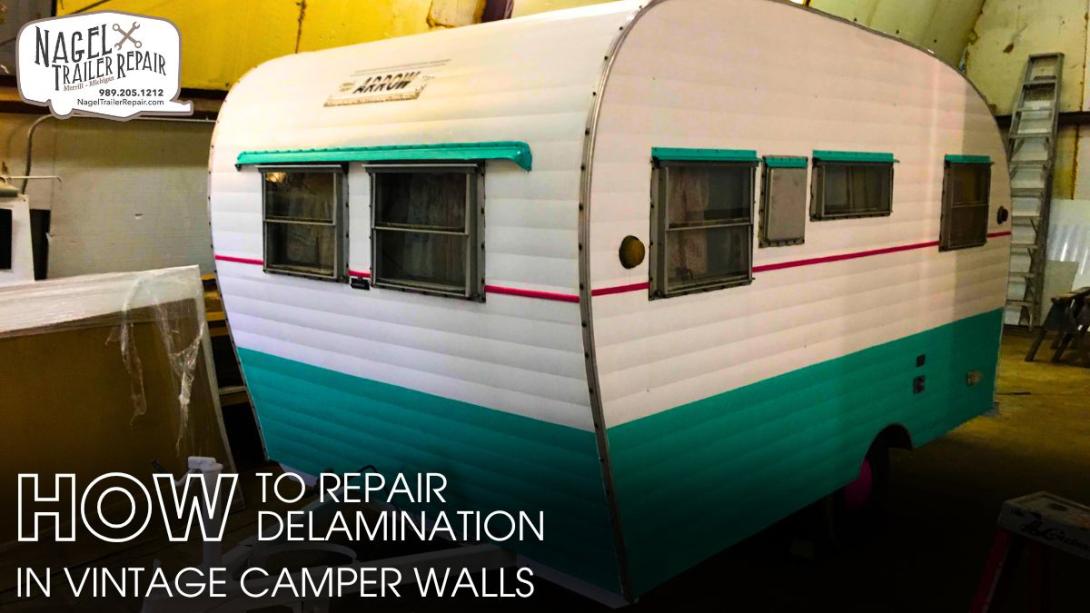
I still remember the first time I discovered delamination on my old ’72 Shasta. The side panel near the dinette looked just a little “off”—a tiny ripple that I almost ignored. Two weeks later, it had spread halfway down the wall. That’s when I learned how sneaky water damage can be. Living in Michigan, where damp air is a constant companion, makes this even trickier for those of us doing Vintage Camper Repair Michigan projects.
The fix wasn’t easy, but it was worth it. I stripped off the trim, peeled the skin back, and dried the soft plywood underneath. Then, I carefully injected epoxy, clamped it tight, and waited a full two days before touching it again. When I finally reattached everything, it looked like new.
Now I inspect my camper every season—roof seams, window edges, and corners especially. Those tiny gaps invite water in, and once it’s there, delamination starts quietly.
In this guide, we have discussed how to detect and repair this issue before it becomes serious. Whether you’re a weekend traveler or a full-time restorer, learning to handle delamination keeps your vintage camper alive for decades. Each repair is more than maintenance—it’s a way of preserving history through Vintage Camper Repair Michigan craftsmanship.