

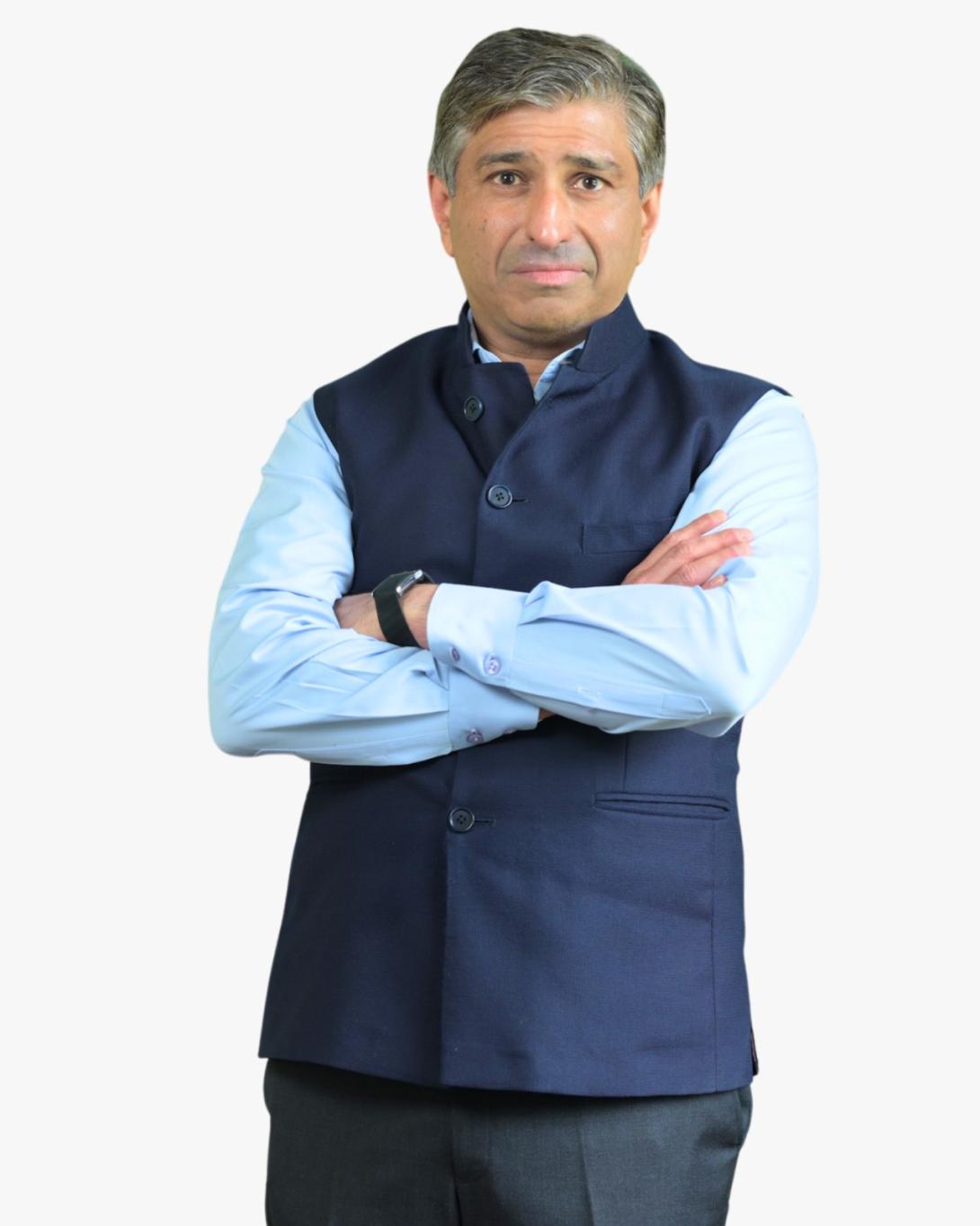
For over a decade, Ratul Puri, Chairman of Hindustan Power has carried India's energy sector conversation onto one of the world's most influential stages - the World Economic Forum. As a Young Global Leader and an active WEF partner, Ratul Puri has used this platform not just to speak for his own company, but to represent the broader ambitions and constraints of Indian industry as it navigates a global energy transition that is being written in real time.
Global forums like Davos can often feel distant from the on-ground realities of infrastructure building in emerging markets. But he has consistently used his seat at the table to bridge that gap - translating the practical, execution-level challenges of scaling clean energy in India into a language that resonates with global policymakers, investors, and industry peers. It is this ability to move fluently between boardroom detail and big-picture policy that has made Ratul Puri a recurring voice at WEF engagements over the years.
A Track Record of Global Engagement
In 2016, Ratul Puri Chairman led the discussion on climate resilience at the World Economic Forum - a moment that reflected India's growing role in shaping global consensus on how emerging economies balance growth with decarbonisation. It was not a one-off appearance. He has remained an engaged partner with the Forum in the years since, part of a small cohort of Indian industry leaders who show up consistently rather than episodically.
That consistency matters. Global policy conversations on energy are rarely settled in a single session - they evolve over years of dialogue, trust-building, and repeated engagement. By returning to the WEF platform year after year, Puri has been able to build credibility as a voice that understands both the aspirations and the constraints shaping India's energy sector, rather than someone parachuting in with a single talking point.
A Message Rooted in Realism
What comes through most clearly in his WEF engagements is a consistent, grounded message: India cannot simply import the energy transition playbooks written for developed economies. A nation of India's scale, energy demand, and economic aspirations needs its own transition pathway - one that accounts for affordability, grid readiness, financing access, and energy security for over a billion people, alongside the push toward cleaner sources.
This is a theme Ratul Puri has returned to repeatedly across different platforms, not just at WEF. It reflects a broader philosophy: that the global climate conversation only becomes actionable when it is grounded in the operational realities of emerging markets, not just the ambitions of developed ones. His contribution to these forums has often been to inject that operational realism into rooms where it can otherwise be missing.
Connecting Global Dialogue to Domestic Policy
Ratul Puri's international engagement does not exist in isolation — it runs parallel to, and is informed by, his domestic policy work. As Chairman of the Power Committee at CII – Northern Region, Ratul Puri has pushed for financing structures, regulatory clarity, and grid infrastructure that make India's renewable energy targets achievable rather than merely aspirational. He has also co-chaired the Energy track at the India National Strategy Day, driving conversations on innovative financing models for the sector - a recurring thread in how he frames India's energy story to international audiences as well.
This back-and-forth between domestic policy engagement and global platform representation is, in many ways, what gives Puri's WEF contributions their credibility. He is not simply commenting on India's energy transition from the outside - he is actively shaping the financing conversations, regulatory dialogues, and industry positions that determine how that transition unfolds on the ground.
Why This Matters
India's energy transition is not a side conversation to its economic growth story — it is central to it. As the country works toward its 2030 non-fossil fuel capacity targets, the industry voices that get heard on global platforms like the World Economic Forum play a real role in shaping how international capital, policy support, and partnerships flow toward Indian infrastructure.
By showing up consistently at Davos and in WEF working groups over the years, Ratul Puri has positioned himself as one of the relatively few Indian industry leaders translating ground-level execution challenges into the global policy dialogue - and, in doing so, has helped keep India's energy transition narrative grounded in realism rather than rhetoric.
About Ratul Puri
Ratul Puri is the Chairman of Hindustan Power, an integrated power generation company with a strong presence in renewable and transitional energy generation. Over the years, Ratul Puri has been involved in the development of large-scale energy infrastructure projects that support India’s growing power requirements and its transition toward cleaner energy sources.