

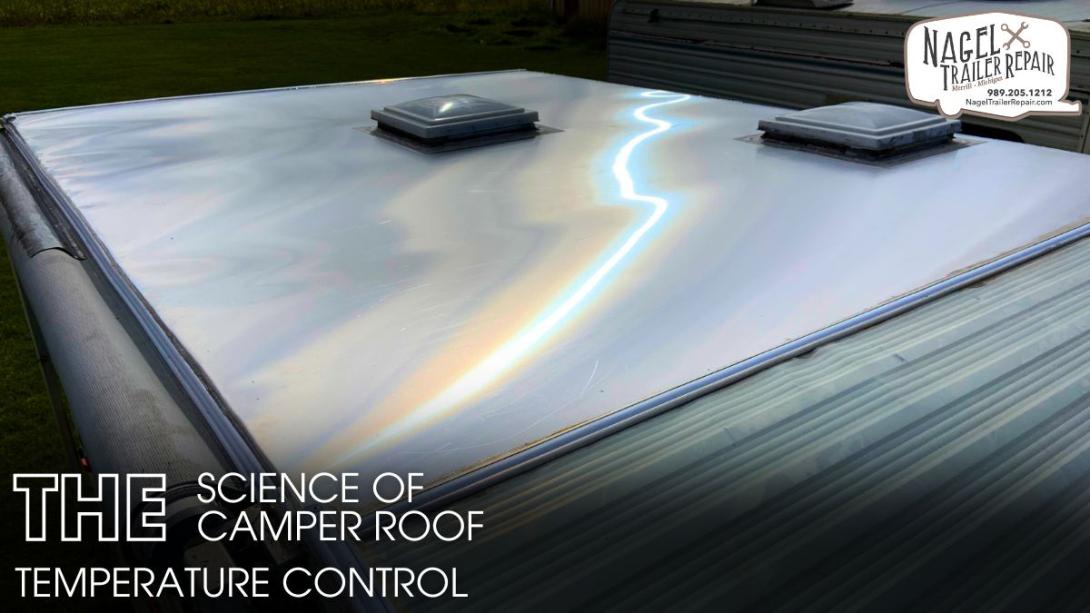
A camper roof does more than shield you from rain — it’s a complex temperature-regulating system. Every beam of sunlight that hits your roof creates heat energy that must be managed. The materials, angles, and sealants used all influence how much of that energy enters your living space. The goal of professional camper roof sealing Michigan services is to create a thermal barrier strong enough to withstand Michigan’s intense summers and frigid winters.
Without sealing, heat seeps into cracks and weak points, undermining insulation performance. Over time, these gaps expand and allow more heat to enter or escape, forcing your air conditioning or heating system to work harder. Sealants made for camper roofs contain UV inhibitors and reflective additives that help bounce sunlight away while keeping the roof watertight.
A properly sealed roof can cut energy use by up to 20%, reduce condensation inside, and extend the roof’s lifespan by years. It’s a scientific yet practical solution that ensures comfort and durability.
In this guide, we have discussed how factors like heat conduction, radiation, and airflow all contribute to roof temperature. With the right sealing and coating system, your camper remains efficient, quieter, and far more resilient to temperature fluctuations.