
In the world of Mechanical Engineering, the lines between Product Design and Industrial Design often blur. However, for an Engineering Consultant, distinguishing the two is the difference between a functional prototype and a profitable, mass-produced asset.
1. The Prototype: Product Design
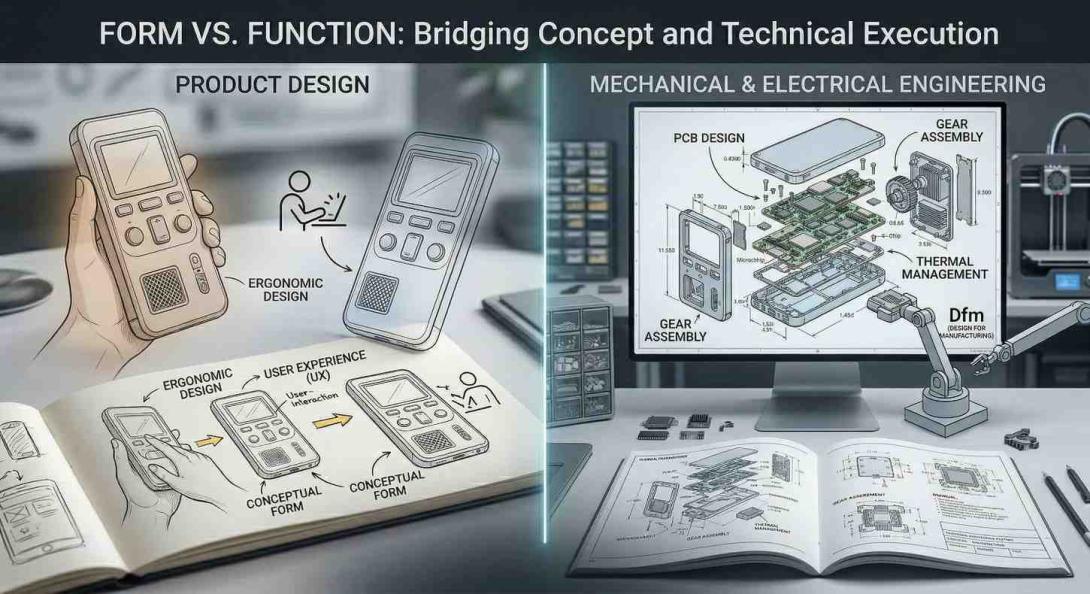
Product design is the conceptual phase where an idea takes physical form. It’s about solving the "User Problem."
- Focus: Aesthetics, ergonomics, and User Experience (UX).
- Methodology: Transitions from sketches to CAD Rendering to validate the concept.
- Output: Innovative, unique designs that prioritize how a user interacts with the product.
2. The Production Logic: Industrial Design
Industrial Design (or Mechanical Design Services) is the bridge to the factory floor. It’s about solving the "Manufacturing Problem."
- Focus: Mass production, material selection, and assembly efficiency.
- Methodology: Using 3D Modeling Services to ensure parts can be ejected from molds and assembled by machines.
- Output: Detailed, "manufacturer-ready" data accounting for every screw, microchip, and tolerance.
Comparison for Engineering Firms
Primary Goal
Innovation & Appeal
Manufacturability & Scale
Key Metric
User Satisfaction
Production Cost-Efficiency
Technical Focus
Form & Function
DFM (Design for Manufacturing)
The Bottom Line
A Product Designer makes a product worth buying; an Industrial Design Company makes it possible to build at a profit. For a successful launch, your engineering workflow must integrate both: one to capture the market's heart, and the other to satisfy the assembly line's requirements.
In your experience, what is the biggest challenge when transitioning a conceptual product design into a manufacturer-ready mechanical model?
Read More: Difference between product design and industrial design services