

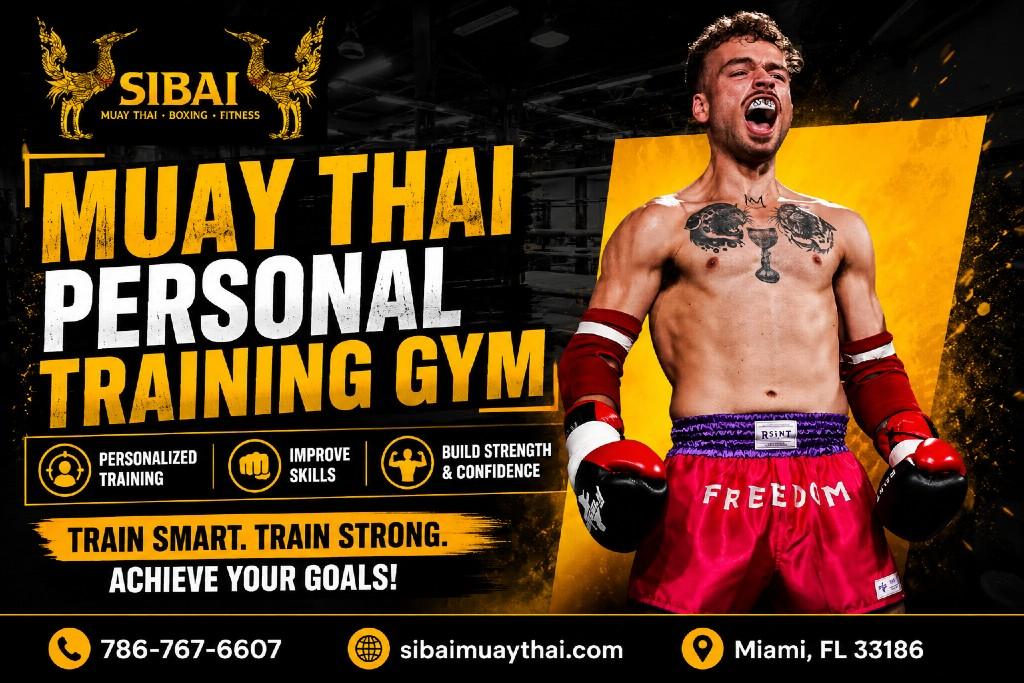
Building strength and improving fitness does not always require a traditional weightlifting routine. Muay Thai combines striking techniques, movement, conditioning, and bodyweight exercises to create a well-rounded approach to physical training. For people who prefer structured coaching and individualized attention, a Muay Thai Personal Training Gym can provide a focused environment for developing strength, endurance, coordination, and overall fitness.
How Muay Thai Supports Strength and Fitness
Muay Thai training involves repeated movements such as punches, kicks, knee strikes, defensive actions, footwork, and conditioning drills. These movements engage multiple muscle groups while challenging the cardiovascular system.
Regular training can help develop:
- Functional strength: Striking and movement exercises engage the legs, core, shoulders, arms, and back.
- Cardiovascular endurance: Pad work, combinations, and conditioning drills can keep the heart rate elevated.
- Muscular endurance: Repeated techniques require muscles to work continuously over a training session.
- Balance and coordination: Footwork and striking combinations encourage better body control.
- Mobility and flexibility: Warm-ups, movement drills, and technique practice can support a wider range of motion.
- Core stability: Rotational movements involved in punches and kicks require controlled core engagement.
Because sessions can combine technical and conditioning elements, Muay Thai can be adapted for different fitness objectives and experience levels.
Benefits of One-on-One Muay Thai Training
A major difference between group training and personal coaching is the level of individual attention. In a Muay Thai Personal Training Gym, sessions can be structured around a person's current fitness level, goals, and technical ability.
For someone focused primarily on fitness, a trainer may emphasize conditioning, strength-based movements, pad work, and sustained combinations. Someone interested in improving technique may spend more time working on stance, footwork, striking mechanics, defense, and timing.
Individual coaching can also make it easier to identify areas that need improvement. Trainers can provide immediate feedback and adjust exercises when a movement is too difficult or when additional challenge is appropriate.
Training for Different Fitness Goals
Muay Thai personal training does not have to follow one standard routine. Programs can be adjusted depending on what a person wants to accomplish.
Building Strength
Strength-focused sessions can incorporate bodyweight movements, resistance exercises, controlled striking drills, and conditioning work. The objective is to improve physical capacity while maintaining proper technique.
Improving Endurance
Combination drills, pad rounds, footwork, and interval-style conditioning can help develop stamina. Training intensity can be gradually adjusted as fitness improves.
Supporting Weight Management
Muay Thai sessions can provide a physically demanding workout that combines cardiovascular activity with full-body movement. When paired with appropriate nutrition and consistent activity, this type of training can support healthy weight-management goals.
Developing Technique
Fitness and technical development can work together. Learning proper punching, kicking, knee, defensive, and footwork mechanics allows participants to build skills while staying physically active.
The Importance of Personalized Coaching
Not everyone begins with the same fitness level. A beginner may need more time to learn basic movements, while an experienced athlete may require more advanced combinations and conditioning.
Personalized coaching allows training volume, intensity, and technical difficulty to be adjusted accordingly. This can make sessions more practical and help participants progress without unnecessarily increasing training demands too quickly.
At Sibai Muay Thai, personal training is designed around individual objectives, including general fitness, technical development, self-defense, and competition preparation. Head Coach Ziad Sibai brings competitive and professional training experience to individual coaching sessions, with instruction adapted to different levels.
What to Expect From a Personal Training Session
A typical session may begin with a warm-up and movement preparation before progressing into technique practice, pad work, conditioning, or strength exercises. The exact structure depends on the participant's goals and experience.
A session might include:
- Warm-up and mobility exercises
- Stance and footwork practice
- Punch, kick, knee, or defensive techniques
- Pad or bag work
- Strength and conditioning exercises
- Technique review and feedback
- Cool-down and recovery work
This combination can make each session both skill-oriented and physically challenging.
Safety and Progression Matter
Strength and fitness improvements generally come from consistent training rather than trying to maximize intensity during every session. Proper technique, suitable training volume, recovery, and gradual progression are important parts of an effective program.
A qualified coach can also modify exercises according to a participant's abilities. Anyone returning from an injury or dealing with a physical limitation should discuss appropriate exercise choices with a qualified healthcare professional before beginning a demanding training program.
Why Choose a Muay Thai Personal Training Gym?
For people seeking a more individualized approach to fitness, a Muay Thai Personal Training Gym can combine technical instruction with strength and conditioning in a single training environment. One-on-one coaching can provide structure, immediate feedback, and a program that changes as fitness and skills develop.
Whether the goal is improving strength, increasing endurance, learning Muay Thai fundamentals, or preparing for competition, personalized training offers a flexible way to work toward measurable fitness objectives.
FAQs
Is Muay Thai personal training suitable for beginners?
Yes. Beginners can start with fundamental movements and gradually progress as their fitness, coordination, and technique improve.
Can Muay Thai personal training build strength?
Yes. Muay Thai uses the legs, core, upper body, and stabilizing muscles through striking, movement, bodyweight exercises, and conditioning drills.
How often should I do personal Muay Thai training?
The ideal frequency depends on fitness level, goals, recovery, and schedule. A trainer can help establish an appropriate routine.
Is Muay Thai only for people who want to fight?
No. Many people train Muay Thai for fitness, strength, coordination, confidence, conditioning, or self-defense without pursuing competition.
What does Sibai Muay Thai offer?
Sibai Muay Thai offers individualized training that can focus on fitness, Muay Thai technique, competition preparation, and other personal goals.