
In today’s mobile-first world, user expectations for personalized and relevant experiences are higher than ever. With rising competition in app marketplaces and the diminishing effectiveness of traditional advertising due to privacy restrictions, developers and businesses must find innovative solutions to improve user engagement and monetization. Enter machine learning (ML) — the technology that powers recommendation engines, dynamic pricing, user segmentation, and predictive analytics.
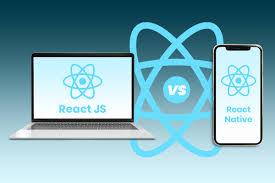
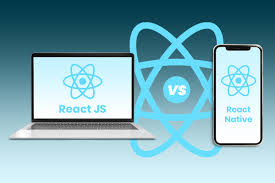
But what happens when you merge machine learning capabilities with the flexibility and efficiency of React Native App Development? You get a powerful duo capable of delivering smarter, more engaging in-app ads that not only respect privacy but also drive better ROI.
Why In-App Advertising Needs a Smart Upgrade
The shift toward privacy-first ecosystems — especially with Apple’s App Tracking Transparency (ATT) and Google’s upcoming Privacy Sandbox — means marketers and developers are forced to rethink how user data is used. Traditional targeting methods powered by third-party data are quickly becoming obsolete.
However, machine learning offers a privacy-respecting alternative. By analyzing first-party data — data collected directly from users within the app — ML algorithms can uncover deep insights about user preferences, behaviors, and engagement patterns. These insights can then be used to deliver highly relevant, context-aware in-app ads without breaching user trust.
Benefits of Using Machine Learning
React Native’s modular, cross-platform architecture makes it easier to integrate AI/ML tools across both Android and iOS from a single codebase. This ensures consistency in ad targeting logic and user experience. Here are some core benefits:
- Real-time personalization: Display ads based on current user behavior, such as browsing or purchase history.
- Predictive targeting: Forecast what a user might be interested in next and serve corresponding ads.
- Ad fatigue reduction: ML models can limit the frequency of repeated ads, enhancing user satisfaction.
- Click-through rate (CTR) optimization: Algorithms can test and learn which creatives and formats work best for specific user segments.
Top Machine Learning Libraries Compatible with React Native
To successfully implement ML within a React Native app, you’ll need robust libraries that offer native bindings or lightweight integration. Some popular choices include:
- TensorFlow.js: A flexible library for running ML models in JavaScript. You can train or use pre-trained models directly within your React Native app.
- Core ML (via bridging): For iOS-specific features, Core ML can be integrated using a native bridge to handle intensive on-device processing.
- Python Flask API (Backend Integration): Train ML models in Python and serve them via an API, allowing React Native apps to send requests and receive predictions.
Each of these tools can help enable features like sentiment analysis, recommendation engines, or contextual ad suggestions based on user interactions.
Use Case: Dynamic Ad Targeting Based on User Behavior
Imagine a mobile shopping app developed using React Native. Through machine learning, the app can analyze how often a user browses a particular category — say, sports shoes — and when they are most active.
Instead of showing random banner ads, the app can dynamically present carousel ads for sports shoes at peak engagement times. Not only does this make ads less intrusive, but it also significantly increases the chance of user interaction.
Further, by implementing reinforcement learning algorithms, the app can continuously improve its ad delivery based on feedback like clicks, scrolls, or even time spent viewing an ad.
Challenges to Consider
Of course, integrating machine learning in mobile apps isn’t without its hurdles. Some challenges you may face include:
- Model size and performance: ML models can be bulky. You need to ensure they don’t slow down the app or drain device resources.
- Privacy compliance: Even with first-party data, developers must implement data collection and processing ethically and legally.
- Offline functionality: Many apps operate in environments with limited internet access. On-device inference becomes critical in these scenarios.
- Skill requirements: While React Native developers may not be data scientists, collaboration between dev and data teams becomes essential.
Fortunately, the React Native ecosystem and the broader developer community offer a wealth of plugins, guides, and cloud services to help overcome these obstacles.
The Future of Smarter In-App Ads with React Native and ML
Looking ahead, machine learning will continue to transform mobile advertising. From automated creative testing to hyper-personalized user journeys, ML models can ensure your ads are both relevant and timely.
And React Native, with its vibrant ecosystem, hot reloading, and reusable components, stands as an ideal framework for this integration. Developers can rapidly prototype, test, and iterate ad strategies without managing two separate codebases.
As tools like Meta’s Hermes engine improve app performance and ML inference becomes more lightweight, the possibilities for intelligent, scalable, and ethical advertising grow exponentially.
Conclusion: Don’t Just Build Apps — Build Smart Ones
Incorporating machine learning into React Native App Development allows businesses to deliver high-impact, privacy-conscious advertising that aligns with the evolving expectations of today’s users. With smarter in-app ads, you’re not just increasing revenue — you’re enhancing the user experience.
Whether you’re an eCommerce platform, news app, or gaming ecosystem, integrating ML could be your competitive edge in a saturated market.
Call to Action:
Ready to revolutionize your app with AI-driven advertising? Trust the experts at Adequate Infosoft for seamless ML integration into your React Native App Development projects.
📞 +91-120-4198878