

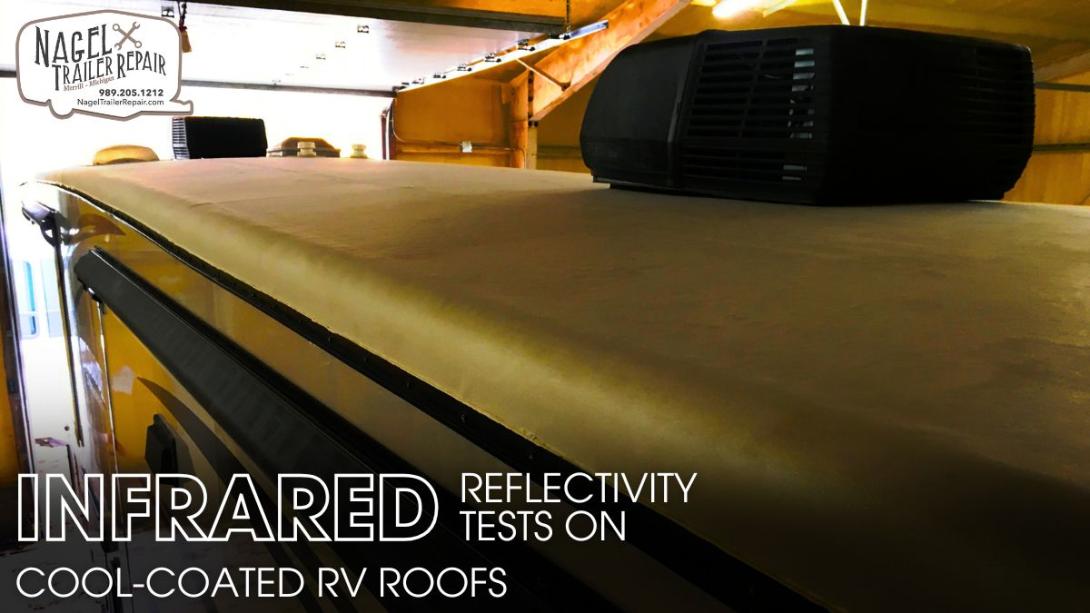
Owning an RV means embracing the open road — but it also means dealing with weather extremes that test your roof’s endurance. In Michigan, RV owners face a unique mix of hot summers, heavy rains, and cold winters. The roof becomes the first line of defense, and its performance directly impacts comfort, durability, and energy use.
That’s where cool-coated RV roofs come in. These advanced coatings reflect solar radiation, especially infrared light, reducing surface temperature and interior heat buildup. Through infrared reflectivity tests, technicians can measure just how efficient these coatings really are — a vital consideration for anyone planning RV roof repair in Michigan or upgrading their RV for long-term performance.
Understanding Infrared Reflectivity:
Infrared reflectivity measures how well a surface can bounce back infrared radiation — the heat-carrying portion of sunlight. When an RV roof absorbs too much infrared energy, the temperature rises rapidly, heating the cabin below.
High infrared reflectivity, on the other hand, helps to:
- Reduce interior cabin temperatures by 10–15°F on average
- Lower air conditioning demand and extend battery life during long trips
- Protect roof materials from thermal expansion, cracking, and UV degradation
- Improve comfort during summer travel and parking
In short, a roof that reflects infrared light performs better in every measurable way — especially in climates like Michigan where seasonal extremes are common.
The Science Behind Cool-Coated Roof Technologies:
Cool-coated RV roofs are built on material science. Unlike simple white paints, these coatings contain microscopic reflective compounds that target infrared wavelengths.
Common ingredients include:
- Titanium dioxide: A high-reflectance pigment used for blocking UV and infrared radiation
- Ceramic microbeads: Enhance thermal insulation by scattering radiant energy
- Elastomeric polymers: Provide flexibility to handle expansion and contraction in Michigan’s freezing winters and humid summers
These coatings create a surface that remains durable, flexible, and highly reflective for years. That’s why many professionals offering RV roof restoration in Michigan now prefer infrared-tested coatings — they deliver measurable efficiency and longevity.
Setting Up Infrared Reflectivity Tests:
Infrared reflectivity testing may sound complex, but it’s grounded in precise, science-based methods. Technicians use a combination of laboratory tools and field instruments to evaluate performance.
A. Equipment Used in Reflectivity Testing
- Infrared thermometers: Measure surface temperatures under direct sunlight
- Spectroradiometers: Assess the reflectivity of specific infrared wavelengths
- Emissivity meters: Evaluate how efficiently the roof emits absorbed heat
Testing typically involves two roof panels — one coated with a cool roof material, the other left untreated. Both are placed under the same environmental conditions for several hours.
B. Test Variables
- Ambient temperature and humidity
- Solar angle and intensity
- Surface texture and cleanliness
- Coating thickness and application consistency
For mobile RV roof repair in Michigan, field testing is often conducted in parking lots or open test areas during summer, ensuring real-world accuracy. The results often show cool-coated roofs maintaining up to 25°F lower surface temperatures compared to uncoated ones.
Standard vs. Cool-Coated RV Roofs:
When comparing standard RV roofs to cool-coated ones, the difference is clear — and measurable. Traditional EPDM or TPO roofs tend to absorb and store solar heat, causing temperature spikes that stress the roof membrane and adhesives.
Cool-coated roofs, by contrast, exhibit:
- 70–85% infrared reflectivity, depending on the material
- Reduced thermal cycling, minimizing cracking and sealant failure
- Slower aging due to less UV and thermal degradation
For Michigan RV owners, this translates directly to fewer leaks, less maintenance, and longer roof life. Technicians specializing in RV roof leak repair Michigan often recommend infrared-reflective coatings to prevent heat-related membrane fatigue — one of the top causes of recurring roof leaks.
Field Results and Energy Efficiency Benefits:
Data from multiple field studies across Michigan and neighboring states confirm that cool-coated RV roofs deliver substantial long-term benefits.
A. Key Performance Findings
- Interior temperature reduction: 10–15°F lower on average
- Air conditioner usage: 15–25% less frequent during peak summer
- Material degradation: 30–40% slower compared to non-coated roofs
- Roof lifespan: Extended by 3–5 years with proper maintenance
These benefits are especially valuable for RV owners who camp off-grid or travel extensively. Lower internal temperatures mean less generator use, reduced fuel costs, and greater comfort.
Additionally, reflective coatings prevent condensation buildup under the membrane — a common problem in Michigan’s humid summers and cold winters. Preventing moisture intrusion means fewer mold issues, less insulation damage, and reduced need for emergency RV roof repair in Michigan.
Practical Takeaways for RV Owners and Technicians:
Infrared reflectivity testing isn’t just a lab exercise — it’s a real diagnostic tool that helps owners and technicians make smarter maintenance decisions. Whether you’re performing mobile RV roof repair in Michigan or planning a seasonal inspection, here are some practical takeaways:
A. What to Look For
- Check for infrared reflectivity ratings (IRR) above 0.70 on coating datasheets
- Use coatings with proven elastomeric flexibility to handle seasonal expansion
- Inspect seams, vents, and skylights for reflective coating continuity
- Reapply coating every 4–6 years depending on manufacturer recommendations
B. Maintenance Tips
- Keep the roof surface clean to maintain reflectivity efficiency
- Avoid abrasive brushes that could dull reflective compounds
- Conduct thermal imaging scans every few years to track heat absorption changes
When properly applied and maintained, cool-coated roofs drastically reduce the likelihood of heat-induced cracks and leaks — the leading causes of repeated RV roof leak repair in Michigan.
The Role of Professional Maintenance:
Regular professional maintenance plays a critical role in keeping an RV roof performing at its best. Skilled technicians don’t just look for visible wear or leaks — they evaluate how the roof handles heat, moisture, and reflective efficiency over time. Using specialized tools like infrared thermometers, they can detect temperature inconsistencies that signal coating degradation or poor insulation. These inspections ensure that reflective surfaces continue to deflect heat effectively, reducing the energy load on cooling systems and preserving interior comfort.
In well-maintained RVs, a clean and properly sealed roof can significantly enhance thermal efficiency, lower energy use, and extend the life of the entire roofing system. Professional care also prevents small issues, such as seam fatigue or coating failure, from evolving into costly repairs. Simply put, consistent expert maintenance connects roof performance directly to energy savings and overall vehicle longevity.
Conclusion:
Infrared reflectivity tests have moved from the laboratory to the forefront of real-world RV maintenance. For Michigan RV owners, these tests prove that reflective coatings are not just cosmetic upgrades — they’re functional, energy-efficient, and long-lasting solutions.
Whether you’re planning a full RV roof restoration in Michigan or a quick mobile RV roof repair Michigan service, always ask about infrared-tested coatings. They not only keep your RV cooler but also extend roof life, reduce repair costs, and make your travels more comfortable in every season.
In the end, investing in a scientifically tested, cool-coated roof isn’t just about preventing leaks — it’s about upgrading your RV’s resilience and performance for years to come.