

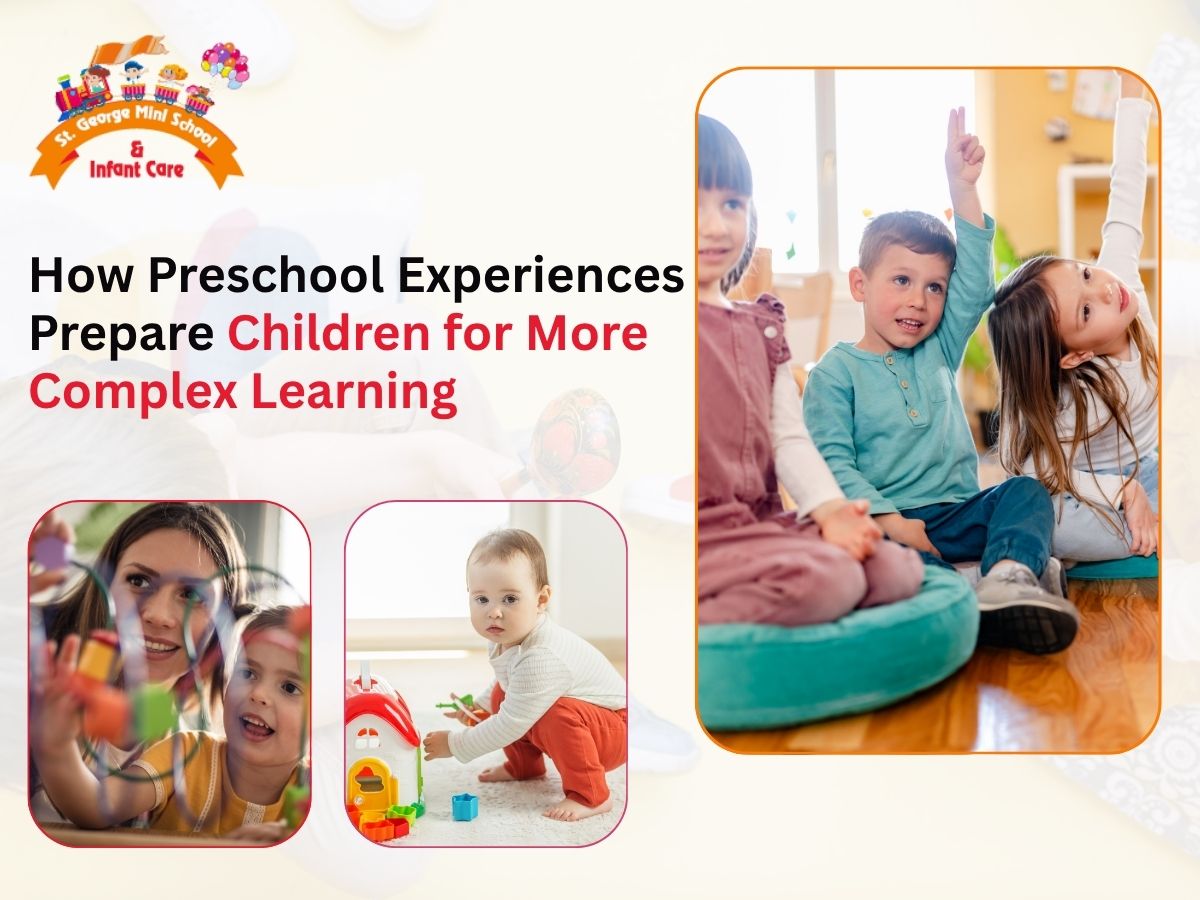
 Preschool gets described as a stepping stone, which makes it sound like a place children pass through on the way to the real thing. That undersells it. Between ages three and five, kids are building the habits they’ll lean on for the next fifteen years: how to stay curious, how to talk about an idea, how to keep going when something doesn’t work. Letters and numbers come along too, but they’re not the main event. Preschool is where children learn how to learn.
What Do Children Actually Learn in Preschool?
Less content than most parents assume, and more skill. A single afternoon might include blocks, a picture book, finger paint, and a round of musical statues, and each one quietly teaches several things at once. Over time, kids pick up early literacy, numeracy, problem-solving, communication, executive functioning, social-emotional skills, and fine motor coordination without anyone handing them a worksheet.
Take a child whose block tower keeps toppling. A good educator doesn’t fix it for them. She asks, “What could we change?” The child tries a wider base, watches it wobble, tries again. That’s persistence, planning, and cause-and-effect in about ninety seconds.
Learning to Think Instead of Simply Memorizing
School gets harder in a particular way. Kids are asked to work out things nobody has shown them. Preschool can start that early through inquiry-based and play-based activities.
Put a bowl of water on the table with a cork, a coin, a spoon, and a pinecone. Ask which ones will sink. Then don’t answer. Let the kids guess, drop each thing in, and argue about the results. The sequence they just went through is the same one scientists use:
Question → Prediction → Experiment → Observation → Conclusion
The bigger lesson is quieter. Not knowing the answer isn’t failing. It’s where the fun starts.
Building Early Literacy Through Conversation and Stories
Reading and writing begin long before a child can decode a word. Preschoolers build language and early literacy skills from conversations, songs, rhymes, picture books, and pretend play. The questions around a story often matter more than the story itself: “Why do you think he did that?” “What happens next?” “How would you feel?” “What would you do?” Each one asks a child to listen, remember, guess, and put an opinion into words.
Dramatic play does similar work. A pretend grocery store means new vocabulary, negotiated roles, and invented plots, which is groundwork for reading comprehension, even if it looks like chaos in the dress-up corner.
Early Math Hiding in Plain Sight
Nobody needs flashcards here. Counting blocks, comparing which stick is longer, spotting the pattern on a sock, measuring flour for muffins: all of it introduces early math concepts. A teacher who says, “We have four kids and three cups, how many more do we need?” has just made counting a real problem, and that’s how number sense and logical thinking start.
Executive Function: The Hidden Foundation of Learning
If you had to pick one thing preschool builds that matters most for later, executive functioning would be a strong contender. It’s the set of mental skills for focusing, remembering instructions, holding back impulses, switching tasks, and working toward a goal. Preschool routines are constant training. Remember three steps before starting an art project. Wait for a turn. Clean up before moving on. Cope when the plan changes. None of it feels like a lesson, but it’s how children train attention, working memory, flexibility, and self-control.
Learning How to Learn With Other Children
Readiness isn’t only about what one child can do alone. Preschool gives daily practice at listening, sharing materials, negotiating, disagreeing politely, and working through small conflicts, which is how social-emotional development and collaborative learning skills grow. Two kids want the same truck? A good educator doesn’t settle it. She helps them talk, come up with options, and agree on turns. The lesson sticks: problems get solved with words.
Independence comes along for the ride. Hanging up a coat, washing hands, asking for help when stuck: each builds self-confidence and independence, and that attitude carries into harder work later.
Why Play Is Still Serious Learning
Some parents worry a preschool isn’t doing enough if kids seem to play all day. In reality, play is one of the primary ways young children learn. Blocks teach balance, pretend play teaches language, and squabbles over the swing teach emotional regulation, eventually.
The goal isn’t to make preschool look like elementary school. It’s to give kids experiences that suit their age and prepare them for what’s coming, without squeezing out the curiosity and fun that make early learning work.
How Parents Can Extend Preschool Learning at Home
You don’t have to turn your kitchen into a classroom. Ask open-ended questions while you cook, count steps on the walk to the park, sort laundry by colour. And when your child asks you something, try answering with “What do you think?” It nudges them to reason it out.
If your family uses before and after school care, aim for a balance between structured activities and downtime. Children need chances to learn, but they also need rest, free play, movement, and time with family.
Common Questions Parents Ask About Preschool Readiness
Does preschool really prepare children for elementary school?
Yes. Quality programs help children build the thinking, language, social, emotional, and self-management skills they need for a more structured school setting.
How can I tell if a preschool supports school readiness?
Look for children who explore, ask questions, interact with peers, solve problems, and build independence. A strong program supports the whole child, not just worksheets.
The Bigger Picture: Preparing Children for Lifelong Learning
What matters most isn’t whether a child can recite the alphabet. It’s whether they start to see themselves as capable, curious, and confident learners. Quality preschool programs build that through purposeful play, responsive educators, predictable routines, and room to make discoveries.
If you’re considering Preschool North York, choose an environment that balances structured learning with play, exploration, and social-emotional development. That’s what gives children a strong, confident start.
This blog “How Preschool Experiences Prepare Children for More Complex Learning” was originally posted Here.