
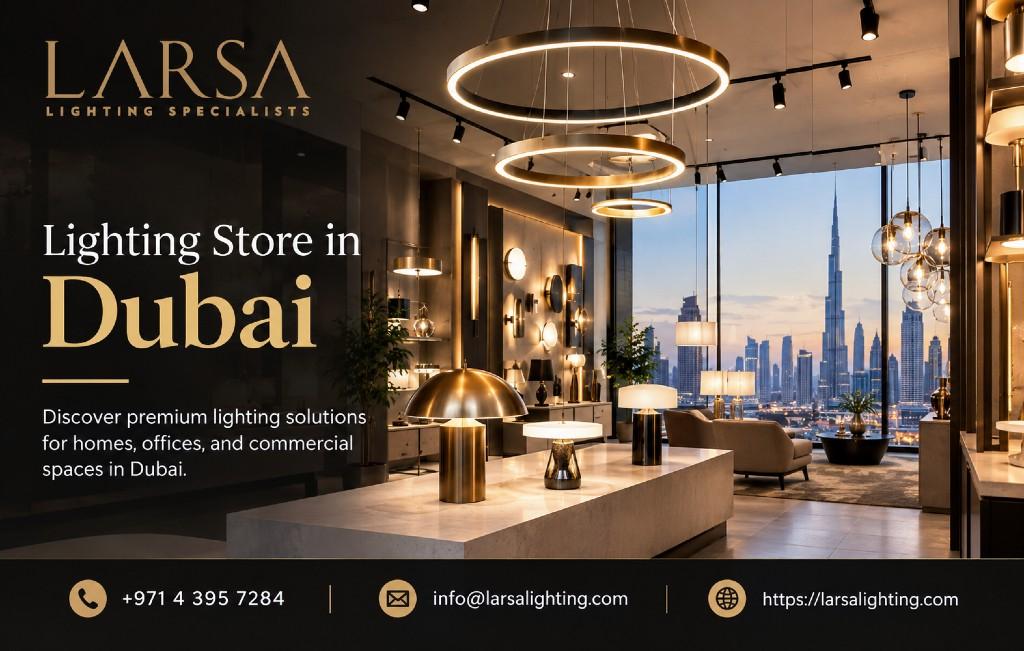
Choosing lighting for a home, office, retail outlet, hotel, or other commercial space can be more complicated than it first appears. There are countless fixture styles, colour temperatures, beam angles, brightness levels, control systems, and installation options to consider. Making the right combination requires more than simply selecting attractive fixtures.
A Lighting Store in Dubai can simplify this process by helping customers understand different lighting options and match them with the requirements of their spaces. From decorative fixtures to architectural and technical lighting, a well-organised approach can make selection easier while supporting both visual comfort and functionality.
Understanding Your Space Before Choosing Lighting
The first step in selecting lighting is understanding how the space will be used. A living room, restaurant, office, showroom, and bedroom all require different lighting approaches.
A lighting store can help narrow down choices based on factors such as:
- Size and layout of the space
- Ceiling height and construction
- Natural daylight availability
- Furniture and interior finishes
- Activities performed in the area
- Required brightness levels
- Desired atmosphere
- Energy and maintenance considerations
For example, a retail environment may need focused lighting to highlight products, while an office generally requires comfortable and evenly distributed illumination. Considering these factors before selecting fixtures helps prevent unsuitable purchases.
Exploring Different Types of Lighting
Lighting is usually divided into three broad categories: ambient, task, and accent lighting. Understanding their roles makes it easier to build a balanced lighting plan.
Ambient lighting provides general illumination throughout a space. Recessed downlights, linear fixtures, ceiling-mounted lights, and other broad-distribution fixtures can contribute to this layer.
Task lighting supports specific activities. Desk lamps, under-cabinet lights, reading fixtures, and focused workplace lighting are common examples.
Accent lighting adds emphasis to architectural features, artwork, displays, textures, or decorative elements. Spotlights and adjustable fixtures can provide controlled illumination where it is needed.
A Lighting Store in Dubai can make these distinctions easier to understand by presenting different fixture types and explaining where each option may be appropriate.
Selecting the Right Colour Temperature
Colour temperature has a significant effect on how a space looks and feels. It is commonly measured in Kelvin (K).
Warm white lighting generally creates a relaxed and welcoming atmosphere and can work well in hospitality areas, bedrooms, lounges, and residential interiors. Neutral white can provide a balanced appearance for offices, retail spaces, kitchens, and multipurpose areas. Cooler light may be suitable for specific task-oriented or technical environments where a crisp visual appearance is preferred.
The right choice depends on the space, materials, activities, and overall design intent. Viewing different colour temperatures in person can make the selection process much easier than relying on specifications alone.
Considering Brightness and Beam Angles
Brightness is another important factor, but simply choosing the highest-output fixture is not always the best approach. Excessive illumination can create discomfort and glare, while insufficient light can make tasks difficult.
Beam angle also influences how light is distributed. A narrow beam can create a concentrated highlight, while a wider beam can cover a larger area. Adjustable fixtures provide additional flexibility when the lighting needs to respond to changing layouts or displays.
When comparing products, it is useful to consider lumens, beam angle, mounting position, and the distance between the fixture and illuminated surface. These details can help create more controlled and comfortable lighting.
Matching Fixtures with Interior Design
Lighting should work alongside architecture and interior finishes rather than appearing as an isolated element. The shape, material, colour, and finish of a fixture can influence the visual character of a room.
Decorative pendants may become a focal point above a dining table, while discreet recessed fixtures can maintain a minimalist ceiling appearance. Linear lighting can complement contemporary interiors, whereas statement fixtures may contribute more strongly to hospitality or residential settings.
A lighting store provides an opportunity to compare these options physically and consider how different fixtures relate to the intended interior style.
Looking at Energy Efficiency and Maintenance
Energy efficiency is increasingly important when selecting lighting for both residential and commercial applications. LED technology has become a common choice because it can provide efficient illumination with relatively long service life.
However, efficiency should be considered alongside light quality, operating hours, controls, maintenance access, and replacement requirements. For larger projects, small differences in fixture performance can have a noticeable effect over time.
Lighting controls can also contribute to efficient operation. Dimming, occupancy sensors, timers, and programmable scenes can help adjust lighting according to use and time of day.
Why Professional Guidance Can Make Selection Easier
The number of available lighting products can make the selection process overwhelming. Professional guidance can help organise the choices around practical project requirements rather than focusing only on appearance.
Larsa Lighting approaches lighting as both a science and an art. The company describes itself as an ISO 9001-2008 certified organisation and highlights its focus on products and services intended to meet customer expectations. Its stated objective also includes expanding its presence across the UAE and GCC through collaboration with world-class brands.
This combination of technical considerations and design awareness reflects why lighting selection often benefits from informed guidance. Rather than choosing individual products in isolation, customers can consider how fixtures, light distribution, colour, controls, and interior requirements work together.
Making Better Lighting Decisions
The easiest way to simplify lighting selection is to start with the needs of the space rather than the appearance of a particular fixture. Define the purpose of each area, identify the type of illumination required, and then compare suitable products based on performance, aesthetics, efficiency, and installation requirements.
A Lighting Store in Dubai can support this process by bringing different categories of products together and helping customers understand their practical applications. This is especially useful for projects where multiple lighting layers need to work together.
Ultimately, good lighting is about creating a suitable relationship between people, space, architecture, and illumination. With careful planning and informed product selection, lighting choices can become more manageable and more effective for both everyday and specialised environments.