

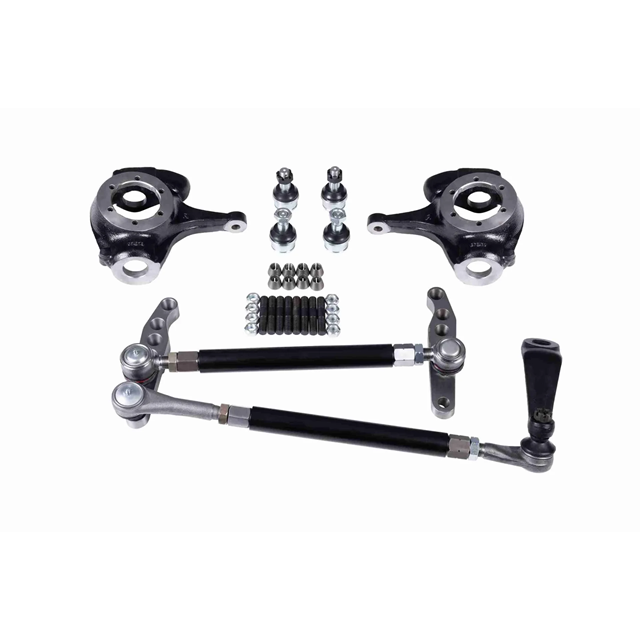

👉 Buy the Complete High Steer Kit Here : https://www.eastwestoffroad.com/product/ewo-complete-dana-44-chevy-10-bolt-high-steer-crossover-steer-kit-with-knuckles
Off-roading is all about control, clearance, and confidence. If you’ve spent any time on trails, chances are you’ve heard the term high steer tossed around in forums or garage talks. But what is high steer, and do you actually need it?
Let’s break it down—comparing traditional steering vs. high steer—so you can decide the best option for your rig.
What Is Traditional Steering?
Most rigs with a solid front axle come with a traditional steering setup, which usually includes:
- Tie rod – runs between the knuckles
- Drag link – connects the pitman arm to the tie rod (or sometimes directly to the knuckle)
This works fine for pavement driving and mild trails. But when you add:
- Bigger tires
- A suspension lift
- Aggressive off-road terrain
…problems start to show up.
⚠️ Issues with traditional steering:
- Poor steering angles
- Bump steer (sudden, unwanted steering inputs)
- Low tie rod clearance (making it a rock magnet)
What Is High Steer and Why Does It Matter?
High steer is more than just an upgrade—it’s a complete re-engineering of your steering geometry.
By relocating steering components above the axle centerline (using flat-top knuckles and aftermarket arms), high steer dramatically improves clearance and handling.
Benefits of High Steer
- ✅ Better clearance – tie rods and drag links are raised out of the danger zone
- ✅ Improved steering geometry – reduced stress on suspension and steering box
- ✅ Reduced bump steer – especially on lifted rigs
- ✅ Stronger trail durability – components stay protected from rocks and obstacles
👉 Check Out This Complete High Steer Crossover Steering Kit
High Steer vs. Traditional Steering: Quick Comparison
Feature
Traditional Steering
High Steer Steering
Clearance
Tie rod hangs low, exposed
Raised, protected components
Geometry
Poor angles with lift kits
Flat, improved steering angles
Bump Steer
Common on lifted rigs
Greatly reduced
Handling
Loose, twitchy feel
Tighter, more responsive
Durability
Components vulnerable
Protected, stronger setup
Do You Really Need High Steer?
Not every rig needs high steer. If you’re just running 31-inch tires with a small lift and hitting fire roads, traditional steering is enough.
But you should consider high steer if you:
- Run 35” tires or larger
- Lifted your rig 4” or more
- Regularly rock crawl or tackle hard trails
- Deal with bump steer or poor handling
- Plan on adding hydro assist steering
What’s Included in a High Steer Kit?
A complete high steer kit typically includes:
- Flat-top knuckles (OEM or aftermarket)
- Heavy-duty high steer arms
- Reinforced tie rod & drag link
- Reaming tools or inserts for alignment
👉 We recommend the EWO Complete Dana 44 / Chevy 10-Bolt High Steer Crossover Steer Kit with Knuckles for a proven, trail-ready solution.
Cost vs. Value
Yes, high steer is more expensive upfront. But think about the costs of:
- Bent tie rods
- Broken ball joints
- Trailside steering box failures
Those repairs add up quickly. High steer not only improves your trail experience—it also protects your investment.
Final Verdict: High Steer or Traditional Steering?
- 🚙 Traditional Steering – Best for mild lifts, small tires, and weekend cruising.
- 🛻 High Steer – Essential for serious off-roaders running big tires, lifts, and rocky terrain.
Bottom line: If you want control, clearance, and durability, high steer is the winner.
👉 Upgrade Your Rig with a Complete High Steer Kit Today
FAQs – High Steer vs. Traditional Steering
Q1: What is the main advantage of high steer for off-roading?
High steer provides better clearance, improved steering geometry, and reduced bump steer—making it ideal for lifted rigs with larger tires.
Q2: Do I need high steer for a daily driver Jeep or truck?
If your vehicle has only a small lift and mild tires, traditional steering works fine. High steer is most beneficial for serious off-road builds.
Q3: Is a high steer kit difficult to install?
It requires some mechanical skills and possibly reaming tools, but it’s a common upgrade for experienced off-roaders and shops.
Q4: Does high steer help with hydro assist steering?
Yes! High steer provides cleaner geometry for mounting hydraulic assist, making it more efficient and durable.
Q5: What’s the best high steer kit for a Dana 44 or Chevy 10-Bolt axle?
The EWO Complete High Steer Crossover Kit with Knuckles is one of the top options for strength, performance, and reliability.
🔑 Keywords
high steer kit, high steer vs traditional steering, Dana 44 high steer kit, Chevy 10 bolt high steer, off-road steering upgrades, crossover steering kit, bump steer fix, Jeep high steer kit, off-road suspension upgrade, heavy duty steering kit