

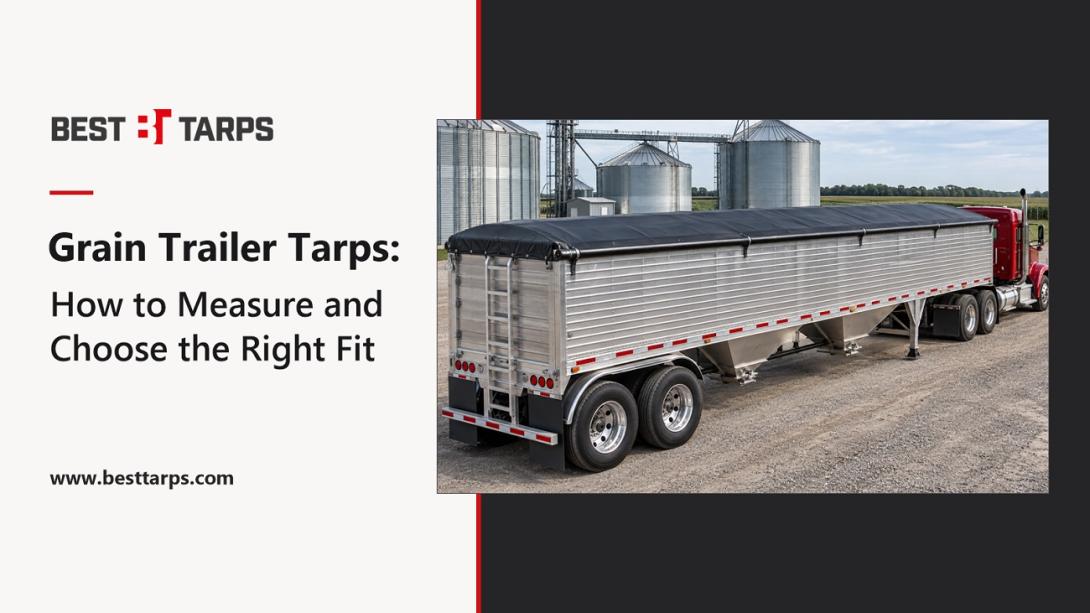
When a grain trailer tarp starts leaving a gap along the rail or rubbing through over a bow, take a few minutes to look at the hardware before you order a new cover. A small tear may need a patch. A tear that keeps coming back in the same spot may point to a rough bracket, a bent bow, or a tarp that rolls unevenly.
For a replacement, start with the trailer make and model, the tarp system name, and the original part number if you can still read it. Then verify the finished tarp dimensions against the supplier's sizing chart. Those details matter when two trailers of the same nominal length use different hardware or have different measurements at the top opening.
Well-fitted grain trailer tarps help keep rain and road debris out of the load. On a side-roll system, the cover winds onto a tube along the trailer. When you close it, the vinyl should reach the closing side evenly and secure according to the system instructions. If one end reaches the rail before the other, inspect the alignment before adding more tension.
How to Measure for a Replacement Grain Trailer Tarp
Measure the trailer width and length at the points specified by your tarp system manufacturer. Take photos of the front and rear caps, the roll tube, and the side where the tarp closes. If the old cover is available, record its finished width and length as a cross-check. A torn or stretched tarp can give you a misleading measurement, so send both sets of dimensions if they disagree.
Here's a real example from our sizing chart. The listed replacements for 96-inch-wide trailers have a finished tarp width of 123 inches. The listed replacements for 102-inch-wide trailers use a 129-inch finished width. Both widths come in a 42-foot length, so ordering by length alone could leave you with the wrong tarp. Check the width and length together, then confirm the part number for your setup.
Choosing Between 18 oz and 22 oz Vinyl
Best Tarps offers 18 oz and 22 oz vinyl in its replacement roll tarp line. An 18 oz cover comes standard on the Roll Master Manual Side Roll for grain trailers. If your system already works well with 18 oz vinyl, matching the original specification is a practical starting point. If you're considering 22 oz, ask whether the heavier cover is available in your size and compatible with your hardware.
How often you roll the tarp matters, too. If you open and close it several times on a busy hauling day, pay attention to how smoothly the tube turns and how consistently the cover closes. If you want push-button operation, ask about an electric side-roll conversion. Confirm compatibility with your trailer and its electrical setup before choosing a kit.
How Grain Trailer Covers and Flatbed Tarps Fit
If you haul lumber or steel between grain runs, flatbed truck tarps are shaped and sized for exposed freight on an open deck. With a lumber tarp, for example, the side drop determines how far the cover hangs down over the load. For a grain trailer, the measurements that matter are the trailer opening and the finished roll tarp dimensions required by its system.
When to Patch a Tarp and When to Replace It
A small, isolated puncture in otherwise sound vinyl may be a good candidate for a patch. Check the area around the hole first. If the vinyl is still flexible and the puncture sits away from a seam or attachment point, use a compatible vinyl repair product and follow its directions for cleaning, application, and cure time. Best Tarps carries vinyl repair tape and glue kits.
Replacement is usually the better call when the vinyl has cracks in several places, a tube pocket is pulling apart, or the cover keeps tearing after repairs. Before fitting the new tarp, check the hardware below the damage. Look for a bow that's bent out of line, a protruding fastener, or a rough edge along the rail. Fixing that contact point can keep it from wearing through the new cover.
What to Check Before Your Next Grain Haul
At the start of a shift, take a walk around the trailer before loading. Look for fresh scuff marks where the vinyl crosses the bows or caps. Check that the tube rolls evenly, the stops are secure, and the cover closes fully. After loading, check whether a high spot in the grain is pressing into the tarp. Recheck the closed position before pulling away.
During harvest, keep the replacement part number and a couple of photos with the trailer's maintenance records. If you manage more than one trailer, label each record with the unit number. That makes it easier to order the correct cover when a tarp fails midweek, especially if two trailers look alike from the ground but use different finished widths or tube attachments.
If your measurements match the sizing chart and the system works smoothly, a replacement cover may be all you need. If the dimensions disagree or the tube binds when you roll it, send us the trailer make, model, measurements, and photos before ordering. A clear photo of the closing side and the tube attachment can help us check which cover or parts fit your setup. Contact Best Tarps