

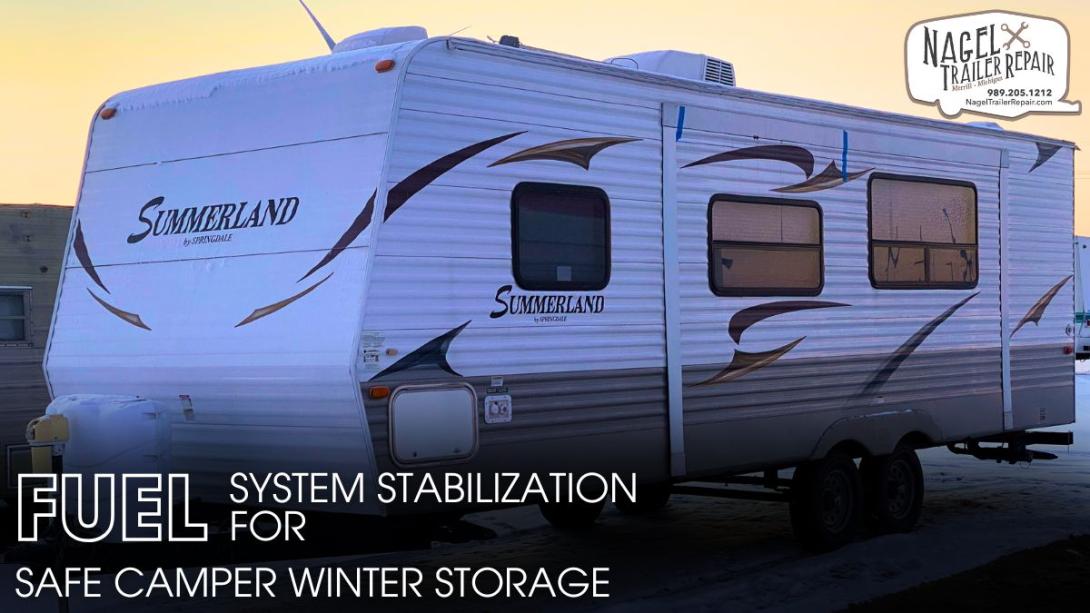
If you’ve ever pulled your camper out in the spring only to face rough idling, stalling, or clogged fuel lines, chances are the fuel system wasn’t prepared for storage. Fuel starts breaking down the moment it sits still, and during long, cold winters, untreated gasoline or diesel can lead to gumming, varnish deposits, and even corrosion inside the system. That’s why Camper Winterization Michigan isn’t complete without addressing the fuel.
Many RV owners focus on draining water lines and sealing the roof, but overlooking the fuel system is a costly mistake. Stabilizing the fuel ensures your camper’s engine and generator will fire up smoothly when the warm season returns.
Understanding How Fuel Degrades Over Time:
Gasoline today often contains ethanol, which attracts moisture from the air. Over time, that moisture settles at the bottom of the tank, creating the perfect environment for corrosion and phase separation. In cold weather, these effects worsen—condensation builds, oxidation increases, and fuel quality drops dramatically.
For those who go through Northern Michigan camper winterizing, the combination of subzero temperatures and long idle months makes this problem even more severe. Diesel campers face similar issues, with microbial growth (“diesel bug”) forming in tanks left untreated.
Simply put, untreated fuel doesn’t just lose efficiency—it can damage injectors, filters, and carburetors, leading to expensive spring repairs.
Choosing the Right Fuel Stabilizer:
Not all fuel stabilizers are created equal. The best ones are designed to prevent oxidation, protect against moisture, and keep the fuel chemically stable for up to 12 months. When shopping, look for stabilizers that specifically mention ethanol protection, as that’s the biggest culprit in Michigan’s climate.
For gasoline engines, use a stabilizer that disperses water and coats internal parts with a protective layer. Diesel campers should use a treatment that not only stabilizes fuel but also prevents microbial growth. Choosing the right product is a crucial part of Michigan RV winter prep.
Step-by-Step Guide:
Applying stabilizer isn’t complicated, but it must be done properly:
- Top off the fuel tank – Fill it about 90–95% full. A near-full tank reduces the air space where condensation can form.
- Add the stabilizer – Follow the manufacturer’s instructions for the correct dosage.
- Run the engine – Allow the camper’s engine and generator to run for 10–15 minutes so the treated fuel circulates through the system.
- Check for leaks and smells – Always do a quick safety inspection after treating the fuel.
A common mistake is adding stabilizer and not running the engine afterward. Without circulation, untreated fuel may still remain in lines and carburetors, defeating the purpose.
Additional Fuel System Protection Tips:
Beyond stabilizer, there are a few extra steps to protect your fuel system during Michigan cold-weather RV storage:
- Drain carburetors and small engines – If your camper has small auxiliary equipment, empty their carburetors completely.
- Replace filters before storage – A fresh fuel filter keeps stabilized fuel clean and prevents clogs later.
- Inspect gaskets and seals – Fuel leaks often appear in spring when rubber components dry out in the cold.
- Control moisture – Keeping the camper in a covered storage area or using a quality cover reduces temperature swings that cause condensation.
Long-Term Benefits:
The payoff for taking these steps shows up the moment you turn the key in spring. Campers that have properly stabilized fuel start easily, run smoothly, and avoid costly trips to the mechanic. Over time, this practice extends the life of your engine, generator, and fuel system components.
When you approach Camper Winterization Michigan as more than just draining water lines, you protect your investment and ensure stress-free travel once the snow melts. With consistent fuel system care, your camper will be ready for road trips, not repair shops.
The Role of Professional Maintenance:
While many RV owners handle winter prep on their own, there are areas where professional maintenance makes all the difference. Fuel systems, for example, need more than just a quick treatment to remain reliable through months of storage. A certified technician can inspect for hidden leaks, replace aging filters, and ensure stabilizer has been properly circulated through lines and injectors.
The same applies to the electrical system. Batteries left unattended in the cold often lose charge or suffer internal damage that isn’t visible until spring. Professionals have the right equipment to test capacity, clean terminals, and recommend whether a battery should be removed, trickle-charged, or replaced.
By investing in expert care before storage, you avoid frustrating surprises, extend the life of your camper’s key systems, and gain the peace of mind that comes with knowing your RV is protected during the harshest winter conditions.
Conclusion:
Preparing your camper for long winter storage requires attention to every system, and the fuel system is one of the most important. By stabilizing fuel, topping off tanks, and circulating treatment through the engine, you protect against ethanol breakdown, condensation, and costly corrosion. Add in a few preventative steps like filter replacement and moisture control, and your camper will emerge from storage in top condition.
Proper stabilization saves money, reduces springtime headaches, and ensures your camper is always road-ready. Whether you’re tackling Northern Michigan camper winterizing, planning a thorough Michigan RV winter prep, or just concerned about safe Michigan cold-weather RV storage, fuel system protection should always be a priority. It’s a simple, affordable step that pays off with reliable performance and long-term durability.