
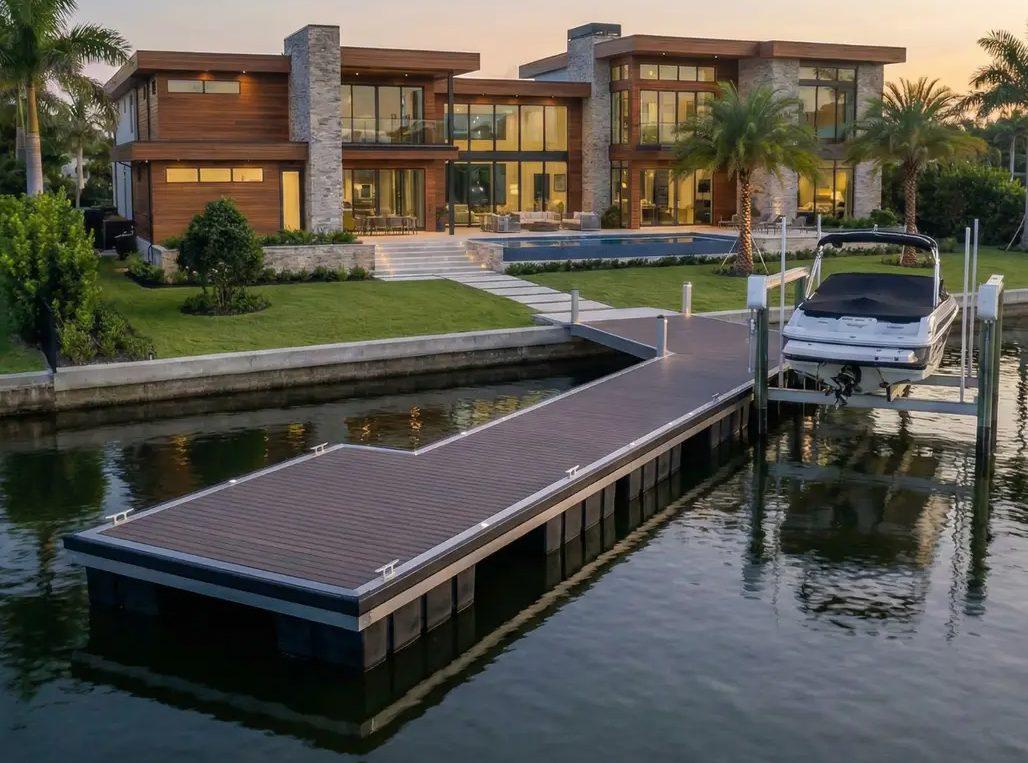
Choosing the right dock can make waterfront access safer, more convenient, and easier to maintain. For homeowners looking for a practical alternative to traditional site-built structures, Prefab Boat Docks offer a combination of modular construction, efficient transportation, and flexible design.
Unlike docks that are built entirely at the waterfront, prefab systems are manufactured and prepared in advance before being delivered to the property. This approach can simplify installation while allowing homeowners to select a configuration suited to their shoreline, water conditions, boat size, and intended use.
What Are Prefab Boat Docks?
Prefab Boat Docks are dock systems manufactured or partially assembled away from the installation site and then transported to the waterfront. Components are typically designed to fit together according to a predetermined layout, reducing the amount of fabrication required on-site.
Aluminum is a popular material for these systems because it combines relatively low weight with structural strength and corrosion resistance. For example, Express Docks uses 6061-T6 aluminum for its residential dock systems, along with WPC composite decking and marine-grade components.
Prefab construction can also make customization easier. A dock may include straight sections, finger piers, gangways, or different frame configurations depending on the property and water conditions.
Why Consider a Prefabricated Dock System?
One of the main advantages of prefabrication is predictable construction. The dock can be designed and checked before it reaches the property, helping identify potential fit or layout issues earlier in the process.
Modular sections can also simplify transportation. Rather than moving a complete dock structure to the waterfront, components can be palletized and delivered by freight. Once on-site, the sections can be assembled according to the engineering plan.
Another consideration is installation. Some residential aluminum systems are designed for assembly using common tools rather than requiring extensive specialized equipment. However, installation requirements vary depending on dock size, anchoring method, shoreline conditions, and local regulations.
Choosing the Right Dock for Your Waterfront
Water conditions should be one of the first considerations when selecting a dock.
Calm Lakes and Protected Water
For relatively calm residential lakes and protected waterfronts, a single-frame aluminum dock can provide a practical configuration for everyday boating, fishing, swimming, and recreation.
Express Docks' Single Frame residential system uses a single-truss construction and is intended for calm to moderate water conditions. The system includes 6061-T6 aluminum framing, WPC composite decking, and palletized delivery.
Rivers and Tidal Properties
Riverfront and tidal properties can experience changing water levels, currents, or differences in elevation between the shoreline and dock. In these situations, a gangway can provide a gradual transition between land and the floating dock.
A modular design can also be useful when waterfront conditions change seasonally or when the dock needs to be adjusted or expanded.
Saltwater and Exposed Waterfronts
Saltwater introduces additional corrosion considerations, while exposed bays and open waterfronts can experience greater wave action and loading. Material selection and structural design therefore become particularly important.
Express Docks offers a Double Truss residential configuration using 6061-T6 aluminum. According to the supplied product information, this design is intended for heavier loads, larger boats, saltwater, and more exposed conditions.
Materials Matter for Long-Term Durability
The material used for the frame and decking has a direct influence on a dock's maintenance requirements and service life.
6061-T6 aluminum is widely used in structural applications because of its strength-to-weight characteristics and corrosion resistance. For waterfront construction, these properties can be valuable because docks are repeatedly exposed to moisture and changing weather conditions.
Decking is another important consideration. WPC composite decking is an option for homeowners who want a surface designed for outdoor and waterfront use. Express Docks offers six WPC decking colors—Teak, Walnut, Charcoal, Driftwood, Espresso, and Gray—with Trex® available upon request.
Fixed or Floating: Which Is Appropriate?
Not every waterfront requires a floating structure. A fixed dock may be suitable where water levels and conditions remain relatively consistent throughout the year.
Floating systems, on the other hand, rise and fall with the water level. This can make them useful for locations where seasonal fluctuations or tidal changes make a fixed platform less practical.
The choice should be based on water depth, fluctuations, shoreline characteristics, local regulations, boat requirements, and the desired access point.
How the Prefab Dock Process Works
A typical prefabricated dock project begins with measurements, photographs, a sketch, or a description of the waterfront. The design can then be developed around the property's requirements.
With Express Docks, the stated process includes:
- Design: The dock is engineered to the requested specifications.
- Review: Customers review the design before construction.
- Factory Build: Components are assembled and quality-checked at the facility.
- Documentation: The completed dock is photo-documented before disassembly.
- Delivery: Components are palletized and shipped to the property.
- Assembly: The dock is assembled at the waterfront according to the supplied design.
The company states that residential systems can generally be assembled by a small crew using basic tools, although larger or more complex installations may require professional assistance.
Check Local Requirements Before Installation
A prefabricated dock does not necessarily eliminate permitting or site requirements. Rules vary by state, municipality, lake authority, and waterway.
Before ordering, homeowners should check whether permits are required and determine what anchoring system is appropriate for the property. Water depth, shoreline conditions, environmental requirements, and property boundaries may all affect the installation.
A Practical Approach to Waterfront Access
Prefab Boat Docks provide a structured approach to waterfront construction by combining off-site manufacturing with modular installation. For homeowners, the key is not simply choosing a prefabricated system, but selecting one that matches the specific water conditions and intended use of the property.
With options ranging from single-frame floating systems to reinforced configurations and fixed docks, a carefully planned aluminum dock can provide a durable foundation for boating, fishing, swimming, and everyday waterfront access. Express Docks offers residential systems built around these considerations, with custom design, factory construction, palletized delivery, and a stated 50-year aluminum-frame warranty.
FAQs About Prefab Boat Docks
How long does a prefab dock take to arrive?
According to the supplied Express Docks information, design work is typically completed within 48 hours, while production and shipping generally take 6–10 weeks depending on configuration and location.
Are prefab docks difficult to assemble?
Many modular residential systems are designed for relatively straightforward assembly. Express Docks states that most of its residential docks can be assembled by two people using basic hand tools. Installation requirements can vary by project.
Are aluminum docks suitable for saltwater?
Aluminum is commonly used in marine environments because of its corrosion resistance. For exposed saltwater locations, structural design, hardware, decking, anchoring, and maintenance should all be considered together.
Can a gangway be added to a floating dock?
Yes. Gangways can be incorporated into or added to suitable dock configurations. They are particularly useful where the shoreline and floating platform experience elevation differences.
What should I consider before buying a prefab dock?
Consider water conditions, dock dimensions, boat size, expected loads, frame material, decking, anchoring, installation requirements, permits, warranty coverage, and long-term maintenance.