
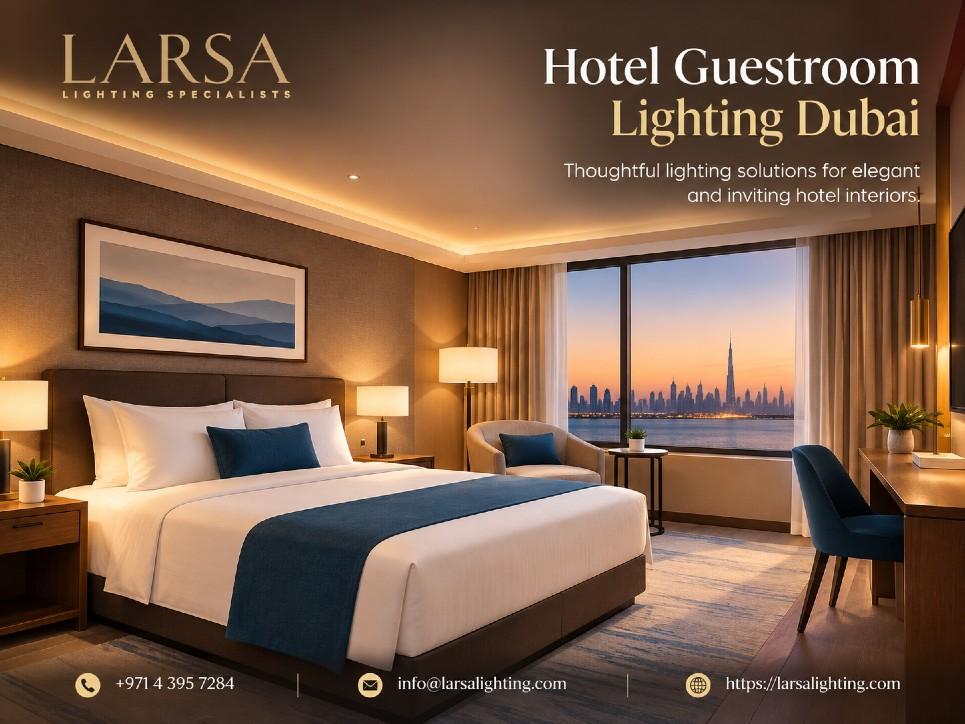
Lighting plays an essential role in shaping the guest experience in luxury hotels. Beyond illuminating a room, it influences comfort, highlights interior finishes, supports daily activities, and creates an atmosphere that reflects the hotel's identity. In Dubai, where hospitality interiors often combine contemporary architecture with refined materials, a carefully planned lighting scheme can make guest rooms more functional and visually appealing.
Hotel Guestroom Lighting Dubai requires a balance between aesthetics, practicality, energy efficiency, and ease of operation. From welcoming entrance lighting to comfortable bedside illumination, every element should serve a purpose while contributing to a cohesive interior design.
1. Create a Welcoming Atmosphere with Layered Lighting
Layered lighting is an effective approach to designing comfortable and sophisticated hotel guestrooms. Instead of depending on a single ceiling fixture, designers can combine ambient, task, and accent lighting to accommodate different activities throughout the day.
Ambient lighting provides general illumination through recessed downlights, concealed LED strips, or carefully positioned ceiling fixtures. Task lighting supports activities such as reading, working, and getting dressed. Accent lighting highlights architectural features, decorative wall panels, artwork, or textured finishes.
Combining these layers allows guests to adjust the room's atmosphere without sacrificing functionality. Dimmable lighting also makes it easier to transition from a bright daytime environment to a relaxing evening setting.
2. Choose Warm Lighting for a Relaxing Guest Experience
Colour temperature influences how a hotel guestroom feels. Warm white lighting, typically around 2700K to 3000K, creates a comfortable atmosphere that works well with timber finishes, soft furnishings, stone surfaces, and neutral colour palettes.
For luxury hotels, warm lighting can help bedrooms feel inviting rather than overly formal. It also complements decorative materials commonly used in contemporary hospitality interiors.
Consistency is equally important. When different fixtures produce noticeably different shades of white, the room can appear visually disjointed. Selecting compatible LED products with consistent colour temperatures and good colour rendering helps maintain a polished appearance.
For projects involving detailed finishes, designers should assess lighting samples against the actual interior materials before finalising the specification.
3. Make Bedside Lighting Functional and Elegant
Bedside lighting is one of the most important elements of guestroom design. Guests may want to read, use electronic devices, or relax without disturbing someone sleeping beside them.
Wall-mounted reading lights, adjustable luminaires, and decorative bedside pendants offer practical options for different interior styles. However, appearance should not be the only consideration. Each reading light should direct illumination towards the reading surface while minimising glare and unwanted light spill.
Independent controls on either side of the bed allow guests to manage their lighting preferences comfortably. Designers can also incorporate concealed headboard lighting to introduce a soft glow behind the bed.
For Hotel Guestroom Lighting Dubai, these details help combine visual sophistication with the everyday convenience expected in a well-designed hospitality environment.
4. Highlight Architectural Features with Accent Lighting
Accent lighting adds depth and visual interest to hotel interiors. It can emphasise textured feature walls, decorative headboards, artwork, shelving, and architectural recesses.
Concealed LED strips are particularly useful for creating indirect illumination along ceiling coves, joinery, and wall details. Adjustable spotlights can direct attention towards selected decorative elements, while integrated linear lighting can give wardrobes and display niches a clean, contemporary appearance.
The key is to use accent lighting selectively. Too many illuminated features can overwhelm the room, compete with decorative finishes, and create unnecessary brightness.
A considered lighting composition gives important elements visual prominence while allowing darker areas to provide contrast and a sense of calm.
5. Improve Wardrobe, Desk, and Bathroom Lighting
Luxury guestrooms must accommodate more than relaxation. Guests also need to prepare for meetings, organise their belongings, and complete personal grooming comfortably.
Wardrobe lighting, particularly LED illumination activated by a door sensor, improves visibility when selecting clothing. Desk lighting should illuminate the working surface without creating distracting reflections on computer screens.
Bathroom lighting requires additional attention. A single overhead light can create shadows across the face, making grooming less convenient. Lighting positioned alongside a mirror or integrated into a suitable vanity system can provide more balanced facial illumination.
Fixtures installed in bathrooms must also have appropriate protection for their locations and comply with applicable electrical safety requirements.
Coordinating these functional areas with the bedroom's overall lighting design helps create a consistent and convenient guest experience.
6. Introduce Smart Controls and Flexible Lighting Scenes
Lighting controls allow guests to personalise their environment quickly. Instead of operating numerous individual switches, an intuitive control system can provide preset scenes for common activities.
For example, an Arrival scene can illuminate the entrance and main room areas. A Relax scene can dim ambient lighting while retaining subtle accent illumination. A Work scene can strengthen desk lighting, while a Good Night setting can switch off most fixtures and maintain a low-level route to the bathroom.
Controls near the entrance and bedside areas make these functions easier to access.
For larger hospitality projects, lighting controls should be coordinated with electrical systems, occupancy sensors, and guestroom management technology during the design stage. Compatibility between LED drivers, dimmers, and control equipment should be verified before installation to avoid flickering or inconsistent dimming.
7. Balance Luxury, Energy Efficiency, and Maintenance
A visually impressive lighting scheme must also remain practical throughout the hotel's operating life. LED technology can reduce energy consumption and maintenance frequency when suitable products, controls, and operating schedules are selected.
Designers should consider fixture durability, driver accessibility, replaceable components, and the availability of spare parts. Standardising selected luminaire families across multiple guestrooms can simplify maintenance and replacement.
Glare control is another priority. Downlights positioned directly above beds or exposed light sources near mirrors can cause discomfort. Appropriate beam angles, shielding, and carefully planned fixture positions help prevent these problems.
For hospitality developments, Larsa Lighting approaches lighting as both a technical discipline and a design exercise, with attention to product performance, coordinated specifications, and the relationship between illumination and interior architecture.
Conclusion
Creative guestroom lighting combines atmosphere, functionality, and reliable performance. From layered illumination and elegant bedside fixtures to smart controls and carefully lit bathrooms, every decision contributes to the overall guest experience.
Well-planned Hotel Guestroom Lighting Dubai can help luxury hotels create distinctive interiors while supporting comfort, operational efficiency, and long-term maintenance needs. By coordinating lighting with architecture, furnishings, and guest expectations, designers can develop spaces that feel welcoming, refined, and practical.