

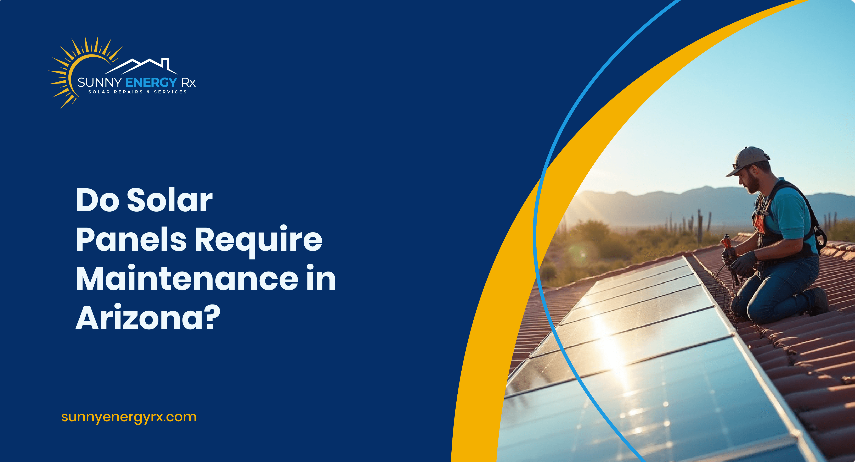
This blog was originally published on Sunny Energy RX.
Arizona is a dream climate for solar: abundant sunshine, long production days, and roofs that can pay you back for decades. That same desert environment dust, monsoon winds, extreme heat also creates a few predictable maintenance needs. The goal isn’t to add chores it’s to keep a simple rhythm so your system performs like the day it was installed.
Low-Maintenance, Not No-Maintenance
Modern panels are engineered to run quietly for 25+ years. They don’t have moving parts, and most of the system sits sealed from the elements. Still, glass collects dust and pollen, wind can shift debris, and sealants and wiring benefit from a periodic look. A light maintenance plan prevents slow performance drift from turning into noticeable bill changes.
The Desert Effect: What Arizona Adds
Fine dust is the big story. After dry spells or haboobs, a thin film can sit on the glass and mute production. Monsoon bursts help rinse panels, but they can also splash dirt back up and loosen debris around mounts and conduit. Heat matters too: while panels are built for high temperatures, extreme heat can nudge efficiency down clean glass helps capture every bit of available light when the mercury climbs.
Cleaning, Sensibly
You don’t need to scrub weekly. Many homes do well with one to two professional cleanings per year, adjusted by location and dust levels. If you can see a dull haze from the ground or your monitoring app shows a stubborn, weather-independent dip cleaning is due. When cleaning is performed, soft water and non-abrasive methods protect the anti-reflective coating harsh brushes and hard water spots are the enemies of long-term clarity.
DIY or Professional?
From a safety and warranty standpoint, ground-level inspections and professional cleanings are best. Roofs can be slippery, and certain mounting hardware is easy to disturb. If you must do light rinsing yourself, choose cool early hours, use gentle spray settings, and avoid stepping on the array. When in doubt, let a pro handle it especially for multi-story roofs or complex layouts.
Inspections: What Pros Actually Check
An annual (or every 18–24 months) inspection focuses on small things that matter later:
- Visual scan for cracked glass, chipped frames, or hot spots.
- Mounting, flashing, and sealant condition to keep water out of the roof system.
- Wiring, connectors, and junction boxes for looseness or corrosion.
- Inverter health error logs, ventilation, firmware status, and any signs of thermal derating.
- Conduit and cable management, including pest guards where birds like to nest.
Catching a loose lug or tired seal early is far cheaper than repairing water intrusion or hunting for an intermittent fault after the fact.
Let Your Monitoring App Guide You
Your app is the simplest maintenance indicator you own. Compare one clear weekday to another clear weekday if shapes and totals don’t resemble each other and the weather can’t explain it something’s changed. Look for:
- Flat lines or unexplained zeroes during bright hours (connectivity, breaker, or device issue).
- A gentle, multi-week decline that persists across sunny days (soiling, shade growth, or a component slipping).
- Repeating dips at the same time daily (a new shadow from a vent or branch).
Treat the app as your early-warning light maintenance then becomes targeted instead of guesswork.
Budgeting and Value
In Arizona, routine cleaning/inspection pricing varies by roof height, access, and array size. Many homeowners fold service into an annual plan for predictable costs and priority scheduling during dusty seasons. However you structure it, weigh the fee against the value of recovered production across long, bright months especially if you’re on a time-of-use plan where midday kilowatt-hours are gold.
Simple Year-Round Rhythm
- After major dust or wind: Do a ground-level check and confirm the next clear day’s production looks normal.
- Each quarter: Open the app, compare two like-weather days, and note any persistent gaps or dents.
- Once a year (or 18–24 months): Book a professional inspection add cleaning if the glass looks hazy or the data says you’re underperforming.
Safety and Warranty Notes
Avoid walking on panels, abrasive cleaning pads, and high-pressure jets. Keep documentation of maintenance visits some equipment warranties appreciate proof of reasonable care. If you ever smell burnt plastic near equipment or hear unusual buzzing, power down per your system’s instructions and call a professional.
Arizona gives you the light. With a clear pane of glass, a quick glance at your dashboard, and a steady maintenance cadence, you keep every ray working for you day after day. For desert-smart care that keeps performance shining, Sunny Energy RX is where your solar stays effortlessly strong.