
Introduction: Why a First Aid Kit is Essential
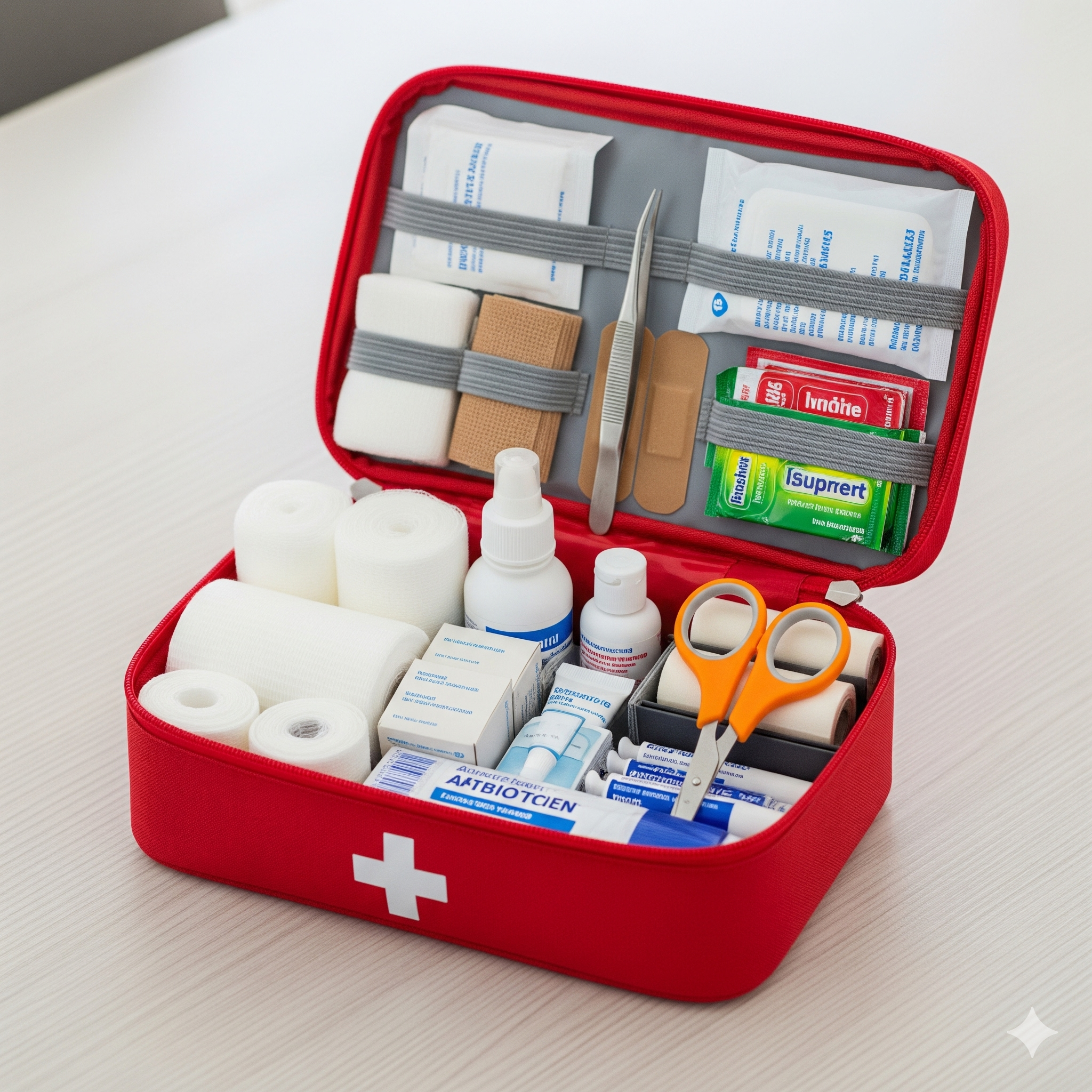
A well-stocked first aid kit is not just a household necessity—it’s a lifesaver in emergencies. From minor cuts and burns to sudden fevers or stomach issues, the right medicines within reach can make a big difference before professional medical help arrives. Every home, office, and even travel bag should have a carefully prepared kit to handle common health problems quickly and effectively. By keeping essential medicines handy, you ensure safety, comfort, and quick relief for you and your loved ones.
Pain Relief Medicines
Paracetamol, Ibuprofen, or Aspirin
Pain is one of the most common health concerns, and having reliable pain relievers in your kit is crucial.
Uses:
- Paracetamol helps reduce fever and mild pain.
- Ibuprofen works well for muscle pain, inflammation, and headaches.
- Aspirin can help with pain relief but is often used cautiously due to side effects.
Precautions:
- Avoid overuse, as it may harm the liver or stomach.
- Aspirin is not recommended for children.
-
Always check dosage instructions carefully.
Medicines for Stomach & Digestive Issues
Digestive problems can strike anytime—after heavy meals, travel, or food poisoning. Keeping the right medicines ensures quick recovery.
Key Essentials:
- Antacids: Provide relief from acidity, heartburn, or indigestion.
- Oral Rehydration Salts (ORS): Prevent dehydration caused by diarrhea, vomiting, or heat exhaustion.
- Anti-diarrheal tablets: Useful in controlling sudden diarrhea episodes.
Precautions:
- Use anti-diarrheal tablets cautiously; seek medical help if symptoms persist.
- ORS is safe for all ages and should be mixed with clean water.
Allergy & Cold Medicines
Allergies, sneezing, or cold symptoms can appear suddenly and disrupt daily life. Having the right medicines ensures quick comfort.
Must-Haves:
- Antihistamines: Provide relief from skin allergies, rashes, and runny nose.
- Decongestants: Help clear blocked noses and ease breathing during colds or flu.
- Nasal Sprays: Offer instant relief from congestion and are easy to use.
Precautions:
- Antihistamines may cause drowsiness—avoid driving or operating machinery after use.
- Decongestants should not be overused, as they can raise blood pressure.
Antibiotic & Antiseptic Essentials
Wounds and injuries can easily get infected if not treated properly. Your first aid kit must include basic infection-fighting medicines.
Important Inclusions:
- Topical antibiotic creams: Prevent infections in cuts, scrapes, or burns.
- Antiseptic solution: Ideal for cleaning wounds before dressing them.
- Basic antibiotic tablets: Should only be taken under a doctor’s prescription.
Precautions:
- Avoid self-medicating with antibiotics. Misuse can lead to resistance.
- Clean wounds thoroughly before applying creams or dressings.
Conclusion
A first aid kit is more than just a box of supplies—it’s your first line of defense in medical emergencies. By stocking pain relievers, digestive medicines, allergy tablets, antiseptics, and doctor-prescribed antibiotics, you ensure preparedness for common health issues. Always remember, these medicines provide quick relief but are not a replacement for professional care. For serious or persistent symptoms, consult a healthcare provider immediately. A ready-to-use first aid kit keeps you safe, confident, and prepared for life’s unexpected moments.