

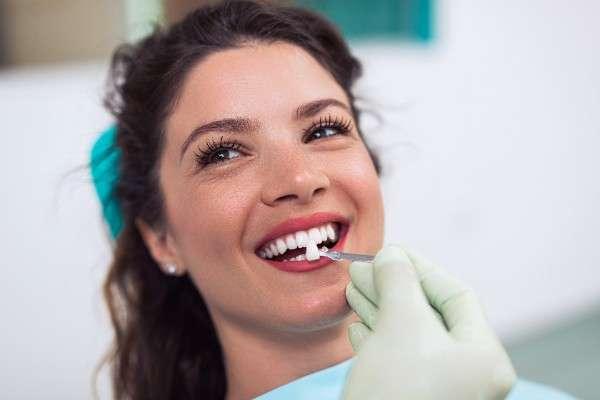
Suffering from dental trauma can be both physically painful and emotionally jarring. A cracked tooth, an unexpected injury during sport, or a dislodged crown can create immediate discomfort, but the psychological impact can linger long after the initial pain subsides. You may find yourself smiling less, avoiding certain foods, or worrying about your appearance. Thankfully, there are professionals available who specialise in not just emergency treatment, but in helping you feel confident again.
If you’ve recently experienced trauma, a visit to an emergency dentist in Widnes can provide fast relief and critical early intervention. From there, a hygienist in Widnes can help support your recovery and ensure your restored smile remains healthy and radiant for the long term.
Why Prompt Attention to Dental Trauma Matters
Ignoring dental trauma—even what seems like minor damage—can lead to serious long-term consequences. Even a small chip or ache could result in nerve damage, infection, or tooth loss if left untreated. Early action is key not only to preserve your tooth, but also to prevent aesthetic issues that may affect your confidence or cause social discomfort.
Common consequences of delayed care include:
- Tooth discolouration from internal bleeding
- Infection and abscesses in exposed root canals
- Misalignment due to untreated dislodgement
- Tooth loss from underlying damage
- Gum inflammation or bone loss near the trauma site
Getting to an emergency dentist in Widnes quickly ensures you protect not just your oral health, but your overall self-esteem.
Immediate Steps After Dental Trauma
When dental trauma occurs, knowing what to do in the moment can make a significant difference. These simple steps can help minimise damage before you reach the clinic:
For a knocked-out tooth:
- Do not touch the root; hold the tooth by the crown
- Rinse it gently if dirty, but do not scrub
- Try to place it back in the socket if possible
- If not, keep it in milk or saline solution
- See an emergency dentist in Widnes within the hour
For cracked or fractured teeth:
- Rinse with warm water to clean the area
- Apply a cold compress to reduce swelling
- Avoid chewing on the affected side
- Take paracetamol if in pain—avoid aspirin
Quick action combined with professional help is the best way to save your smile.
What to Expect from an Emergency Dental Visit
Your emergency dentist’s goal is to relieve discomfort, prevent complications, and start your path to full restoration. Whether you’re dealing with visible damage or subtle symptoms like pain when chewing, an expert evaluation is essential.
Your appointment may include:
- A visual exam and digital X-rays
- Temporary or permanent pain relief
- Repairs such as bonding, splints, or root canal therapy
- A timeline for restorative work like crowns or veneers
- Immediate care instructions for home management
An emergency dentist in Widnes will also take care to match restorations with your natural teeth, prioritising aesthetics as well as function.
Healing Beyond the Emergency: Role of a Hygienist
Once the damage has been assessed and repaired, your mouth needs to heal—and that’s where your hygienist in Widnes comes in. They play a key role in both physical recovery and psychological reassurance.
Hygienist care includes:
- Gentle cleaning of the trauma area to avoid infection
- Monitoring gum health, especially near injury sites
- Tailored oral hygiene advice to prevent future issues
- Support in rebuilding habits like brushing and flossing
- Advice on gentle care tools, such as softer toothbrushes or specialist mouthwashes
Many patients find that their hygienist becomes a trusted part of their journey back to confidence, offering ongoing support and personalised guidance.
Restorative Options for a Natural-Looking Smile
Once the immediate damage is under control, your dentist may recommend long-term restorative solutions to restore function and appearance. Whether you’ve lost a tooth, chipped the enamel, or require internal repair, modern dentistry offers natural-looking and highly durable solutions.
Popular restorative treatments include:
- Composite bonding to repair cracks and chips
- Porcelain crowns for broken or weakened teeth
- Dental implants or bridges for missing teeth
- Veneers for aesthetic refinements
- Internal whitening or replacement for discoloured trauma teeth
These procedures not only restore strength, but also give you the confidence to smile again without hesitation.
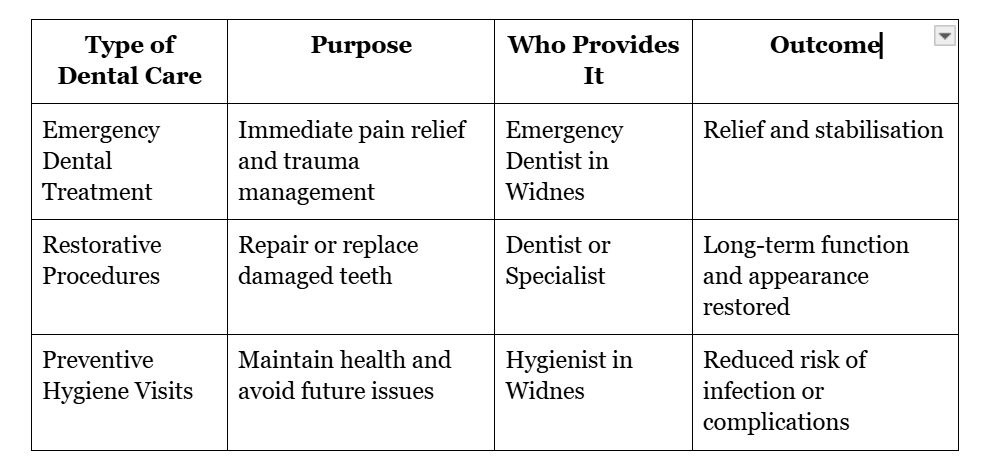
Comparing Emergency, Restorative, and Preventive Care
Daily Care Tips to Support Healing and Prevent Recurrence
After trauma, it’s important to adjust your daily routine to promote healing and avoid re-injury. These habits support your oral recovery while maintaining cleanliness and comfort.
Tips to follow post-trauma:
- Use a soft-bristled toothbrush to reduce irritation
- Avoid very hot, cold, or hard foods for a few days
- Rinse gently with salt water if swelling occurs
- Floss carefully—avoid tugging near injured areas
- Keep up appointments with your hygienist in Widnes
- Wear a mouthguard if you play contact sports
These simple steps can prevent setbacks and help you return to full function faster.
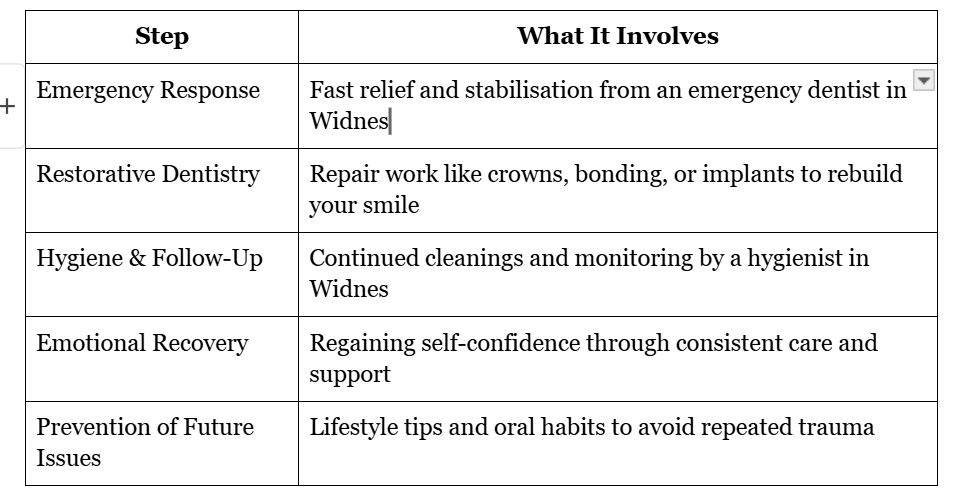
Summary Table: Path to Confidence After Trauma
The Emotional Effects of Dental Trauma
A visible injury or missing tooth can significantly impact how we feel in social or professional settings. Smiling less, avoiding conversations, or worrying about your appearance may not just affect your confidence—they can influence your mental health too.
Common psychological effects:
- Self-consciousness in photographs or meetings
- Avoidance of dates, meals out, or public speaking
- Fear of future accidents or pain
- Hesitation to laugh or express emotions freely
Addressing these issues requires more than treatment—it takes compassionate care, reassurance, and consistent follow-up. This is where the combined care of an emergency dentist in Widnes and a hygienist in Widnes can make a lasting difference.
Conclusion
Dental trauma doesn’t have to mean the end of your confidence. With swift action, expert repair, and compassionate follow-up, you can return to your daily life with a strong, healthy smile. The journey begins by visiting an emergency dentist in Widnes—someone who understands that restoring your smile is also about restoring your well-being. At EDP Group, we believe every smile deserves a second chance. Let us help you reclaim yours, with care that goes beyond the emergency.