

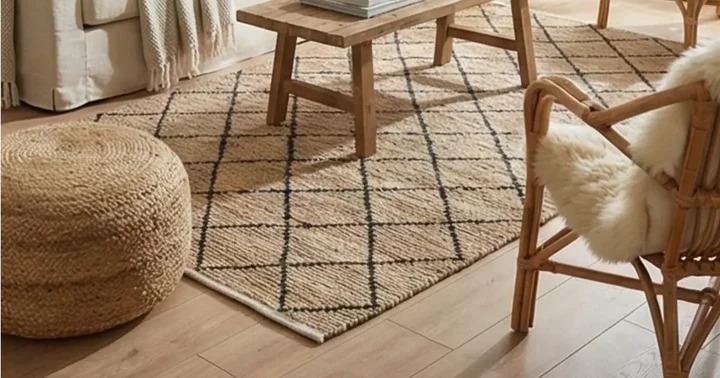
If you're looking for a rug that works hard without demanding attention, a flat woven rug is your answer. No pile, no fuss. Just clean lines, honest texture, and a design that fits almost anywhere. Australians have been warming to this style for good reason. They're practical, they're beautiful, and they suit our way of living.
What Makes Flat Woven Rugs Different?
Most rugs you walk past in a showroom have a pile. Thousands of loops or cut fibres standing upright, giving that soft, cushiony feel. A flat woven rug skips all that. The yarn is woven directly into the warp and weft of the rug, creating a surface that lies completely flat. Think of it like a piece of textile rather than a traditional floor covering.
This technique has been around for centuries. Kilims from Anatolia, dhurries from the Indian subcontinent, and soumaks from the Caucasus region are all examples of flat weave traditions that have shaped how the world thinks about rugs. The craft is genuinely ancient, and its staying power says everything about how well it works.
What you get is a rug with both sides usable, exceptional durability, and a graphic quality that pile rugs simply can't replicate. The pattern is the structure. There's no hiding it behind texture.
Why the Weave Matters for Australian Living
Australia's climate varies dramatically from north to south, but most homes share a common thread: we live on our floors. We sit on them, our kids play on them, our pets sprawl across them. A rug needs to hold up to that. The tight, low-profile construction of a flat woven rug makes it genuinely suited to high-traffic areas. It doesn't flatten or wear unevenly the way a pile rug can over time.
Flat weaves also trap less dust and debris than thicker pile rugs, which is a real advantage in dusty or coastal environments. Cleaning is far more straightforward. A good vacuum and the occasional spot clean, and you're done.
Colour, Fibre, and the Rise of Undyed Rugs
The fibre used in a flat weave dramatically affects how it looks and feels underfoot. Wool is the most popular choice by far. It's resilient, naturally soil-resistant, and takes dye beautifully. Cotton offers a crisper, more structured feel and holds geometric patterns particularly well. Jute and sisal bring an earthy, organic quality that suits coastal and Hamptons-style interiors.
Silk is sometimes woven into flat weaves for a subtle sheen, though it's better suited to lower-traffic rooms. For most Australian homes, a wool or wool-blend flat woven rug strikes the right balance between comfort, durability, and aesthetics.
The Case for Going Undyed
There's a growing movement toward undyed rugs in contemporary Australian interiors. These are rugs made from natural fibres in their original, unprocessed colour. Cream, warm ivory, soft greys, and deep charcoals are all achieved not through synthetic dyes but through the natural variation of the fleece itself. Different breeds of sheep produce different tones, and skilled weavers use that diversity to create pattern and depth.
Undyed rugs have a particular warmth and authenticity to them. They don't fade the same way dyed rugs can, and they carry a certain honesty that feels right in homes that lean toward natural materials and considered living. Paired with timber floors, linen curtains, and rattan furniture, they anchor a space without overpowering it.
For anyone conscious about what goes into their home, undyed rugs also tend to involve fewer chemical processes, which aligns well with the growing preference for low-impact, sustainably made goods.
How to Style a Flat Woven Rug in Your Home
Hallways, dining rooms, and busy living areas are where a flat woven rug genuinely earns its place. The slim profile means doors clear easily, chairs slide without snagging, and the overall look stays neat and intentional. In open-plan spaces, a large flat weave can define a zone without creating a visual barrier.
They also layer beautifully. Placing a flat weave over a larger natural fibre rug adds pattern and dimension, a styling trick that's popular in both relaxed coastal interiors and more curated, contemporary spaces.
Getting the Size and Placement Right
A rug that's too small floats awkwardly in a room. As a general rule, all key furniture legs should sit on or just off the rug. In a dining room, the rug should extend at least 60 centimetres beyond the table on all sides, so chairs remain on the rug even when pulled out.
Conclusion
A well-chosen rug does more than fill floor space. It sets the tone for how a room feels. With a flat woven rug, you're investing in something that ages gracefully, works across styles, and rewards you with years of practical beauty. Choose well, and it'll be one of the quietest, most dependable things in your home.