

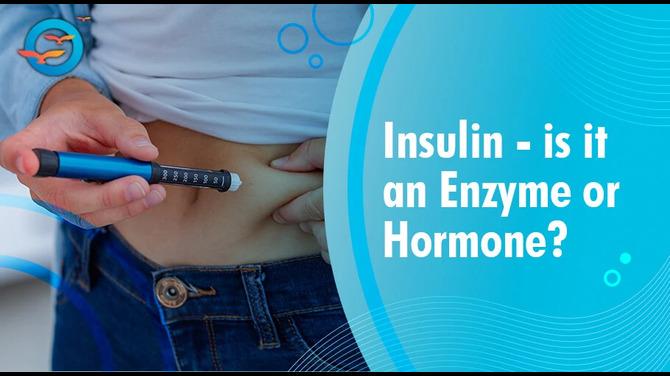
Many people get confused when they hear about insulin. A common question is—is insulin an enzyme or a hormone?
The answer is simple: insulin is a hormone. But to really understand why, we need to look at how it works inside the body.
In this article, I’ll explain this in a clear and practical way, so it’s easy to understand—even if you don’t have a medical background.
What is the Role of Insulin in the Body?
Insulin is produced in the pancreas by special cells called beta cells. These cells respond to changes in your blood sugar levels.
Whenever you eat, your blood sugar rises. In response, insulin is released into the bloodstream. Its main job is to help glucose enter your body’s cells so it can be used for energy.
Without insulin, glucose would remain in the blood instead of reaching the cells. Over time, this leads to high blood sugar and diabetes.
Insulin: Hormone vs Enzyme
To understand why insulin is a hormone, let’s first look at the difference between hormones and enzymes.
Enzymes help speed up chemical reactions in the body
Hormones act as messengers that signal different processes
Since insulin sends signals to cells—telling them to absorb glucose—it clearly functions as a hormone.
In fact, insulin is known as an anabolic hormone, meaning it helps the body store energy and build tissues.
How Insulin Works Inside the Body
Once insulin is released, it helps move glucose from the blood into:
Muscle cells
Fat cells
Liver
Here’s what happens next:
In the liver, glucose is stored as glycogen (a process called glycogenesis)
Excess glucose may also be converted into fat
For example, after eating a heavy meal, insulin helps store extra glucose for later use instead of letting it circulate in the blood.
High vs Low Insulin Levels
The balance of insulin in the body is very important.
When insulin levels are high:
The body enters a “fed” state
Energy gets stored as glycogen or fat
Glucose production in the liver slows down
When insulin levels are low:
The body enters a “fasting” state
Stored energy (fat and glycogen) is broken down
This process is called catabolism
For example, during fasting or long gaps between meals, low insulin allows the body to use stored energy.
Three Key Functions of Insulin
Insulin plays a major role in keeping the body stable. Its main functions include:
1. Regulating Blood Sugar
It keeps glucose levels within a healthy range at all times.
2. Storing Energy
It helps store glucose in the liver and muscles for future use.
3. Managing Nutrient Metabolism
It influences how the body uses carbohydrates, fats, and proteins.
Without insulin, the body cannot properly store glucose or produce fat.
What Happens Without Insulin?
If insulin is absent or very low, the body cannot use glucose effectively.
As a result:
The body starts breaking down fat for energy
This produces substances called ketones
High ketone levels can lead to a dangerous condition called diabetic ketoacidosis
This is why insulin is life-saving, especially for people with Type 1 diabetes.
How Insulin Controls Blood Sugar
Every time you eat, part of your food turns into glucose and enters your bloodstream.
Insulin then signals your cells to absorb this glucose.
If this process works well, blood sugar stays stable.
But if insulin is not produced or not used properly—as seen in diabetes—glucose builds up in the blood. Over time, this leads to serious health complications.
Insulin as a “Fed vs Fasting” Signal
Insulin also acts like a signal system for the body.
High insulin = Fed state → store energy
Low insulin = Fasting state → use stored energy
For example, after meals, insulin rises and promotes storage. During sleep or fasting, insulin drops, allowing the body to use stored fuel.
Why Insulin is So Important Today
Since its discovery in the 1920s, insulin has saved millions of lives.
Today, it is considered an essential medicine worldwide and is widely used in diabetes treatment.
However, modern lifestyles have led to increased insulin resistance, especially in people with Type 2 diabetes.
Understanding Insulin Levels
Insulin and blood sugar levels are usually checked at different times:
Fasting level – measured before eating
Post-meal level – measured after eating
Random level – taken at any time
In general:
Fasting blood sugar should be below 100 mg/dL
Random levels should stay below 140 mg/dL in healthy individuals
When Insulin Levels Go Wrong
Both low and high insulin levels can cause problems.
Low insulin (Hypoinsulinemia):
Leads to insulin deficiency
Common in Type 1 diabetes
High insulin (Hyperinsulinemia):
Linked to insulin resistance
Increases risk of obesity, heart disease, and Type 2 diabetes
Maintaining balance is the key.
Can You Improve Insulin Balance Naturally?
Yes, especially in early stages or Type 2 diabetes.
Simple lifestyle changes can make a big difference:
Eating a balanced, whole-food diet
Staying physically active
Managing stress
Getting proper medical guidance
Many people are able to improve insulin sensitivity and reduce dependency on medications with the right approach.
Final Thoughts
So, coming back to the main question—is insulin an enzyme or a hormone?
It is clearly a hormone, and a very important one at that.
Insulin plays a central role in managing blood sugar, storing energy, and keeping your metabolism balanced. When it works well, your body functions smoothly. But when it’s out of balance, it can lead to serious health issues.
The good news is that with the right lifestyle and awareness, you can support your insulin function and improve your overall health. Understanding insulin is the first step, but improving how your body responds to it is even more important. Explore how a structured diabetes reversal program can help restore insulin sensitivity naturally. Read more: insulin-is-an-enzyme-or-hormone.