
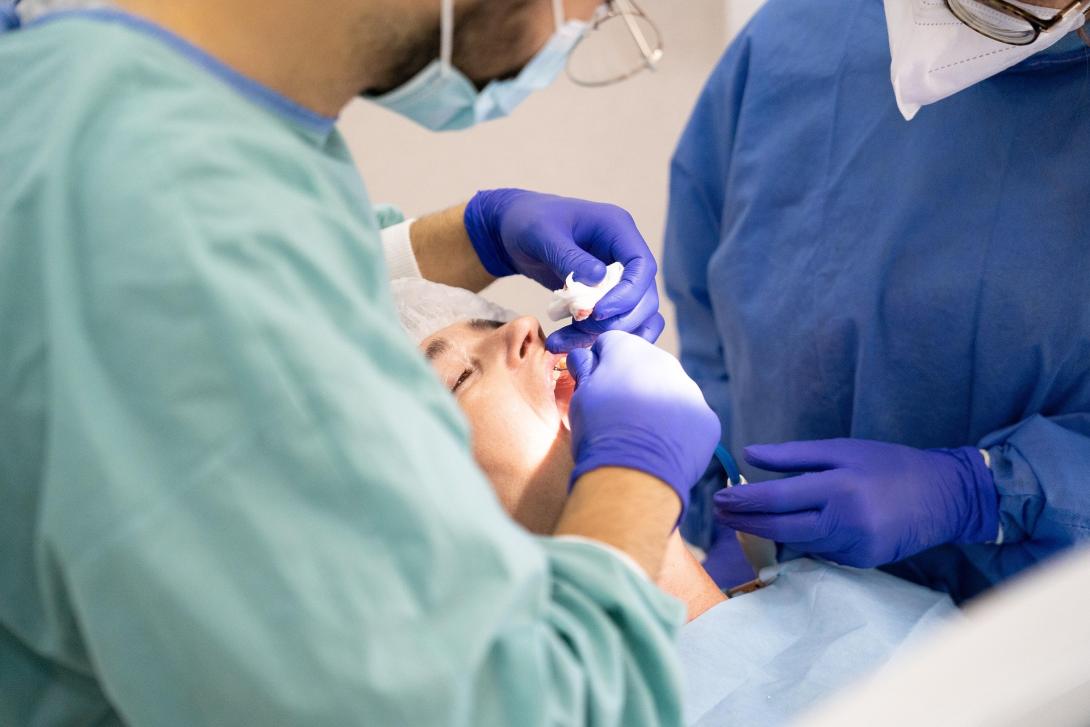
If you're researching dental implants Adelaide Australia patients trust for missing or failing teeth, you've probably got four questions on your mind: what actually happens, what it costs, whether it hurts, and how long you'll be out of action. This guide walks through all four — clearly, honestly, and without the jargon — so you can make an informed decision before you ever sit in the chair.
Dental implants Adelaide search results are full of price ranges and clinical terms that don't always translate into a real answer. Below, we break down the process from the first consultation to the final crown, and explain why choosing an experienced, Australian-registered local specialist matters more than most patients realise.
What Are Dental Implants? An Overview
A dental implant is a titanium post that's surgically placed into the jawbone to act as an artificial tooth root. Over several months, the bone grows around the implant in a process called osseointegration — essentially fusing the titanium post to your jaw so it becomes a stable, permanent foundation. Once healed, a connector piece called an abutment is attached to the top of the implant, and a custom-made crown is fitted over it to complete the restoration.
Unlike a bridge, an implant doesn't rely on neighbouring teeth for support, so healthy teeth either side of the gap are left untouched. Unlike a denture, it doesn't sit loosely on the gum — it's anchored directly into bone, which means it looks, feels, and functions like a natural tooth when you eat, speak, and smile.
Adelaide dental implants are typically recommended for patients who have lost a tooth to injury, decay, or gum disease, or who need a tooth removed because it's beyond repair. Good candidates generally have healthy gums, adequate jawbone density, and are committed to maintaining strong oral hygiene. If bone volume is insufficient, a bone grafting procedure can rebuild the site so it's ready to support an implant. Most dental implant literature reports success rates well over 90%, which is considered very high in medicine, although — as with any surgical procedure — individual results vary and a second opinion from a qualified practitioner is always worth seeking before proceeding.
For patients considering multiple missing teeth or a full arch, options like All-on-4 dental implants Adelaide clinics offer can replace an entire row of teeth using just four strategically placed implants, avoiding the need for a full set of individual implants.
Dental Implants Adelaide Australia Cost: What Influences the Price
Cost is usually the first question patients ask, and it's a fair one — dental implants are a meaningful investment, and prices vary more than people expect. In Adelaide, a single implant can start from around $1,500 for the implant fixture itself, though this figure typically excludes the abutment, crown, and any bone grafting that might be needed. By the time a single tooth restoration is complete from start to finish, total costs commonly range from roughly $3,000 to $6,000+, depending on the complexity of the case.
Several factors influence dental implants cost Adelaide patients are quoted:
- Number of implants needed — a single tooth replacement costs less than a full arch or All-on-4 restoration.
- Bone grafting requirements — if the jawbone has thinned following tooth loss, grafting adds both time and cost to the treatment plan.
- Implant brand and materials — established brands like Nobel Biocare, Dentsply Sirona, MIS, and BioHorizons vary in price point.
- Sedation choice — a straightforward local anaesthetic procedure costs less than treatment performed under IV sedation or sleep dentistry.
- Laboratory and crown work — custom crowns fabricated at a local laboratory add to the final cost but ensure a precise, natural-looking fit.
- Practitioner experience — a specialist with extensive implant experience and modern equipment may charge more, but this often reduces the risk of complications and revision work later.
It's worth being cautious of the cheapest dental implants Adelaide advertisements you may come across online. Extremely low quoted prices sometimes exclude essential components like the crown or don't account for cases requiring bone grafting — meaning the final bill ends up far higher than expected. A transparent, itemised quote from a registered Australian dental practitioner is the safest way to understand your real cost before committing.
The good news is that many Adelaide patients can offset part of the cost through private health insurance. Major funds including Medibank, Bupa, HCF, HBF, nib, CBHS, and Frank Health Insurance typically offer rebates on implant treatment for members with extras cover that includes major dental or oral surgery — it's worth checking your policy or asking your dentist to help you understand what's claimable.
The Dental Implant Procedure Step-by-Step
The dental implant procedure is not a single appointment — it's a staged process that typically unfolds over three months or more, allowing proper healing at each stage. Here's how it generally proceeds:
- Initial assessment. Your dentist examines the affected tooth or gap, takes imaging (X-rays or a CT scan) to assess jawbone density, and determines whether the tooth needs extraction or can be preserved. Teeth are only removed when they're genuinely beyond repair.
- Extraction (if needed). If a tooth must come out, it's removed carefully to preserve as much surrounding bone as possible. In some cases, an implant can be placed immediately at the time of extraction. In others — particularly where bone volume is limited — patients wait around two months before the implant is placed, with a temporary solution filling the gap in the meantime for aesthetic reasons.
- Implant placement. The titanium implant post is surgically positioned into the jawbone under local anaesthetic. If bone grafting is required, it's typically carried out at this stage or shortly beforehand.
- Healing and osseointegration. This is the longest phase, generally requiring a minimum of two to three months. During this time, the bone fuses around the implant, creating a stable base strong enough to support a crown.
- Abutment and impressions. Once osseointegration is confirmed, the abutment is attached and an impression is taken. This is sent to a local dental laboratory, where your custom crown is fabricated to match the shape, size, and colour of your natural teeth.
- Final crown fitting. A few days to a couple of weeks later, the finished crown is attached to the abutment, completing the restoration.
From first consultation to final crown, the full dental implant procedure typically spans a minimum of three months, and can take longer for more complex cases involving grafting or multiple implants. Choosing a dental implant specialist who manages every stage locally — rather than outsourcing components overseas — means faster communication, easier follow-up, and no added complications if something needs adjusting along the way.
Do Dental Implants Hurt? Pain Levels and Anaesthesia Explained
This is one of the most common concerns patients raise, and the honest answer is: most patients report far less discomfort than they expect. The implant placement itself is performed under local anaesthetic, so you shouldn't feel pain during the procedure — at most, some pressure or vibration as the implant is positioned into the jawbone.
For patients who feel anxious about dental procedures, sleep dentistry (IV sedation) is available as an option. Under sedation, a licensed anaesthetist safely sedates the patient throughout the appointment, meaning most people have little to no memory of the procedure afterwards. This can make the experience significantly more comfortable for nervous patients or those undergoing more involved treatment, such as multiple implants or bone grafting in a single visit.
After the anaesthetic wears off, it's normal to experience mild to moderate soreness, swelling, or bruising around the surgical site for a few days. This is generally well managed with over-the-counter pain relief and typically improves noticeably within 48 to 72 hours. Most patients describe post-implant discomfort as comparable to, or milder than, a tooth extraction — manageable, temporary, and far less daunting than the anticipation beforehand.
Dental Implant Recovery Time and Healing Timeline
Recovery from dental implant surgery happens in stages, and understanding the timeline helps set realistic expectations.
First 24–48 hours: Mild swelling, tenderness, and slight bleeding are common. Sticking to soft foods, avoiding the surgical site when brushing, and resting are usually recommended.
First week: Swelling and discomfort should steadily reduce. Most patients return to normal daily activities within a few days, though strenuous exercise is typically best avoided for about a week.
2–3 months: This is the osseointegration window, where the implant fuses with the jawbone. There's little visible change during this period, but it's the most critical phase for long-term implant success — patients won't feel ongoing pain, but should maintain excellent oral hygiene and attend any scheduled check-ins.
3+ months (final restoration): Once the implant is confirmed to be fully integrated, the abutment and crown are fitted, completing the visible restoration.
Total dental implant recovery time, from surgery to final crown, is generally a minimum of three months, though cases involving bone grafting or multiple implants can take longer. Long-term, implants require the same care as natural teeth — regular brushing, flossing, and professional cleanings — and with proper maintenance, they're designed to last many years, helping preserve jawbone structure and prevent the facial changes that often follow untreated tooth loss.
Why Choose Dr Zielinski & Associates for Dental Implants in Adelaide
Choosing the right dental implant specialist Adelaide patients can trust makes a real difference to both the experience and the outcome. At Dr. Zielinski, every stage of your implant journey — from initial assessment through to the final crown — is handled locally by an Australian-registered dental practitioner, so there's no overseas travel, no communication delays, and no uncertainty if follow-up care is ever needed.