

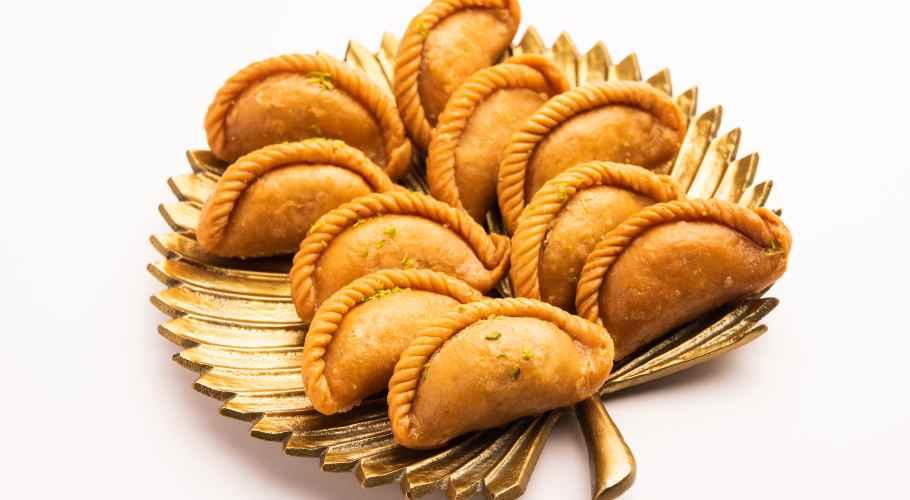
Baked Jowar Karanji – A Diabetes-Friendly Twist on a Traditional Maharashtrian Sweet
A Healthier Version of Traditional Festival Karanji
Karanji is a classic sweet from Maharashtrian cuisine that holds a special place during festive celebrations such as Ganesh Festival, Diwali, and other family occasions. Traditionally, karanji is prepared as a half-moon-shaped pastry made from suji (semolina) or maida (refined flour) and filled with a rich mixture of shredded coconut, dry fruits, and sugar. The final step usually involves deep frying in ghee, creating the crisp texture and rich flavor associated with this festive favorite.
While traditional karanji is enjoyed for its taste and cultural significance, the combination of refined flour, added sugar, and deep frying may not align well with balanced eating habits or blood sugar awareness.
This FFD-style Baked Jowar Karanji offers a modified version that preserves the festive experience while making thoughtful ingredient substitutions. By replacing frying with baking, using jowar flour instead of refined flour, and relying on dates and stevia for sweetness, this recipe creates a lighter alternative that can be enjoyed more mindfully.
Although portion awareness remains important, simple ingredient changes can help make traditional sweets more adaptable to healthier eating patterns.
Why This Version Works Better for Blood Sugar Awareness
This recipe introduces several modifications to create a more balanced nutritional profile.
Key changes include:
- Baked instead of deep fried
- No refined flour (maida) used
- Uses jowar flour as the base
- Dates provide natural sweetness
- Stevia reduces dependence on added sugar
- Includes nuts that contribute healthy fats and texture
- Uses plant-based ingredients instead of traditional ghee
These ingredient choices may help create a dessert that feels satisfying while reducing excess refined carbohydrates and added sugars.
Nutritional Highlights
Jowar Flour
Jowar (sorghum) flour replaces refined flour and forms the outer covering of the karanji. Jowar contains fiber and is commonly included in balanced eating approaches.
Dates
Dates contribute natural sweetness and also help bind the filling together. Their soft texture adds richness without relying entirely on refined sugar.
Cashews, Almonds, and Pistachios
The combination of nuts creates a flavorful and nutrient-rich filling. Nuts also contribute healthy fats and make the dessert more satisfying.
Cashew Butter and Cashew Cream
These ingredients help improve texture and richness while keeping the recipe dairy-free.
Cardamom, Nutmeg, and Saffron
Traditional Indian spices and saffron provide warmth, aroma, and festive flavor without needing additional sweeteners.
Ingredients
For Filling
- ¼ cup cashews (finely slivered)
- ¼ cup almonds (finely slivered)
- ¼ cup pistachios (finely slivered)
- ½ cup dates (chopped)
- Few drops stevia as needed
- 1 tsp cardamom powder
- ½ tsp nutmeg (jaiphal) powder
- Pinch of saffron (kesar)
For Dough
- 2 cups jowar atta
- ½ cup cashew butter
- ½ tsp cardamom powder
- ½ tsp nutmeg powder
- 2 tbsp cashew cream
- Few drops stevia
- Hot water to prepare dough
Makes approximately 25–30 medium-sized karanjis.
Method
Step 1: Prepare the Filling
Lightly roast the cashews, almonds, pistachios, and saffron until they become slightly golden and release a roasted aroma.
Remove from heat and allow the mixture to cool completely.
Add chopped dates, stevia, cardamom powder, and nutmeg powder.
Mix thoroughly and keep the filling aside in an airtight container.
Step 2: Prepare the Dough
In a large mixing bowl, combine jowar flour, cashew butter, cardamom powder, nutmeg powder, cashew cream, and stevia.
Slowly add hot water while mixing until a soft and workable dough forms.
Cover and allow the dough to rest briefly.
Step 3: Shape the Karanji
Divide the dough into small equal portions.
Roll each portion into small rounds.
Place a spoonful of filling in the center.
Fold into a half-moon shape and seal the edges carefully.
Create decorative flowery edges using fingers or a karanji cutter.
Step 4: Bake
Arrange the prepared karanjis on a baking tray.
Bake in a preheated oven at 180°C–200°C until both sides turn light golden.
Allow them to cool before serving.
Tips for Better Results
- Roast nuts gently to avoid bitterness.
- Keep the filling dry to prevent breakage while baking.
- Use hot water gradually to maintain soft dough consistency.
- Seal edges properly so filling stays intact during baking.
- Store in an airtight container after cooling.
- Enjoy in moderation as part of a balanced eating pattern.
Serving Suggestions
Baked Jowar Karanji can be served:
- During festive celebrations
- As an occasional homemade dessert
- Alongside herbal tea
- As a special snack for gatherings and family occasions
Final Thoughts
Traditional sweets are an important part of celebrations and food culture. With small ingredient modifications, it is possible to create versions that feel lighter while preserving familiar flavors and festive experiences.
This Baked Jowar Karanji combines the richness of nuts, the sweetness of dates, and the texture of baked jowar dough into a more mindful alternative to traditional fried karanji. When enjoyed in moderation, it can become part of a balanced and enjoyable lifestyle.
Read more about this , visit our blog