
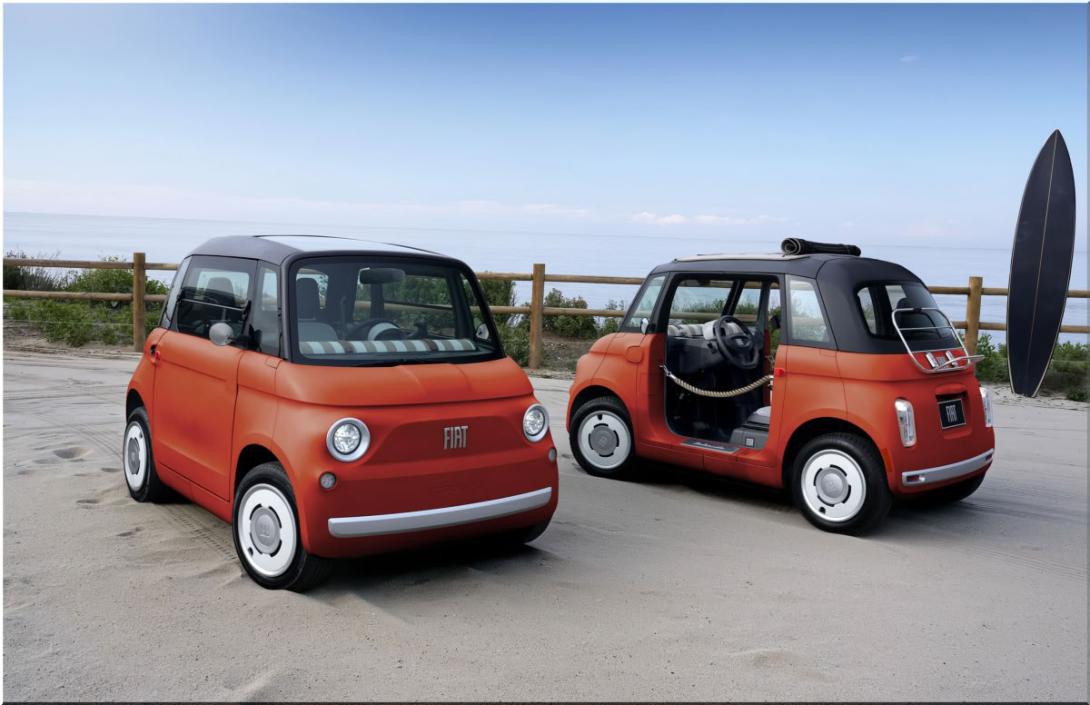
Dense American cities, coastal enclaves, and master-planned communities face a constant spatial crisis as passenger vehicles continue to inflate in size and weight. The 2027 Fiat Topolino tackles this urban sprawl head-on by delivering a zero-emission, ultra-compact footprint designed specifically for short-distance micro-mobility. Stellantis officially brings this iconic Italian nameplate stateside, tailoring the platform to meet federal Low-Speed Vehicle (LSV) regulations while adding fresh exterior paint options, a distinctive open-air body configuration, and minimalist urban utility.

Architectural Dimensions and Body Styling Innovation
Spatial efficiency forms the foundation of the 2027 Fiat Topolino engineering philosophy. A bumper-to-bumper length of just 99.6 inches paired with a slim 55.1-inch width allows the vehicle to maneuver through cramped alleyways and navigate tight parking structures effortless. The sub-100-inch profile lets drivers park up to three Topolino units side-by-side within a single standard parallel parking space.
Underneath the vibrant exterior finish lies a rigid tubular steel spaceframe chassis wrapped in lightweight composite thermoplastic body panels. This structural design keeps total curb weight at a mere 1,069 pounds including the high-voltage battery pack. For comparison, traditional subcompact automobiles weigh over 2,750 pounds and measure upwards of 161.5 inches in length.
The North American specification introduces a DolceVita open-air body style tailored for warmer climates and beachside transport. This configuration replaces traditional metal doors with thick woven rope barriers and swaps the solid steel roof for a heavy-duty retractable canvas sunroof. A overall height of 60.2 inches maintains ample headroom inside the cabin, while an ultra-tight wall-to-wall turning radius of 23.6 feet ensures unmatched agility across congested city blocks.
Electric Powertrain Mechanics and Charging Logistics
Propulsion relies on a single rear-mounted permanent magnet synchronous motor driving the back wheels directly without a complex multi-speed transmission. The electric motor delivers a steady 8 continuous horsepower alongside a temporary peak rating of 17 horsepower. Top speed remains electronically governed at 25 mph to maintain strict compliance with federal FMVSS 500 standards for low-speed street-legal operation on roadways posted at 35 mph or below.
Energy flows from a floor-mounted 5.4-kWh lithium-ion battery pack operating at a 48-volt nominal threshold. This compact chemistry emphasizes long-term cell durability and thermal stability over extended highway range. The vehicle offers an estimated driving range of 45 miles per full charge, matching the typical daily mileage needs of urban commuters, campus maintenance crews, and local resort shuttles.
Recharging requires zero proprietary infrastructure or costly electrical upgrades. An onboard 2.0-kW battery charger routes energy directly through an integrated, retractable charging cord that plugs into any standard 120-volt residential wall outlet. Depleted battery cells replenish completely from zero to 100 percent in approximately four hours.
Interior Space Utilization and Modern Digital Integration
Designing an ergonomic passenger compartment inside a restricted footprint requires clever interior geometry. Engineers positioned the driver and passenger seats in an asymmetrical layout. The driver seat slides along a traditional fore-and-aft track, whereas the passenger seat sits stationary slightly behind the driver shoulder line. This offset seating arrangement frees up elbow room for two adult passengers while opening up a dedicated front luggage recess.
Interior storage total 22.2 cubic feet across the cabin, outperforming the 15.0 cubic feet of cargo capacity found in many conventional compact hatchbacks. Storage features include deep door net pockets, dashboard utility cubbies, and a rear luggage rack mount.
The driver dashboard discards heavy analog instrument clusters in favor of a smartphone integration dock. A central mounting bracket secures the driver mobile phone, connecting instantly via Bluetooth to stream turn-by-turn navigation, display speed metrics, and drive external audio playback. Passive cabin ventilation occurs naturally through open door portals and the canvas roof, supported by an electrical heated windshield defroster grid for cold mornings.
Chassis Hardware and Safety Features
The chassis pairs utility with basic automotive safety standards to satisfy municipal vehicle codes across the country. The front suspension utilizes an independent MacPherson strut setup, while the rear axle uses a compact trailing arm layout to cushion road imperfections. Rolling stock consists of 14-inch steel wheels wrapped in high-efficiency 155/65R14 low-rolling-resistance all-season tires.
Braking performance combines hydraulic front disc brakes with mechanical rear drum units to deliver reliable stopping power for a light vehicle chassis. Standard safety equipment includes three-point lap-and-shoulder seatbelts, high-intensity LED headlights, laminated safety glass windshields, dual side mirrors, and integrated turn signals.
Starting at an estimated base MSRP under $10,000, the Topolino presents a compelling economic case for urban dwellers seeking weather-protected personal transit without traditional auto ownership overhead.
Pro-Tip for Commercial Fleets: Deploying low-speed electric vehicles across corporate campuses or municipal delivery zones cuts operational costs dramatically. Charging via existing 120V electrical infrastructure avoids the tens of thousands of dollars required to engineer and install dedicated Level 2 charging stations.
Frequently Asked Questions
Is the 2027 Fiat Topolino quadricycle car legal to drive on high-speed highways? No. Federal regulations restrict low-speed vehicles to public roads with posted speed limits of 35 mph or lower, making it ideal for urban districts, suburban neighborhoods, and private developments rather than interstates.
How long does it take to charge the battery using a regular home outlet? The integrated charging cable plugs directly into standard 120-volt outlets and completely recharges the 5.4-kWh battery pack from zero to full capacity in about four hours.