

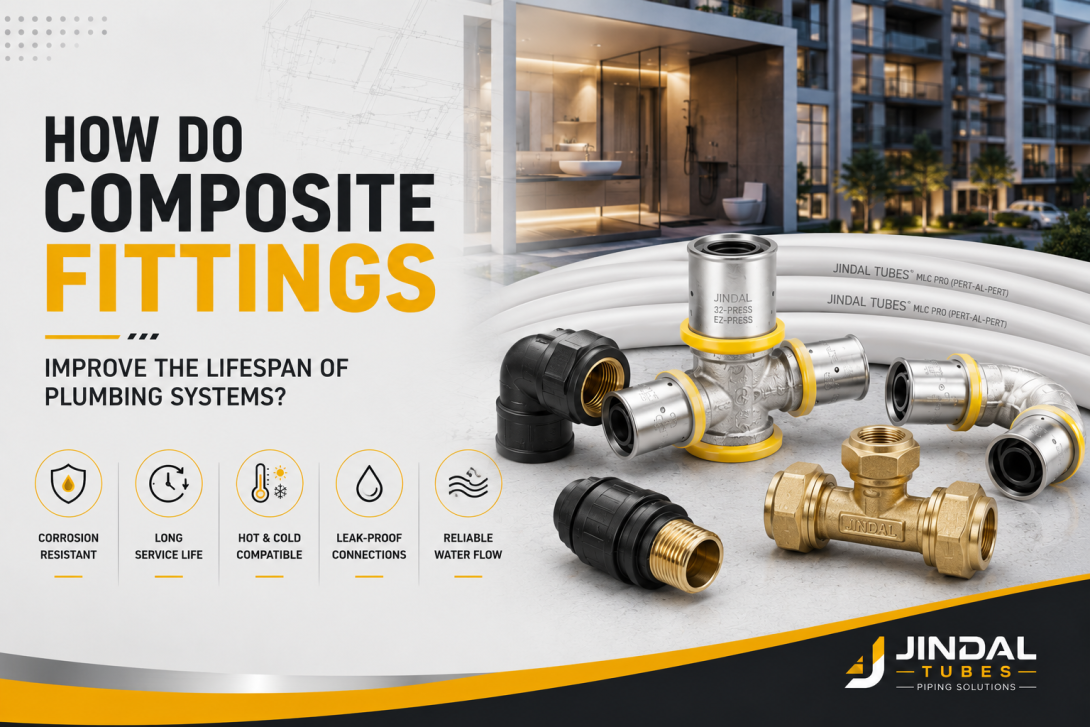
The lifespan of a plumbing system depends on more than the quality of its pipes. Pipe connections are often the first components to fail due to pressure changes, thermal movement, improper installation, or material incompatibility. Composite fittings help extend the service life of plumbing systems by creating durable, leak-resistant connections that maintain their performance under demanding operating conditions. When paired with multilayer composite pipes, they contribute to a more reliable and lower-maintenance plumbing infrastructure.
Why Plumbing System Lifespan Depends on More Than Pipes
Many building owners focus on selecting durable pipe materials, but every plumbing network contains dozens, or even hundreds, of connection points.
If these joints fail, the entire system can require repairs regardless of the pipe's condition.
Common causes of reduced plumbing lifespan include:
- Leaking pipe joints
- Corrosion of metal fittings
- Water pressure fluctuations
- Thermal expansion and contraction
- Poor installation practices
- Incompatible pipe and fitting combinations
According to the International Association of Plumbing and Mechanical Officials (IAPMO), using certified plumbing products that comply with recognized standards helps improve system safety, durability, and long-term performance.
Composite Fittings Are Designed for Long-Term Reliability
Composite fittings are engineered specifically for multilayer composite piping systems such as PE-AL-PE pipes. Rather than relying on threaded joints that may loosen over time, press-fit composite fittings create permanent mechanical connections designed to maintain sealing integrity for decades.
Their design helps:
- Improve joint stability
- Maintain consistent sealing pressure
- Reduce connection failures
- Support long-term system performance
Understanding the structure of multilayer pipes explains why compatible fittings are so effective. The guide on How PE-AL-PE Multi-Layer Pipes Work explores how multilayer construction contributes to plumbing durability.
Stronger Connections Mean Fewer Failures
Most plumbing failures occur at joints rather than within the pipe itself.
Composite fittings improve reliability by creating secure mechanical connections that help resist:
- Joint movement
- Pressure cycling
- Pipe vibration
- Mechanical stress
- Long-term wear
Because connection failures are minimized, the overall plumbing system experiences fewer repairs throughout its service life.
The International Code Council (ICC) recognizes press-connect technology as a reliable joining method that creates permanent mechanical joints for modern plumbing systems.
Resistance to Pressure Fluctuations Improves Durability
Residential and commercial plumbing systems experience changing water pressure every day.
These fluctuations can gradually weaken poorly designed pipe connections.
Composite fittings are engineered to maintain secure sealing under varying operating pressures, helping to preserve system integrity over time.
Benefits include:
- Stable mechanical joints
- Reliable pressure performance
- Reduced joint fatigue
- Improved operational reliability
Better Thermal Performance Protects Plumbing Connections
Temperature changes naturally cause plumbing materials to expand and contract.
Repeated thermal cycling places continuous stress on pipe joints.
Composite fittings designed for multilayer systems help absorb these movements while maintaining secure connections.
This helps reduce:
- Seal deterioration
- Joint loosening
- Stress-related failures
- Maintenance requirements
The Plastic Pipe Institute (PPI) highlights the long-term performance advantages of modern plastic and multilayer piping systems, particularly their resistance to corrosion and suitability for hot and cold water applications.
Corrosion Resistance Supports Longer Service Life
Traditional metal fittings may be vulnerable to corrosion depending on water quality and environmental conditions.
Composite press-fit systems help minimize corrosion-related issues by using materials specifically engineered for modern plumbing applications.
This contributes to:
- Longer component life
- Improved water quality
- Lower maintenance costs
- More reliable plumbing performance
Reduced Maintenance Extends Overall System Value
Every plumbing repair adds to the total cost of building ownership.
Reliable composite fittings help reduce:
- Emergency repairs
- Water damage
- Maintenance labour
- Replacement frequency
- Building downtime
The U.S. Environmental Protection Agency (EPA) encourages infrastructure planning that considers lifecycle performance and long-term maintenance when selecting building systems.
Compatibility Creates Better Plumbing Performance
Pipes and fittings perform best when designed as one integrated system.
Composite fittings provide:
- Accurate dimensional compatibility
- Reliable sealing performance
- Better hydraulic efficiency
- Long-term structural stability
For multilayer plumbing applications, EZ-PRESS composite fittings are engineered to work with compatible composite pipes, helping installers create durable press-fit connections that support long-term plumbing reliability.
Composite Fittings vs Traditional Plumbing Fittings
Feature
Composite Press-Fit Fittings
Traditional Threaded Fittings
Leak Resistance
Excellent
Moderate
Corrosion Resistance
High
Varies
Pressure Stability
Excellent
Moderate
Thermal Performance
High
Moderate
Maintenance Requirements
Low
Higher
Expected Long-Term Reliability
Excellent
Depends on installation
Why the Industry Is Investing in Longer-Lasting Plumbing Systems
Modern construction increasingly focuses on total lifecycle value rather than simply reducing upfront installation costs.
Builders, engineers, and consultants are selecting integrated multilayer piping systems because they offer:
- Greater connection reliability
- Reduced maintenance
- Improved installation consistency
- Longer operational lifespan
- Better overall building performance
Manufacturers such as Jindal Tubes have contributed to this industry shift by developing compatible multilayer piping solutions where composite pipes and press-fit fittings work together to support durable, high-performance plumbing systems.
Frequently Asked Questions
Do composite fittings last as long as composite pipes?
When properly installed with compatible piping systems, high-quality composite fittings are designed for long-term performance and are intended to match the service life of modern multilayer plumbing systems.
Why do plumbing connections fail before pipes?
Connections experience continuous pressure changes, thermal movement, and mechanical stress, making them more susceptible to failure than straight pipe sections.
Can composite fittings reduce maintenance costs?
Yes. By minimizing leaks and connection failures, composite fittings help reduce repair frequency, maintenance expenses, and water damage throughout the building's lifecycle.
Where are composite fittings commonly used?
They are widely used in residential buildings, commercial developments, hospitals, hotels, educational facilities, and industrial plumbing systems utilizing multilayer composite piping.
Final Insight
The durability of a plumbing system is determined not only by the pipes installed but also by the reliability of every connection between them. Composite fittings strengthen these critical connection points by providing secure mechanical joints that resist pressure changes, thermal movement, and corrosion over years of service.
As the construction industry continues to prioritize lifecycle performance and maintenance efficiency, composite press-fit fittings have become an essential part of modern plumbing infrastructure. When combined with compatible multilayer piping systems, they help extend system lifespan while improving reliability, operational efficiency, and long-term value for building owners.