

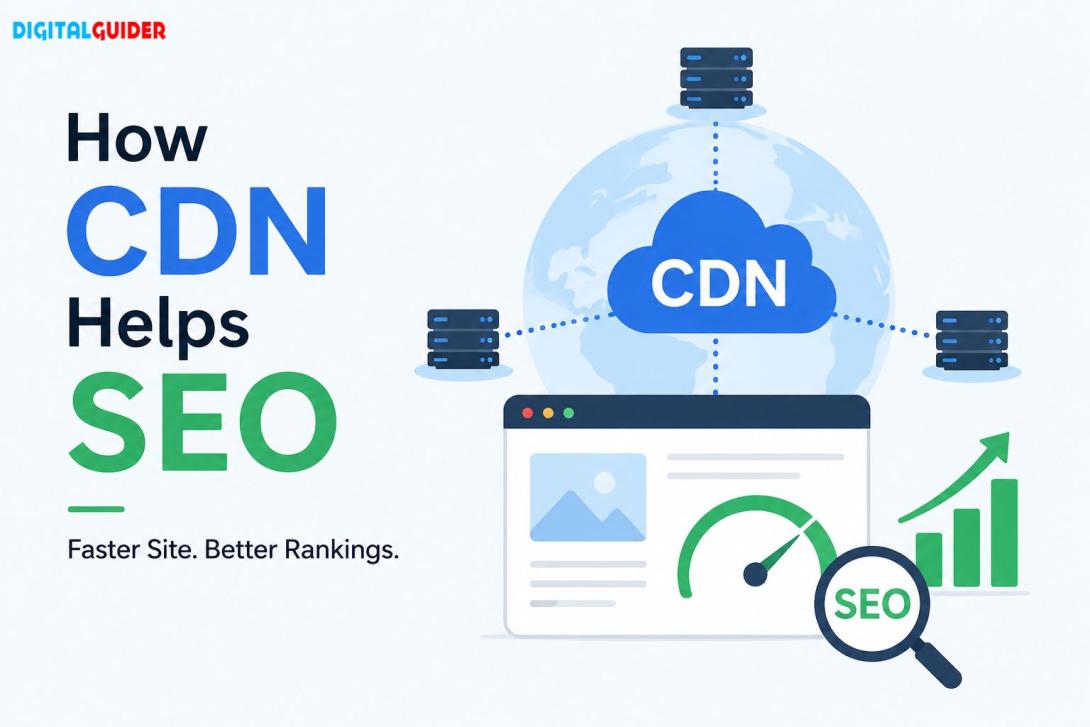
In today’s hyper-competitive search landscape, ranking on Google is no longer just about keywords and backlinks. Technical performance has become a decisive factor, and one of the most overlooked elements is your Content Delivery Network (CDN).
If you’re serious about improving your rankings, understanding how a CDN impacts SEO is essential. A well-implemented CDN doesn’t just make your website faster; it strengthens your entire SEO foundation.
For a deeper breakdown, check out this detailed guide on how CDN improves SEO.
What Is a CDN and Why Does It Matter?
A Content Delivery Network (CDN) is a distributed network of servers located across different geographic regions. Instead of serving your website from a single origin server, a CDN delivers content from the server closest to the user.
Think of it this way: instead of every visitor accessing your website from one central location, they receive data from a nearby “edge server,” drastically reducing load time.
This matters because speed, accessibility, and stability are now core ranking signals.
The Direct Connection Between CDN and SEO
Let’s be clear: Google doesn’t rank your site simply because you use a CDN. However, a CDN improves the exact metrics that Google does care about, making it a powerful indirect ranking factor.
Here’s how:
1. Faster Page Load Speed (A Confirmed Ranking Factor)
Page speed has been a confirmed Google ranking factor for years. With the introduction of Core Web Vitals, it has become even more critical.
A CDN reduces the physical distance between your server and your users. By caching assets like images, CSS, and JavaScript on global servers, content is delivered faster.
In fact, websites using CDNs can reduce load times significantly, sometimes by up to 50% or more.
SEO impact:
- Lower bounce rates
- Higher engagement
- Better rankings
2. Improved Core Web Vitals
Core Web Vitals, such as Largest Contentful Paint (LCP) and Interaction to Next Paint (INP), are key performance metrics used by Google to evaluate user experience.
A CDN directly improves these metrics by:
- Delivering large files faster
- Reducing latency
- Ensuring smoother page rendering
This helps turn poor performance scores into “green” metrics in tools like Google Search Console.
SEO impact:
- Stronger UX signals
- Higher chances of ranking on Page 1
3. Reduced Server Load and Better Uptime
Without a CDN, every request hits your origin server. During traffic spikes, this can slow down your site, or worse, crash it.
A CDN offloads a large portion of traffic by serving cached content from edge servers, reducing strain on your main server.
Additionally, CDNs provide redundancy. If one server fails, another takes over.
SEO impact:
- Improved uptime
- No ranking drops due to downtime
- Better crawl reliability
4. Enhanced Crawl Efficiency
Search engines like Google allocate a “crawl budget” to your website. If your server is slow or overloaded, Googlebot reduces the number of pages it crawls.
With a CDN:
- Your server responds faster
- Googlebot can crawl more pages
- Crawl rate may increase
Google has even indicated that faster infrastructure can lead to increased crawl activity.
SEO impact:
- Faster indexing
- Better visibility for large websites
5. Lower Latency and Better Global Reach
If your audience is spread across different countries, a single hosting server can create uneven experiences.
A CDN solves this by serving users from the nearest location, reducing latency and ensuring consistent performance worldwide.
SEO impact:
- Better international SEO
- Improved mobile experience
- Higher engagement across regions
6. Stronger Security Signals
Modern CDNs offer built-in security features like:
- DDoS protection
- Web Application Firewalls (WAF)
- SSL encryption
Security is a trust signal, not just for users, but also for search engines.
A secure, stable website is less likely to experience disruptions or penalties.
SEO impact:
- Improved trustworthiness
- Reduced risk of downtime or attacks
7. Better User Experience = Better Rankings
At its core, SEO is about user experience. Google rewards websites that provide fast, smooth, and reliable interactions.
A CDN contributes directly to:
- Instant page loading
- Seamless browsing
- Reduced frustration
And when users stay longer, interact more, and bounce less, your rankings naturally improve.
When You Might Not Need a CDN
While CDNs are powerful, they’re not always necessary.
You may not need one if:
- Your site is small and local
- Traffic is minimal
- Content is lightweight
However, as soon as your audience grows or your site becomes content-heavy, a CDN quickly becomes a necessity rather than a luxury.
Common CDN Mistakes That Can Hurt SEO
A poorly configured CDN can actually harm your rankings. Common issues include:
- Blocking search engine bots
- Incorrect caching rules
- Duplicate content problems
This is why implementation matters just as much as adoption.
Final Thoughts
In 2026, SEO is no longer just about content and backlinks; it’s about infrastructure. A CDN acts as the bridge between your website and both users and search engines. It enhances speed, improves crawlability, strengthens security, and ensures a consistent global experience.
While it may not be a direct ranking factor, its influence on critical SEO signals makes it indispensable. If you’re aiming for higher rankings, better performance, and scalable growth, investing in a CDN is no longer optional; it’s essential.