
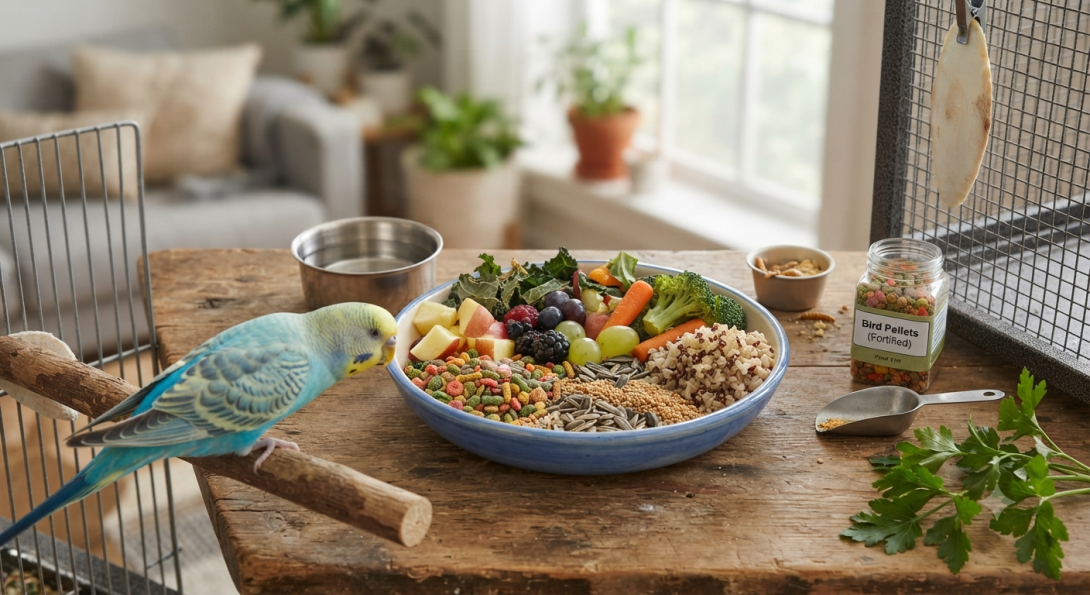
The best food for birds is a formulated pellet diet, with fresh vegetables and a small amount of seed on the side. Pellets deliver vitamins and minerals that seed mixes lack. Avian vet guidance puts pellets at roughly 60 to 80 percent of a budgie’s daily food.
Shopping for food for birds can feel like guesswork. The bag says “complete,” the seed mix looks colorful, and your bird still might miss key nutrients. This guide shows what a healthy bowl looks like and how to move a picky eater onto a better diet.
Key Takeaways
- Pellets should be the base of the diet. For budgies, vets suggest 60 to 80 percent.
- Seeds and nuts are high in fat and low in calcium and vitamins. Treat them as extras.
- Switching a seed lover to pellets can take days, weeks, or even months.
- Powder sprinkled on seed does little, because birds remove the hulls first.
- Ask your avian vet to check your bird’s weight and diet once a year.
Why Seed-Only Diets Fall Short
Pet birds have long been fed seeds and nuts. The MSD Veterinary Manual says these diets run high in fat and short on many vitamins and minerals. It also calls poor diet a major ongoing problem for pet birds.
Birds pick favorites. Give a bird a bowl of mixed pellets and seeds, and it will grab the tasty seeds and leave the pellets behind. A mixed bowl does not fix the problem on its own.
So what goes wrong over time? MSD lists vitamin A deficiency, low calcium, goiter from low iodine, and obesity. A bird counts as obese when it weighs 20 percent more than its ideal weight. Seed-heavy diets are also low in calcium, and African greys fed only seed face a higher risk of sudden low blood calcium.
What a Healthy Bowl Looks Like
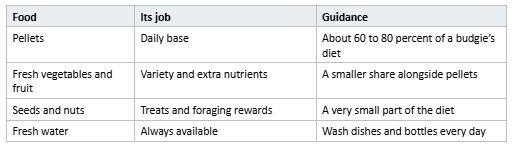
Species matter. MSD says the goal is a balanced pelleted diet plus a smaller amount of fresh vegetables and fruit. Your vet can name the right pellet-to-fresh ratio for your bird.
Picking a Pellet
Choose a formula made for your bird’s size and species. Do not trust the front of the bag alone. VCA Animal Hospitals points out that no regulatory body certifies avian diet products, so a “complete nutrition” claim proves little. Read the ingredient list and ask your vet which brands they trust.
Using Seeds Well
Seeds still have a place. Hide a few in a foraging toy or use them as a reward. Millet spray is a favorite, but VCA notes that millet lacks many nutrients, so keep it rare.
How to Switch Your Bird to Pellets
Birds can be stubborn about change. Go slowly and stay consistent.
- Offer pellets first thing in the morning, when your bird is hungriest.
- Mix pellets with the usual seeds. Cut the seed a little each day while the pellets increase.
- If your bird refuses, offer a small amount of seed or fresh food later in the day.
- Put any supplement on moist food, not on seed.
- Call your vet if your bird stops eating or loses weight.
VCA says a diet change can take days, weeks, or months. Patience beats pressure here.
Buying Food for Birds Online
When you buy bird food online, check three things before you add to cart. Make sure the formula fits your bird’s species and size. Read the full ingredient list. Look for a recent best-by date, then store the bag sealed and dry at home.
Common Diet Mistakes
A few habits trip up even careful owners.
- Mixing pellets into seed and hoping your bird picks the healthy ones. MSD says birds usually choose the tastier seeds and nuts.
- Sprinkling vitamin powder on seed. The hulls come off, and the powder goes to waste.
- Trusting a “complete” label without reading the ingredients.
- Sharing fatty or salty table foods, which add to the obesity risk.
Frequently Asked Questions
How much food should my bird eat each day?
Your vet sets the exact amount, because it depends on species, size, and activity. Offer a measured portion of pellets and fresh food daily. Remember that a bird 20 percent over its ideal weight counts as obese, according to MSD.
Can birds live on seeds alone?
No. VCA says a seed-only diet lacks vitamins, minerals, and protein, and it can shorten a bird’s life. Even seed-loving birds like budgies need pellets as the base. Move over slowly and ask your vet for a plan.
Do birds need grit?
Budgies do not. VCA explains that budgies remove the outer hull before swallowing the kernel, so grit adds nothing. Ask your vet before offering grit to any other species.
Do pellet-fed birds need extra vitamins?
Usually not. MSD says birds eating mostly commercial pellets typically need no added vitamins or minerals unless a vet recommends them. Too much vitamin A can cause trouble too, so ask before you add anything.
Which human foods are dangerous for birds?
Avoid avocado, chocolate, caffeine, and alcohol. Avian vet Dr. Laurie Hess explains that caffeine can cause arrhythmia and even cardiac arrest, and chocolate can be toxic in tiny amounts. If your bird eats any of these, call your vet right away.
Next Steps
Look at what your bird actually eats tonight, not what you put in the bowl. Pick a pellet sized for your bird, start mixing it in this week, and book a vet visit to confirm weight and diet.
This article is general information, not veterinary advice. Talk to your avian vet before you change your bird’s diet.
#birds food #food for birds #bird food online #bird food #bird feed #food for birds