
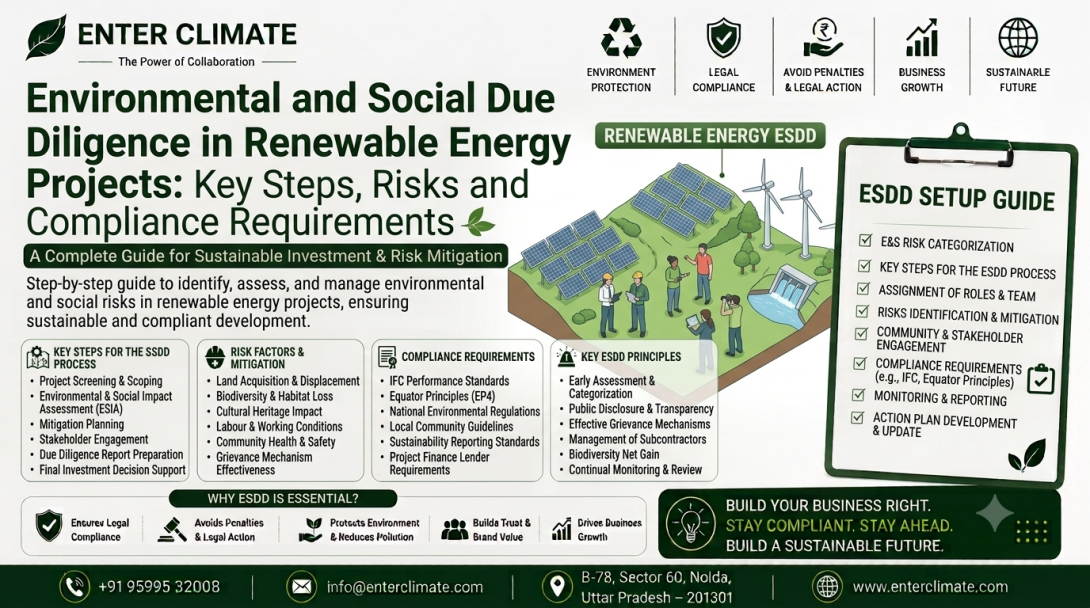
Renewable energy projects such as solar parks, wind farms, and small hydropower plants are helping India move toward cleaner energy. But starting a renewable energy project is not only about installing panels or turbines. A project can also affect land, water, workers, nearby communities, and the local environment.
This is why Environmental and Social Due Diligence in the Renewable Energy Industry has become an important part of project planning. It helps businesses understand possible risks before they become expensive problems.
What Is Environmental and Social Due Diligence?
Environmental and Social Due Diligence, often called E&S Due Diligence, is like doing a health check of a project.
Before investing in or starting a renewable energy project, experts check questions such as:
- Will the project affect local land or water?
- Are all important environmental approvals in place?
- Are workers being treated safely and fairly?
- Could nearby communities be affected?
- Is the project following applicable environmental laws?
- Are there plans for handling emergencies and waste?
The goal is simple: find problems early and fix them before they cause bigger trouble.
Why Is It Important for Renewable Energy Projects?
A solar or wind project may look environmentally friendly, but it can still create risks.
For example, a large solar park may require significant land. Construction can create dust, noise, waste, and traffic. A wind project may affect nearby communities or local biodiversity. Workers can also face safety risks during construction and operation.
A proper due diligence process helps project owners understand these issues and take action.
Key Steps in Environmental and Social Due Diligence
1. Check Legal and Environmental Compliance
The first step is to check whether the project has the required permissions, approvals, consents, and other documents.
Experts review environmental approvals, pollution control requirements, waste management records, land-related documents, and other applicable regulations.
Missing or outdated compliance documents can create delays, penalties, or difficulties during financing.
2. Study Environmental Risks
The next step is to understand how the project may affect the environment.
The assessment may cover:
- Air and water quality
- Soil and land use
- Noise
- Biodiversity
- Waste generation
- Water consumption
- Hazardous materials
- Construction impacts
This gives the project team a clear picture of what needs attention.
3. Conduct a Social Impact Assessment
Environmental risks are only one part of the picture. People living near the project also matter.
A social impact assessment helps identify how a project may affect local communities, workers, land users, and other stakeholders.
For example, the assessment may look at employment opportunities, changes in land use, community concerns, access to resources, and possible impacts on livelihoods.
Listening to local people can also help prevent misunderstandings and conflicts later.
4. Review Health and Safety Practices
Renewable energy projects involve construction equipment, electrical systems, heavy machinery, working at heights, and other workplace risks.
The due diligence process should check whether workers have proper safety equipment, training, emergency procedures, and safe working conditions.
A strong safety system protects both workers and the project.
5. Prepare a Disaster Management Plan
Unexpected events can happen even when a project is carefully planned.
A Disaster Management Plan helps the project team prepare for situations such as fire, chemical spills, electrical accidents, natural disasters, equipment failure, or other emergencies.
The plan should clearly explain who will respond, what actions should be taken, how people will be evacuated, and how emergency communication will work.
Good preparation can reduce damage and save lives.
Common Risks Found During Due Diligence
Some common risks in renewable energy projects include:
Environmental risks: pollution, improper waste disposal, water stress, biodiversity impacts, and land disturbance.
Social risks: community complaints, livelihood impacts, land-related disputes, worker welfare concerns, and poor stakeholder communication.
Compliance risks: missing approvals, expired permissions, incomplete records, or failure to follow pollution control requirements.
Operational risks: unsafe work practices, poor emergency preparedness, and weak monitoring systems.
Finding these risks early makes them much easier to manage.
Post-Compliance Monitoring Is Equally Important
Completing approvals does not mean the compliance work is finished. A project must continue following the applicable conditions and legal requirements during its operation.
Regular audits and monitoring can help identify gaps before they become serious.
For businesses operating in Gujarat, Post Compliance Auditing under GPCB can be useful for checking whether applicable pollution control and environmental compliance requirements are being properly followed.
Such audits can review documents, operational practices, waste management, consent conditions, environmental records, and other applicable requirements.
How Enterclimate Can Help
Environmental compliance can sometimes feel confusing because renewable energy projects involve many different requirements.
Enterclimate provides environmental and compliance consulting support to businesses, helping them understand environmental requirements, identify compliance gaps, and improve their documentation and processes.
Professional support can make it easier for project owners and investors to understand risks and make better decisions before investing time and money.
Final Thoughts
Renewable energy is important for a cleaner future, but clean energy projects still need responsible planning.
Environmental and Social Due Diligence in the Renewable Energy Industry helps businesses look beyond the project’s financial side. It brings environmental protection, community interests, worker safety, and legal compliance into the same picture.
When risks are identified early, businesses can solve problems faster, protect communities and the environment, and build projects that are safer and more sustainable in the long run.
Author Profile
Upendra Sharma
Upendra Sharma is an Environmental Compliance Consultant associated with Enterclimate. He writes about environmental regulations, sustainability, pollution control compliance, environmental audits, Social due diligence, and responsible business practices. His aim is to make complex environmental compliance topics simple and easy for businesses to understand.