
Running a modern business requires upgrades to technology; however, replacing old equipment brings with it the added responsibility of properly managing electronic waste. Computers, monitors, servers and networking equipment should not be thrown away with normal commercial waste, but should rather be disposed of correctly.
Choosing E-waste recycling Boston MA services helps organizations manage retired technology while supporting responsible material recovery. Companies can reduce the amount of unnecessary electronic waste by partnering with experienced recycling providers who are knowledgeable about equipment collection, secure processing, and appropriate disposal methods.
Surplus Technology Solutions offers electronics recycling and IT asset disposition services to businesses, educational institutions, healthcare facilities, and government organizations. The methodology integrates data security, asset management, sustainable recycling, and device pickup into an organized process that is customized to the needs of different companies.
Another important issue in managing electronic waste is information security, as many discarded devices contain sensitive company information. It’s important that a responsible recycling arrangement takes into account data protection and environmental issues before equipment is moved to downstream recycling channels.
Understanding What Electronic Equipment Can Be Recycled
Over time, businesses acquire many types of technology, and not all retired devices can be discarded through regular waste. The most common items that need to be responsibly processed include desktop computers, laptops, servers, monitors, printers, phones, tablets and networking equipment.
Organizations may also have unique electronics that require additional attention during the equipment retirement process. Surplus Technology Solutions accepts all types of equipment, including medical equipment, lab equipment, audio visual equipment, cables, batteries and other electronics that use batteries or plug in.
A comprehensive collection program simplifies the management of many types of equipment via a single, unified procedure. Organizations can negotiate their inventory requirements and put in place appropriate collection and processing arrangements rather than deploying separate disposal solutions for different devices.
Businesses should identify the equipment to be retired and whether any devices contain stored information prior to scheduling collection. This preparation will identify which assets require secure data sanitization before they can be repurposed, remarketed, or recycled.
Protecting Confidential Information During Equipment Retirement
Sensitive data can linger on electronic equipment long after it is no longer being used by employees. Business computers, servers, laptops and storage devices may contain financial records, customer information, employee details and internal documents that need to be adequately protected in retirement.
Therefore, secure data destruction needs to be part of the equipment management process of professional recycling programs. Surplus Technology Solutions complies with the NIST SP 800-88 Rev. 2 guidelines, employing certified data wiping for reusable media and physical destruction when shredding of storage devices is necessary.
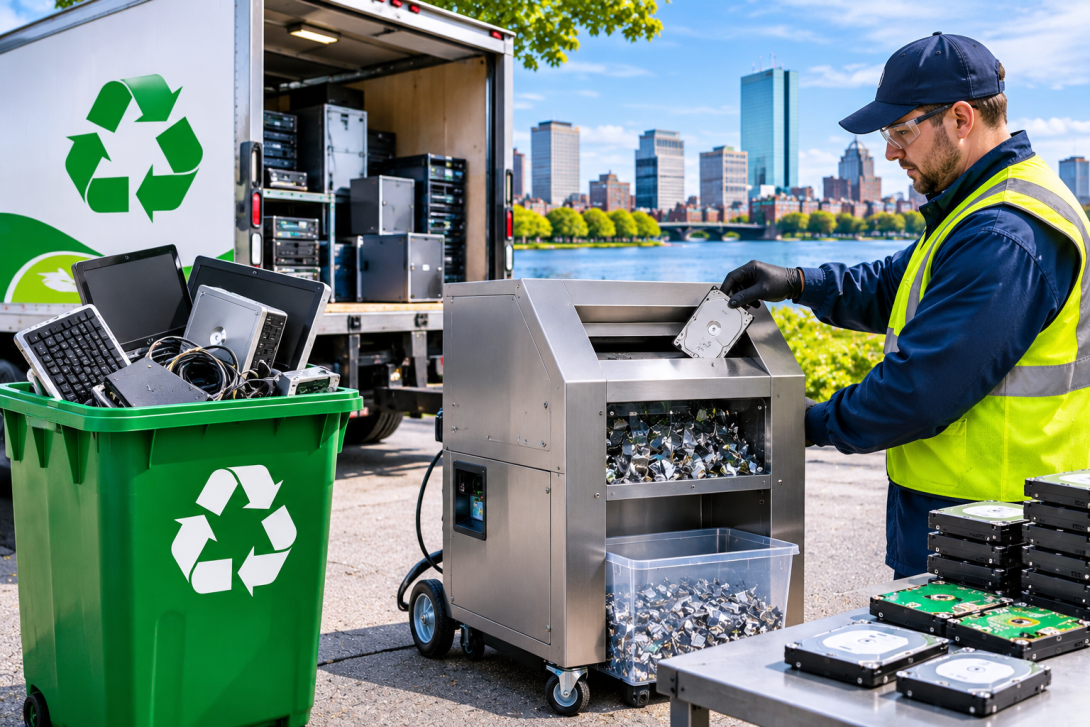
For organizations handling confidential information, on-site hard drive shredding Boston businesses require can provide an additional level of control during equipment retirement. Furthermore, with physical destruction, the storage media is destroyed at the business location, not sent to another location for destruction.
This is especially important for companies that need to process regulated information or have internal security policies. Proper documentation also promotes accountability by recording the completion of destruction activities and providing businesses with records to keep for their internal reporting and compliance needs.
How On-Site Hard Drive Shredding Supports Data Security
There can be problems with accountability and handling when you move retired storage devices from one place to another. If sensitive information requires extra scrutiny during the equipment retirement process, businesses may choose to physically destroy the equipment on their own premises.
With on-site hard drive shredding Boston organizations can arrange physical destruction at their business locations. Surplus Technology Solutions also provides off-site shredding services at its Waltham facility, allowing businesses to consider a variety of strategies based on their operational needs.
The company’s published hard drive shredding information describes the physical destruction of particles smaller than 2 millimeters. The aim of this process is to make the original storage media unrecoverable and the witnessed destruction is another opportunity for organizational oversight.
And another big part of the process is the documentation. Customers are provided with an asset disposition report identifying equipment by make, model and serial number, and a serial-number-based Certificate of Data Destruction for storage devices that have been processed.
Why Certified Recycling and Documentation Matter
But choosing an electronics recycling provider is, of course, not merely about arranging transportation for unwanted equipment. Organizations should also understand the recycling process of their devices, the standards that govern the operation, and the documentation produced after the completion of the recycling and data destruction activities.
Surplus Technology Solutions is RIOS Certified and an ISO 14001 and ISO 45001 certified recycler. These accreditations demonstrate its commitment to the application of good occupational health and safety practice and environmental management principles to its recycling activities.
Businesses can also increase their visibility into retirement technology through a documented process. For organizations that are reviewing asset retirement activities and maintaining internal records, recycling certificates, serial-number tracking, data destruction records and equipment inventory are valuable resources.
Documented data destruction can assist organizations operating in regulated industries to meet their information security and compliance obligations. Standards-based processing and proper records give a better understanding of how sensitive equipment was handled as it went down the retirement path.
Managing Electronic Waste Through Organized Business Pickup
Office moves, technology upgrades, departmental changes and facility cleanouts can cause large organizations to accumulate large quantities of outdated equipment. Planning for the coordination of removal of these assets is required, especially regarding the inventory and secure handling of the various categories of equipment.
Scheduled pickups for electronics recycling are offered for businesses in Massachusetts and the Greater Boston area. Surplus Technology Solutions It services a broad cross-section of organizations that require responsible disposal of equipment, including commercial businesses, schools, hospitals, government buildings, laboratories and other institutions.
Businesses may collect computers, monitors, servers, networking equipment and other acceptable electronics. The equipment is inventoried and data-bearing devices are identified for proper sanitization before reusable assets and remaining materials enter their respective processing channels.
A coordinated collection arrangement can make the equipment retirement process easier for internal IT departments and facility managers. It also gives you a chance to discuss project requirements like volume of equipment, whether you need specialized devices, how secure the destruction is, and what your documentation expectations are before the pick up.
What Happens After Electronics Are Collected
Collection is only part of responsible electronic waste management. The organizations need to be assured that when equipment is delivered to the processing facility, retired assets will be evaluated, documented and routed to appropriate reuse, data destruction or recycling activities.
The equipment collected is transported to the Surplus Technology Solutions facility in Waltham in accordance with chain of custody procedures. Devices containing data are either properly wiped or physically destroyed, depending on their condition and how they will be disposed of, before further processing.
The company’s IT asset disposition program enables the evaluation of functional equipment for remarketing or reuse. Of course, not all devices and components can be reused and these are handled by certified downstream recycling partners for responsible material recovery.
The last part is documentation that gives companies insight into what happened to their equipment. Certificates of data destruction, certificates of recycling and asset disposition reports are valuable records for those organizations that are reviewing their electronic waste management practices and conducting internal inventories.
Choosing E-Waste Recycling Boston MA Businesses Can Trust
Organizations that are retiring technology and/or dealing with sensitive information have an important decision to make when choosing an appropriate recycling partner. Businesses should consider the arrangement for collection, acceptance of the equipment, data destruction method, certification credentials and documentation provided once processing is complete.
For organizations seeking E-waste recycling Boston MA services, Surplus Technology Solutions offers electronics recycling, computer recycling, IT asset disposition, secure data destruction, and specialized equipment recycling. Its services are tailored to meet the specific requirements of various organizations throughout Massachusetts.
Businesses requiring additional information protection can also discuss on-site hard drive shredding Boston arrangements for storage devices that need physical destruction. A more systematic way of retiring old technology is to combine the collection of equipment with secure data handling and documented recycling.
Finally, responsible electronic waste disposal includes information security and environmental considerations. Organizations that partner with an experienced vendor such as Surplus Technology Solutions can be sure that their unwanted technology is being processed and documented properly for disposition, while also establishing a more accountable equipment retirement process.