

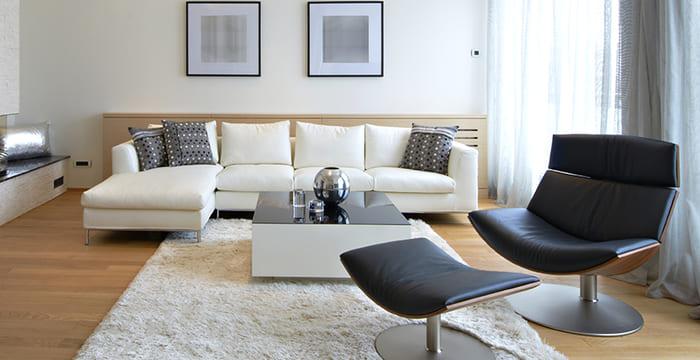
Before you buy sofa sets for sale, consider your room measurements, lifestyle at home, fabric longevity, frame quality and budget. For Singapore’s small homes, size and material choices are critical. Look for sofas that offer a good blend of comfort and practicality -- consider stain resistance, easy maintenance and long-term structural integrity for a good return on investment.
The sofa is one of the biggest furniture decisions you’ll make as a new homeowner. It anchors your living room, it takes the daily wear and tear, and often it sets the tone for the rest of your interior. With so many sofa sets for sale in Singapore, it can be easy to feel lost. This guide cuts through the noise to tell you exactly what to look for.
1. How Much Space Does Your Living Room Actually Have?
Measure your living room before you even start browsing. In Singapore, HDB flats typically range from 60 to 110 square metres, which means living space is precious. A sofa that looks perfect in a showroom can swallow your entire floor plan at home.
Use painter's tape to mark out the sofa's footprint on your floor before purchasing. Leave at least 45cm of walkway clearance around the sofa for comfortable movement.
2. What Sofa Shape Suits Your Layout?
The shape of your sofa directly affects how your living room feels and functions. Common options include:
- L-shaped sofas: Great for corner spaces and open-plan layouts. Maximise seating without taking up central floor space.
- 3-seater sofas: Versatile and suitable for most HDB living rooms.
- Sectional sofas: Modular and flexible, but require more planning around room flow.
- Loveseat or 2-seater: Ideal for smaller rooms or as a secondary seating option.
If you're working with a narrow or irregular room layout, a straight sofa or a compact 3-seater is usually the safest choice.
3. Which Fabric Works Best in Singapore's Climate?
This is where many first-time buyers make a costly mistake. Singapore's humidity and heat mean not every fabric performs the same way year-round.
A fabric sofa is a popular choice for its breathability and comfort. Unlike leather, it doesn't stick to skin in humid conditions. Look for performance fabrics like microfibre or tightly woven polyester blends these resist stains, hold their shape, and are easier to clean in tropical conditions.
Avoid velvet or chenille if you have young children or pets. These materials trap dirt and are harder to maintain.
4. How Important Is Frame Construction?
The frame is the skeleton of your sofa and it's the one part you can't easily see or replace. A poor-quality frame will sag, creak, and fail within a few years.
Look for these indicators of quality construction:
- Kiln-dried hardwood or engineered wood frames
- Reinforced corner joints (not just stapled or glued)
- A suspension system using sinuous springs or eight-way hand-tied springs for better support
When you sit on a sofa in a showroom, try rocking it slightly side to side. If it wobbles, the frame is likely weak.
5. What Type of Cushion Filling Should You Choose?
Cushion filling determines how comfortable your sofa is and how long that comfort lasts. The three most common options are:
- High-resilience (HR) foam: Durable and supportive. Bounces back after use. Best for everyday seating.
- Memory foam: Contours to your body. More comfortable for long sitting sessions but retains heat.
- Fibre-filled (down alternative): Soft and plush, but requires regular fluffing and flattens faster.
For households with elderly members or people with back concerns, HR foam with lumbar support is usually the most practical pick.
6. How Many People Will Use It Daily?
Your household size and usage habits should directly influence which living room sofa you choose. A sofa used by four people every evening needs a different durability standard than one in a rarely used guest room.
If children are in the picture, prioritise stain-resistant fabric, removable cushion covers, and rounded edges. For households where the sofa doubles as a nap spot, look for deeper seats and firmer cushion support.
7. Does the Style Match Your Existing Interior?
A sofa you love in isolation might clash with your flooring, walls, or existing furniture. Before choosing a colour or design, identify your interior style:
- Minimalist / Scandinavian: Clean lines, neutral tones, light wood legs
- Contemporary: Bolder silhouettes, mixed textures, structured cushions
- Japandi: Low-profile sofas, natural fabrics, muted earthy colours
For first-time homeowners in Singapore, neutral-toned sofa sets in Singapore such as beige, warm grey, or off-white are the easiest to style around as your interior evolves.
8. What Is a Realistic Budget?
Sofa prices in Singapore vary widely. Entry-level options start around SGD 500–800. Mid-range sofas fall between SGD 1,000–2,500, while premium or designer pieces can exceed SGD 4,000.
A useful rule of thumb: spend what you'd spend on a good mattress. You use your sofa daily, and a cheap frame or thin foam will cost more in early replacement than an upfront investment in quality.
Don't ignore total cost of ownership factor in delivery fees, warranty coverage, and whether replacement covers or cushions are available should anything wear out.
9. What Does the Warranty Actually Cover?
Warranty terms vary significantly between retailers. Some cover only the frame for one year; others offer three to five years on both the frame and cushion foam.
Ask specifically:
- Is the frame warranty separate from the fabric or cushion warranty?
- Does the warranty cover normal wear and tear or only manufacturing defects?
- Is the warranty voided by DIY cleaning or re-upholstery?
A clear, documented warranty is a strong signal of brand confidence in their product quality.
10. Can You Actually Test It Before You Buy?
Online shopping is convenient, but for a sofa, there's no substitute for sitting in it. Spend at least five minutes on each sofa you're considering. Sit, recline, and shift positions especially if you spend long hours reading, working, or watching TV on your sofa.
Check whether the seat depth suits your leg length. A seat that's too deep will cause you to slouch; one that's too shallow won't support your thighs properly. If buying online, look for retailers with a generous return policy or showroom options.
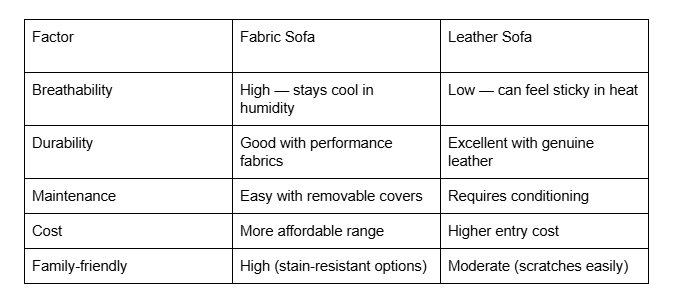
Quick Comparison: Fabric vs. Leather Sofas for Singapore Homes
Making Your Final Decision
The right sofa isn't the most expensive one in the showroom it's the one that fits your space, suits your household's lifestyle, and holds up over years of daily use. In Singapore's compact living environments, every purchase decision counts, and a sofa is one you'll live with for a long time.
If you're looking for well-crafted fabric sofas that balance quality with practical design, Ecozy Furniture offers a thoughtfully curated range suited to Singapore homes from space-saving configurations to durable everyday options built for real family life.
Frequently Asked Questions
What is the best sofa fabric in Singapore for humid weather?
For Singapore’s humidity, performance microfibre and close-woven polyester blends are best. They are breathable, moisture and stain resistant and hold their shape better than natural fibres like cotton or velvet in tropical climates.
How to choose the right sofa size for HDB flats?
Measure your living room and make sure you have at least 45cm clearance all around the sofa. For most HDB layouts, a 3-seater or a small L-shaped sofa will do the trick. Always mark the dimensions on your floor with tape before you buy.
How much should I budget for a sofa set in Singapore?
For mid-range sofa sets in Singapore, you can expect to pay between SGD 1,000 and SGD 2,500. This range generally offers decent frame construction, durable upholstery and a fair warranty the sweet spot for first-time homeowners seeking long-term value.
How many years does a good sofa last?
A well-constructed sofa with a hardwood frame and high-resilience foam cushions will last seven to 10 years with regular care. The cheap frames and low-density foam tend to sag quite a bit after two or three years of daily use.
Leather sofa or fabric sofa? Which one is right for you?
Fabric sofas are generally the more practical choice for a Singapore home. It’s more breathable, has more design options and is typically cheaper. Today’s high-performance fabrics also provide good stain and wear resistance comparable to entry-level leather.
If you are trying out a sofa in a showroom there are a few things you should look at.
In your natural position, sit on the sofa for at least five minutes. Check seat depth, back support and arm-rest height. Rock the frame gently to test its structural stability. Also ask about the type of cushion filling and whether the covers are removable for washing.