
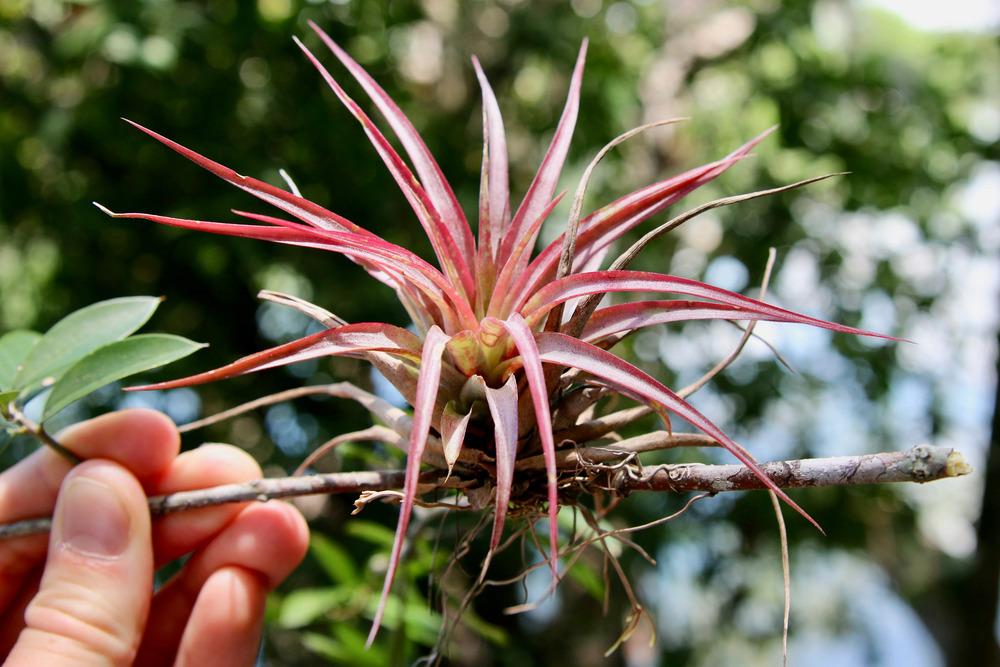
If you love houseplants but want something a little different from the usual leafy greens, Tillandsias, or Air Plants, are a perfect choice. These modern, sculptural plants don’t need soil, don’t take up much space, and look amazing almost anywhere—on shelves, in terrariums, hanging planters, or as part of your holiday décor. Their affordability and unique beauty make them great gifts too, especially during the festive season.
What Makes Air Plants So Unique?
Tillandsias belong to the bromeliad family, which means they’re related to pineapples—but they grow very differently. As epiphytes, air plants naturally attach themselves to trees or rocks and absorb everything they need—water, nutrients, and humidity—through their leaves instead of roots.
They typically grow 6–12 inches tall, prefer bright filtered light, and produce vibrant blooms in colors like purple, pink, and red. They’re non-toxic and even attract pollinators when grown outdoors under the right conditions.
The Best Spots for Air Plants Indoors
Air plants thrive in bright, indirect sunlight. Some great locations include:
- On a desk near an east-facing window
- A bright bathroom shelf (hello, built-in humidity!)
- A living room table with filtered light
- A kitchen windowsill away from harsh sun
Ideal Indoor Temperatures: 64–90°F
If placing them outdoors, bring them inside when temperatures drop below 60–65°F.
Watering Air Plants: The Step Most People Get Wrong
Even though they don’t need soil, air plants do need regular watering. The easiest and most effective method is soaking.
Weekly Soak Routine
- Submerge the plant in room-temperature water for 20–40 minutes.
- Shake off excess water.
- Dry the plant upside down on a towel to prevent trapped moisture.
Letting the plant dry fully is essential—otherwise, moisture inside the base can cause rot, the #1 cause of air plant loss.
Should You Mist Air Plants?
Misting boosts humidity, especially in dry indoor spaces, but it won’t replace soaking. Mist only as a supplement.
How to Tell When Your Air Plant Is Thirsty
Watch for signs like:
- Curled or rolled leaves
- Wrinkled texture
- Dull or faded color
- Slow or halted growth
If you notice these, try watering every 5–6 days instead of once a week.
Growing, Grooming & Propagating Air Plants
Air plants don’t require heavy feeding, but you can give them a little boost:
- Use an air plant or bromeliad fertilizer once or twice a month after watering.
- Trim brown leaf tips at an angle if needed.
- After blooming, your plant will produce pups (baby plants!). You can gently remove them or let them cluster for a fuller arrangement.
Beautiful, Versatile & Gift-Ready
From holiday ornaments to decorative centerpieces, air plants can shine in countless creative displays. They’re ideal for apartments, small spaces, offices, and gift-giving occasions like birthdays, holidays, or teacher appreciation.
If you’re looking for a unique, easy-care plant, Tillandsias offer year-round enjoyment with minimal effort.
Looking for Gardening Tools Near Me?
Want great tools for gardening? At Evergreen Nursery, you'll find an amazing array of superior gardening tools that will let you garden fashionably! Our tools will assist you—whether you are an experienced gardener or new to gardening—in making every gardening task easier and more productive.