

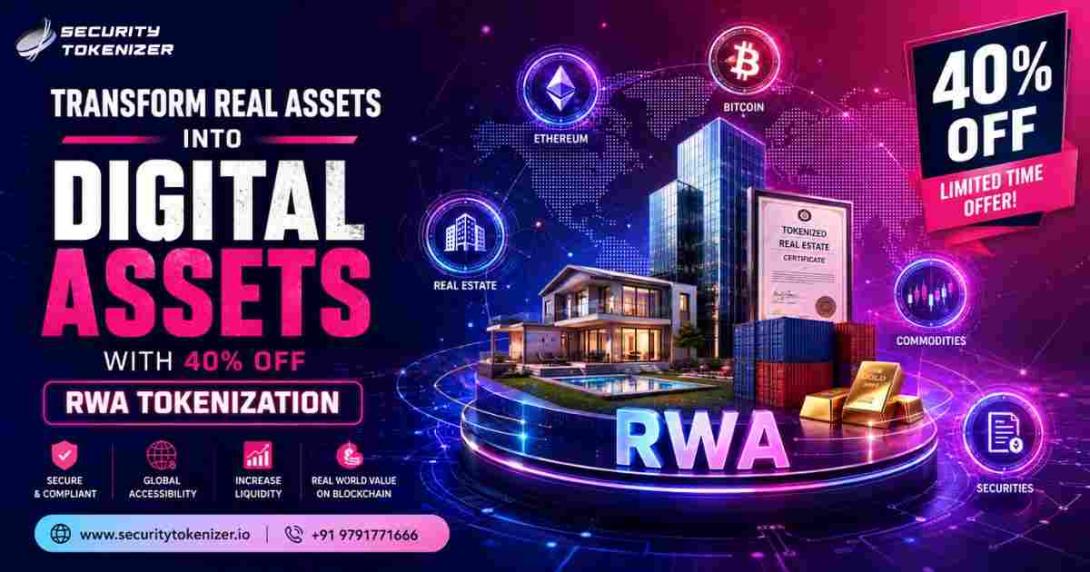
Real-World Asset Tokenization is emerging as a major blockchain trend by bringing traditional assets such as real estate, commodities, private equity, funds, and debt into digital ecosystems. By representing ownership or economic rights through blockchain-based tokens, businesses can explore new models for accessibility, transparency, efficiency, and liquidity.
The Growing Shift Toward On-Chain Assets
Traditional assets such as real estate, commodities, private equity, funds, and debt have long faced challenges around accessibility, liquidity, transparency, and transaction efficiency. Blockchain technology is changing this landscape by enabling physical and financial assets to be represented digitally.
As businesses explore new ways to modernize ownership and investment models, tokenized assets are gaining attention across financial markets. This shift is not simply about adopting blockchain; it is about creating more flexible and digitally accessible ways to manage valuable assets.
How Blockchain Is Improving Asset Accessibility
Blockchain introduces a transparent and programmable infrastructure for representing asset ownership. Instead of relying entirely on traditional paperwork and centralized processes, businesses can use blockchain-based systems to record ownership, transfers, and transaction activity.
A Token Development Company can help businesses create customized token structures based on their asset type, regulatory requirements, and business objectives. Smart contracts can also automate predefined processes, helping reduce manual intervention and improve operational efficiency.
This approach can potentially make selected asset classes easier to access while creating new opportunities for global participation.
Key Benefits for Businesses and Investors
The growing interest in tokenized assets is driven by several practical advantages:
- Greater Accessibility: Digital representations can make selected assets easier to access and manage.
- Improved Transparency: Blockchain records can provide verifiable transaction histories.
- Enhanced Liquidity: Token-based structures can support more flexible transfer mechanisms where legally permitted.
- Fractional Ownership: Certain high-value assets can potentially be divided into smaller digital units.
- Automated Operations: Smart contracts can streamline ownership transfers and predefined transactions.
These benefits make blockchain-based asset infrastructure attractive to businesses looking to modernize traditional financial models.
Why White-Label Solutions Are Gaining Attention
Developing an asset tokenization ecosystem from the ground up can require considerable technical expertise, security planning, and infrastructure. White Label Tokenization solutions offer businesses a customizable foundation that can be adapted to their branding, business model, and asset requirements.
A reliable Token Development Company can support essential components such as token creation, smart contract integration, wallet connectivity, investor management, compliance-oriented features, and administrative controls. Businesses can therefore focus more on their market strategy while using an established technical foundation.
The Future of Real-World Asset Tokenization
The future of Real-World Asset Tokenization is closely connected to growing institutional interest, blockchain maturity, regulatory development, and demand for digitally managed assets. As infrastructure becomes more sophisticated, tokenized real estate, commodities, private credit, securities, and other assets could become increasingly integrated with digital financial ecosystems.
For businesses seeking customized blockchain solutions, Security Tokenizer offers expertise in developing secure and scalable tokenization solutions designed around specific business requirements.