

Prescription medications can play an important role in treating pain, anxiety, sleep problems, and other medical conditions. However, some prescription drugs can also lead to physical dependence, misuse, or substance use disorder. When problematic use develops, treatment needs to account for more than the medication itself.
This is why personalized care matters in Prescription Drug Addiction Treatment Oceanside. Each person's medication history, health conditions, withdrawal risks, mental health needs, and recovery goals can be different. A treatment plan that works for one person may not be appropriate for another.
The National Institute on Drug Abuse (NIDA) notes that treatment for prescription drug addiction should take into account both the type of drug involved and the individual's needs. Depending on the substance and circumstances, treatment may include detoxification, behavioral therapies, medications, or a combination of approaches.
What Is Prescription Drug Addiction?
Prescription drug addiction generally refers to a substance use disorder involving a medication that was prescribed to the person or obtained through another source.
Several categories of prescription medications can be misused, including:
- Prescription opioids used for pain
- Benzodiazepines prescribed for anxiety or certain other conditions
- Prescription stimulants used for conditions such as ADHD
- Certain sedative or sleep medications
It is important to distinguish physical dependence from addiction. A person can become physically dependent on some medications when taking them as prescribed, particularly after regular or long-term use. Dependence does not automatically mean that a person has a substance use disorder.
For example, the American Society of Addiction Medicine's 2025 benzodiazepine tapering guideline emphasizes the difference between physical dependence and benzodiazepine use disorder. It also advises that people who have been taking benzodiazepines regularly should not abruptly stop them without appropriate clinical guidance.
Why One Treatment Plan Does Not Fit Everyone
Prescription drug use can involve many different circumstances. One person may have developed dependence after long-term medical treatment, while another may have begun taking medication in larger amounts or more frequently than prescribed.
Other factors can also affect treatment, including:
- The specific medication involved
- Dosage and duration of use
- Other substances being used
- Physical health conditions
- Mental health symptoms
- Previous treatment experiences
- Family and social support
- Housing and daily environment
- Motivation and readiness for change
SAMHSA recommends treatment plans that are based on individual assessment and consider medical conditions, medications, recovery goals, treatment history, social functioning, and other personal factors.
Personalized treatment allows the clinical team to consider these differences instead of treating prescription drug addiction as a single condition with one standard solution.
Personalized Assessment Comes First
Before treatment begins, a qualified clinical team may review the person's prescription and substance use history, medical conditions, mental health, previous treatment, and current symptoms.
This assessment can help determine the appropriate level of care.
For example, someone with significant withdrawal risks or complicated medical needs may require a more closely monitored setting. Someone with stable medical needs may require a different treatment structure.
The goal is not to place every person into the same program. It is to identify the level of support that fits the person's current needs.
Withdrawal Management Requires Individual Attention
Withdrawal is one of the most important reasons personalized care matters.
Different prescription medications can produce very different withdrawal symptoms and risks. Opioid withdrawal, for example, differs from benzodiazepine withdrawal. The appropriate medical response therefore depends on the substance involved and the person's health history.
Benzodiazepines deserve particular caution. Current ASAM guidance states that people who are physically dependent on benzodiazepines should generally taper gradually rather than stop suddenly, with the pace adjusted according to the individual's response.
This is one reason people should not attempt to create their own medication taper based on information found online. A healthcare professional can assess the medication, duration of use, other substances, medical history, and withdrawal risks before recommending a plan.
Mental Health Can Be Part of the Picture
Prescription drug problems and mental health concerns can sometimes occur together.
A person may be dealing with anxiety, depression, trauma-related symptoms, chronic pain, or another condition while also struggling with medication misuse. These concerns may influence treatment decisions.
For example, someone who originally received a prescription for anxiety may need support for both medication dependence and the underlying anxiety symptoms. Treating only the substance use issue may leave an important part of the person's care unaddressed.
A personalized program can screen for co-occurring mental health concerns and determine whether additional psychiatric support is appropriate.
Treatment Can Change as Recovery Progresses
Personalized care does not mean creating one treatment plan and never changing it.
A person's symptoms, needs, and goals can change during treatment. The clinical team can monitor progress and adjust the plan when appropriate.
SAMHSA describes treatment planning as an ongoing process in which healthcare professionals work with patients to establish goals and next steps.
This may mean adjusting the level of support, addressing new symptoms, modifying behavioral interventions, coordinating medications, or preparing for the next stage of care.
Behavioral Treatment and Recovery Skills
Detox can address the initial stabilization period, but it is not necessarily the complete treatment for prescription drug addiction.
Behavioral therapies may help people understand patterns associated with substance use, identify triggers, develop coping strategies, and make changes that support recovery. NIDA identifies behavioral treatments, including cognitive behavioral therapy and contingency management in appropriate circumstances, as part of the treatment options for substance use disorders.
Personalization matters here, too. Treatment can focus on the factors most relevant to the individual rather than using the same goals for everyone.
Considering Prescription Drug Addiction Treatment in California
When researching Prescription Drug Addiction Treatment California, it can be useful to compare programs based on the actual services they provide rather than relying only on location or general claims.
Consider asking:
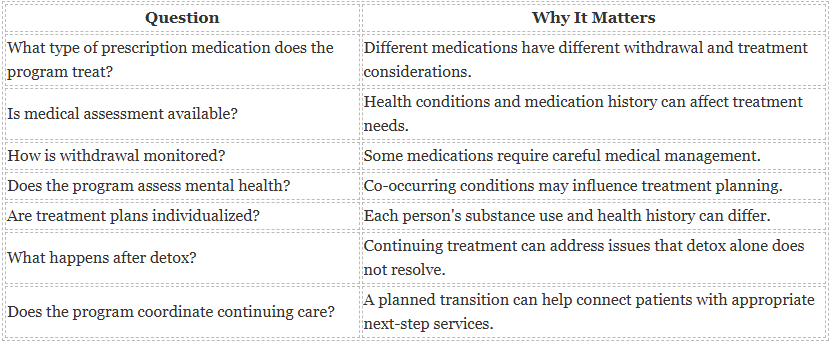
These questions can help families and individuals make a more informed comparison of treatment options.
What About Meth Detox in Oceanside?
Prescription drug treatment and stimulant treatment are not the same, but some people may use more than one substance. If someone is also struggling with methamphetamine use, treatment should account for the complete substance use picture rather than focusing on only one drug.
People searching for meth detox Oceanside should ask whether a program can appropriately assess stimulant use alongside other substances and mental health concerns.
ASAM and the American Academy of Addiction Psychiatry's stimulant use disorder guideline addresses assessment, treatment, and withdrawal management for stimulant-related conditions.
The appropriate treatment setting depends on individual clinical needs.
Why Residential Care May Be Helpful for Some People
For people who need a structured environment, residential treatment can provide separation from triggers and access to ongoing clinical support.
A residential setting may allow a treatment team to monitor progress, address medical or behavioral concerns, and work with the patient on a continuing-care plan.
However, residential treatment is not automatically the right choice for everyone. A professional assessment should help determine whether residential, outpatient, or another level of care is appropriate.
Seaside Detox and Personalized Treatment
Seaside Detox is a private addiction treatment and detox center in Oceanside, California, providing medical detox, residential addiction treatment, withdrawal management, substance-specific treatment, dual diagnosis treatment, addiction recovery support, and personalized treatment programs.
For someone researching Prescription Drug Addiction Treatment Oceanside, the focus should be on finding care that matches their medication history, health needs, withdrawal risks, and treatment goals.
Seaside Detox provides an individualized approach within a private residential setting and can assess treatment needs before determining an appropriate care plan. Individuals considering treatment can contact the admissions team to learn more about available services and whether the program is appropriate for their circumstances.
Final Thoughts
Prescription drug addiction can develop under different circumstances, and treatment needs can vary significantly from one person to another. The medication involved, length of use, physical dependence, mental health, medical history, and previous treatment experiences can all affect the appropriate approach.
That is why personalized care is important. Rather than relying on a one-size-fits-all program, individualized treatment allows clinical professionals to assess the person as a whole, address withdrawal safely, consider co-occurring concerns, and adjust care as needs change.
For people comparing Prescription Drug Addiction Treatment California programs, look for qualified clinical care, individualized assessment, appropriate withdrawal management, mental health support, and a clear plan for continuing treatment. Those factors can provide a more useful basis for comparing treatment options than location alone.
Medical disclaimer: This article is for general educational purposes and does not replace medical advice, diagnosis, or individualized treatment. Prescription medications should not be stopped, reduced, or changed without guidance from an appropriate healthcare professional.