

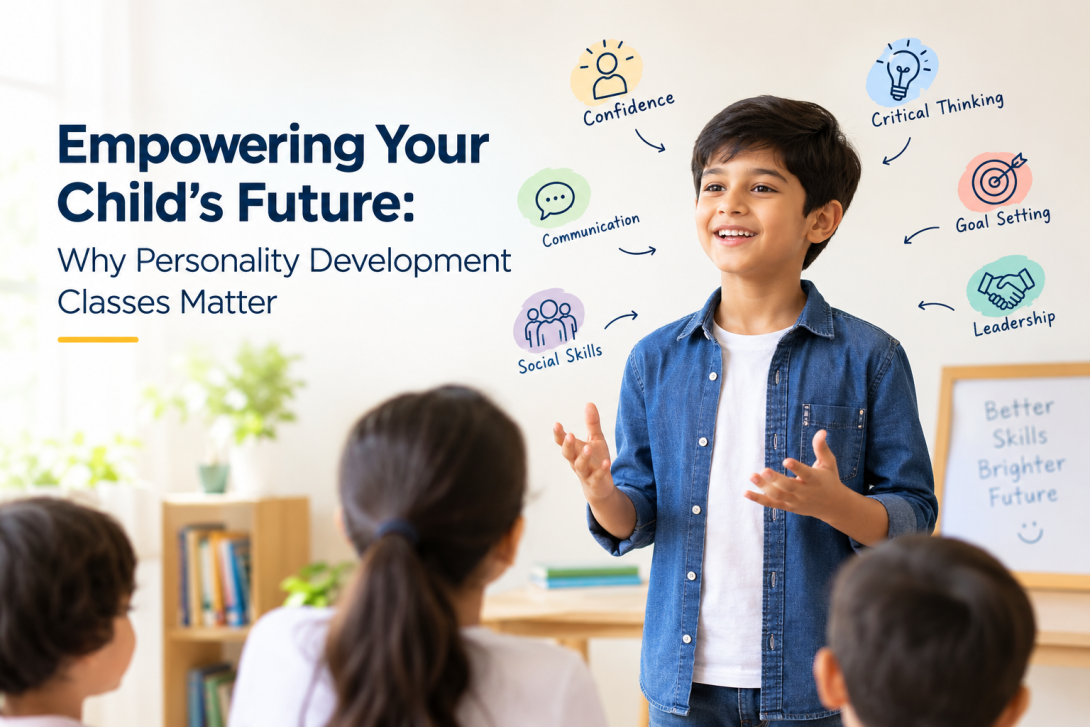
Academic performance is important for every child, but growing up successfully involves much more than marks and examinations. Children also need confidence, communication skills, emotional awareness, decision-making abilities and the courage to face unfamiliar situations.
These qualities do not always develop automatically. They are shaped gradually through experiences, encouragement, interaction and opportunities to express themselves. This is where Personality Development for Kids (PDK) can play an important role.
What Is Personality Development for Kids?
Personality development for children is not about changing a child’s natural personality or forcing them to become more outgoing. Instead, it focuses on helping children understand themselves, communicate comfortably and respond positively to everyday situations.
A child may be academically capable but hesitate to speak in front of others. Another child may be confident while speaking but struggle with teamwork or handling mistakes. Every child has different strengths and areas that need encouragement.
A structured personality development program can provide children with opportunities to practise these skills in a supportive environment.
Why Confidence Matters From an Early Age
Confidence influences many aspects of a child’s daily life. A confident child may be more willing to ask questions, participate in classroom activities, meet new people and try something unfamiliar.
Confidence does not mean that a child should never feel nervous. Instead, it means developing the ability to handle nervousness and still make an effort.
Small achievements can gradually strengthen self-belief. Speaking in front of a small group, completing a team activity or expressing an opinion can become valuable experiences that build confidence over time.
Communication Is More Than Speaking
Good communication involves both speaking and listening.
Children need to understand how to express their thoughts clearly while also paying attention when others are speaking. These skills can help them interact with classmates, teachers, family members and people they meet in everyday situations.
Personality development activities can encourage children to:
- Express their ideas clearly
- Listen actively
- Ask questions confidently
- Participate in group discussions
- Understand different opinions
- Communicate respectfully
When children get regular opportunities to practise communication, they can become more comfortable expressing themselves.
Developing Emotional Awareness
Children experience many emotions as they grow. Happiness, frustration, disappointment, excitement and nervousness are all part of childhood.
Learning to recognise and manage these emotions is an important life skill. Instead of reacting immediately to difficult situations, children can gradually learn to pause, understand what they are feeling and respond appropriately.
Emotional awareness can also help children understand how their words and actions affect other people. This can support empathy and healthier relationships with friends and family.
Learning Through Teamwork
Many important childhood experiences happen in groups. School projects, games, competitions and extracurricular activities give children opportunities to work with others.
Teamwork teaches children that everyone may have different ideas, abilities and responsibilities. They learn to cooperate, share tasks, listen to others and contribute towards a common goal.
Activities involving teamwork can also help children understand that success is not always about being the individual winner. Supporting others and completing a task together can be equally valuable.
Encouraging Decision-Making Skills
As children grow older, they are expected to make more decisions independently. Simple choices during childhood can become opportunities to develop this ability.
For example, children can be encouraged to think about different solutions to a problem, explain why they prefer one option and consider the possible outcome.
The goal is not to expect children to make perfect decisions. It is to help them develop the habit of thinking before acting.
Building Resilience Through Mistakes
Mistakes are a natural part of learning. However, some children may become discouraged when something does not go as planned.
Personality development can help children understand that mistakes do not define their abilities. Instead, they can become opportunities to identify what went wrong, try another approach and continue moving forward.
This mindset can gradually develop resilience—the ability to cope with challenges and recover after setbacks.
Why a Supportive Environment Makes a Difference
Children develop at different speeds. Some are naturally talkative, while others take more time to become comfortable in a group. Some readily volunteer for activities, while others prefer to observe before participating.
A supportive environment allows children to progress without unnecessary pressure.
Child-friendly activities, group interaction, discussions, role-playing and practical exercises can make personality development more engaging. The emphasis should be on participation and gradual improvement rather than comparison between children.
Personality Development and Academic Growth
Personality development does not replace academic education. Instead, it can complement it.
A child who communicates confidently may be more comfortable asking questions in class. Better concentration and self-management can support study habits. Teamwork and communication can help during group assignments and school activities.
These connections show why children's development should be viewed as a combination of academic knowledge and practical life skills.
How Parents Can Support Personality Development at Home
Parents also play an important role in developing these qualities. Simple everyday activities can create valuable learning opportunities.
Parents can encourage children to:
- Talk about their day
- Express their opinions respectfully
- Make age-appropriate choices
- Take responsibility for small tasks
- Participate in family discussions
- Try new activities
- Accept mistakes as part of learning
- Listen when others are speaking
Most importantly, children benefit when their efforts are recognised instead of focusing only on the outcome.
A Gradual Journey That Starts Early
Personality development is not something that happens in a few sessions. It is a gradual process built through repeated experiences.
Confidence grows when children are given opportunities to participate. Communication improves when they practise expressing themselves. Resilience develops when they experience challenges and receive encouragement to try again.
This is why structured Personality Development for Kids programs can be useful alongside a child's regular education.
Winwinx Academy's PDK program focuses on areas such as confidence, empathy and resilience while providing children with opportunities to develop essential life skills. The academy also combines its programs with a child-friendly approach designed to make learning interactive and meaningful.
Final Thoughts
A child's future is shaped by more than academic knowledge. The ability to communicate, cooperate, handle challenges, make thoughtful decisions and believe in oneself can influence many areas of life.
Giving children opportunities to develop these qualities from an early age can help them become more comfortable with themselves and the world around them.
Personality development is therefore not about creating a particular type of child. It is about giving every child the support and opportunities they need to grow with confidence, empathy and resilience.
For parents interested in structured personality development activities, Winwinx Academy's Personality Development for Kids (PDK) program provides one option to consider as part of a child's overall development.