
Modern offices and enterprise environments depend heavily on stable, secure, and predictable network connectivity. Whether supporting cloud-based applications, VoIP systems, internal databases, or remote collaboration tools, the network router sits at the heart of daily operations. Downtime, packet loss, or configuration complexity can directly affect productivity and revenue.
For many organizations, especially small to medium-sized enterprises (SMEs) and branch offices, dynamic routing protocols can be unnecessarily complex. This is where static routing solutions shine. Understanding Why the Huawei S310 Static Router Is Ideal for Offices & Enterprises begins with recognizing the demand for simplicity, reliability, and cost control without sacrificing performance.
Overview of the Huawei S310 Static Router
Product Positioning in Huawei’s Networking Portfolio
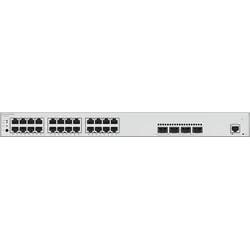
Huawei is globally recognized for its enterprise networking solutions, ranging from core switches to advanced cloud-managed routers. The S310 static router is positioned as a dependable access and edge routing solution designed for offices and enterprise branch deployments.
Rather than focusing on overly complex routing protocols, the Huawei S310 emphasizes stability, efficiency, and security—qualities that align perfectly with predictable office network environments.
Key Design Philosophy
The Huawei S310 static router is built around three core principles:
- Reliability over complexity
- Security by default
- Ease of deployment and management
This design philosophy makes it especially suitable for IT teams that want robust performance without steep learning curves.
Core Features of the Huawei S310 Static Router
Static Routing Capabilities
Static routing is a key strength of the Huawei S310. Instead of dynamically exchanging routing tables, routes are manually defined, ensuring predictable traffic paths and minimal overhead.
Benefits of static routing on the S310 include:
- Reduced CPU and memory usage
- Faster packet forwarding
- Greater control over traffic flow
- Lower risk of misconfiguration from automated updates
This makes the router ideal for stable networks with known paths, such as offices and enterprise branches.
High-Performance Hardware Architecture
The Huawei S310 static router is equipped with enterprise-grade processors and optimized forwarding engines. This ensures consistent throughput, low latency, and reliable performance even during peak usage hours.
Key hardware advantages include:
- High-speed Ethernet interfaces
- Optimized packet processing
- Stable performance under sustained load
Advanced Security Features
Security is non-negotiable in enterprise environments. The Huawei S310 includes built-in security features such as:
- Access control lists (ACLs)
- Firewall filtering policies
- Network address translation (NAT)
- Traffic monitoring and logging
These features help protect internal networks from unauthorized access and external threats.
Performance Advantages for Offices
Stable Connectivity for Daily Operations
Office environments rely on uninterrupted connectivity for email, file sharing, video conferencing, and cloud platforms. Static routing ensures there are no unexpected route changes, leading to consistent and stable network behavior.
This predictability is one of the main reasons Why the Huawei S310 Static Router Is Ideal for Offices & Enterprises with fixed network structures.
Efficient Bandwidth Utilization
By eliminating the overhead associated with dynamic routing protocols, the S310 uses available bandwidth more efficiently. This allows critical applications to perform smoothly even on limited WAN connections.
Enterprise-Grade Benefits
Scalability for Growing Businesses
Although the Huawei S310 is based on static routing, it is far from limited. Enterprises can easily expand their networks by adding predefined routes and additional access points without redesigning the entire infrastructure.
This makes it a future-ready solution for businesses planning gradual growth.
Reliability and Network Uptime
Network downtime can be costly. The Huawei S310 is engineered for continuous operation, with robust hardware and software stability that minimizes failures and service interruptions.
Typical Use Cases
Small to Medium-Sized Offices
SMEs benefit greatly from the Huawei S310 static router due to its balance of affordability and enterprise-grade features. It delivers professional networking without the need for specialized routing expertise.
Branch Offices and Corporate Networks
For branch offices connected to headquarters through fixed WAN links, static routing is often the most efficient approach. The Huawei S310 ensures consistent connectivity between locations.
Educational and Healthcare Facilities
Schools, training centers, and healthcare facilities value stable and secure networks. The S310’s predictable routing and strong security features make it a reliable choice in these environments. Industry best practices often align with international networking standards published by organizations such as IEEE (https://www.ieee.org).
Installation and Deployment Simplicity
Initial Setup Process
The Huawei S310 is designed for straightforward installation. Basic configuration can be completed quickly through a command-line interface or management tools, reducing deployment time.
Network Configuration Best Practices
Best practices include:
- Clearly documenting all static routes
- Segregating traffic using VLANs
- Applying security policies from day one
These steps ensure long-term stability and easier troubleshooting.
Cost Efficiency and Total Cost of Ownership
One of the most overlooked advantages of the Huawei S310 static router is its low total cost of ownership. With fewer software dependencies, lower hardware requirements, and minimal maintenance needs, organizations save both time and money.
There are no recurring licensing fees for dynamic routing protocols, making budgeting more predictable.
Huawei S310 vs Dynamic Routing Routers
While dynamic routing routers are useful in complex, constantly changing networks, they often introduce unnecessary complexity for office and enterprise branch environments.
The Huawei S310 excels where:
- Network topology is stable
- Predictable performance is required
- Simplicity and reliability matter more than automation
This clear distinction explains Why the Huawei S310 Static Router Is Ideal for Offices & Enterprises that prioritize efficiency and control.
Maintenance, Monitoring, and Management
Ongoing maintenance of the Huawei S310 is minimal. Regular firmware updates, configuration backups, and log monitoring are typically sufficient to maintain optimal performance.
The router’s straightforward architecture makes troubleshooting faster and less disruptive.
Frequently Asked Questions (FAQs)
1. Is the Huawei S310 suitable for small offices?
Yes, it is an excellent choice for small offices that need stable and secure networking.
2. Does the Huawei S310 support advanced security features?
Yes, it includes ACLs, firewall functions, and traffic monitoring.
3. Can the Huawei S310 handle enterprise workloads?
Absolutely. It is designed for enterprise-grade performance and reliability.
4. Is static routing difficult to manage?
Not at all. In stable networks, static routing is often simpler and more predictable than dynamic routing.
5. Does the router support future expansion?
Yes, businesses can easily add routes and expand their networks as needed.
6. How does it compare in cost to other enterprise routers?
The Huawei S310 offers excellent value with lower upfront and long-term costs.
Conclusion
Choosing the right router is critical for maintaining productivity, security, and scalability in modern work environments. By combining reliable performance, robust security, and simplified management, the Huawei S310 stands out as a practical networking solution. This in-depth analysis clearly demonstrates Why the Huawei S310 Static Router Is Ideal for Offices & Enterprises, especially for organizations seeking dependable connectivity without unnecessary complexity.