

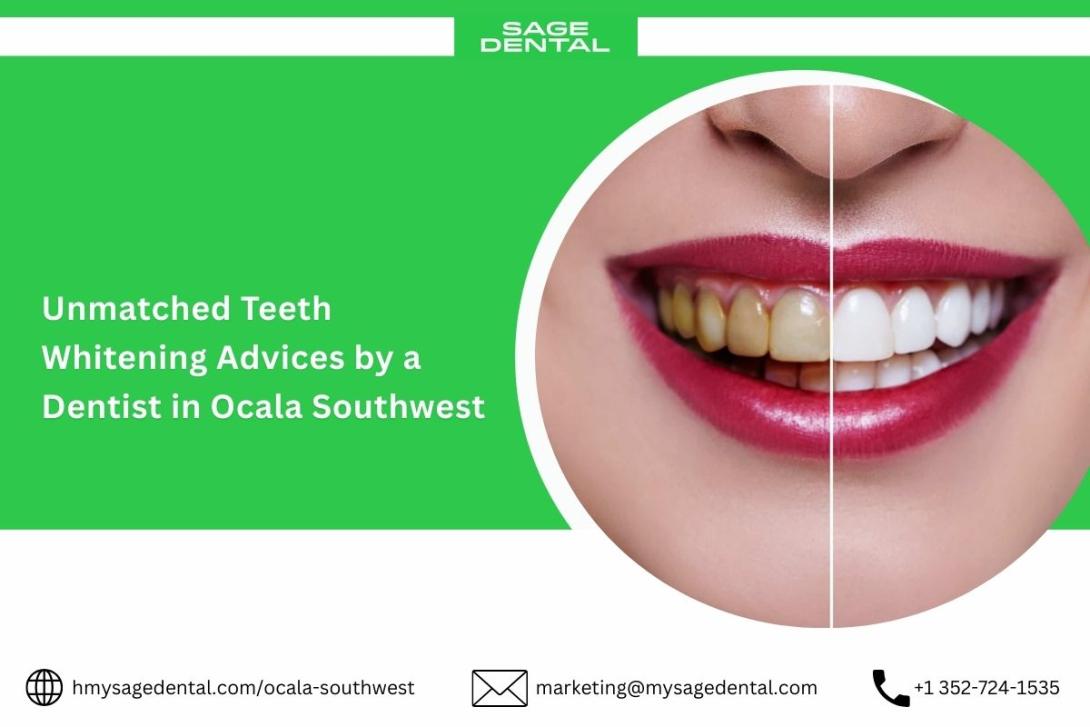
One of the most demanded cosmetic dental treatments done in the U.S. is teeth whitening and its demand is on the rise. Although this may push several individuals to use products available over the counter, it is important to know how the whitening process works and factors leading to its effectiveness. We will discuss the knowledge of an expert, a dentist in Ocala Southwest, regarding the science of whitening, safety implications and what studies indicate about the long-term effects. Here, you will get complete teeth whitening guidance from the expert dentist in Southwest.
What Causes Tooth Discoloration?
The causes of tooth discoloration may be diverse both internal and external. The most frequent causes as per the American Dental Association (ADA), are:
- Extrinsic stains: These are surface stains which are as a result of substances such as coffee, tea, red wine, and tobacco. These build up in time and are removed with the whitening procedures.
- The intrinsic stains: This is caused deeper in the tooth and may be as a result of trauma, age, or drugs like tetracycline. These are more problematic stains that can only be dealt with by professional means.
- Lack of oral hygiene: Style and brushing and poor flossing of the teeth lead to the accumulation of plaque and tartar that may result in the yellowing and discoloration of the teeth.
A dentist in the Ocala Southwest can assist in identifying the type of stain and give the right options for treatment depending on the cause.
How Whitening Products Work
The majority of whitening products are based on the active ingredient of hydrogen peroxide or carbamide peroxide. These chemicals enter the enamel and disintegrate the stain molecules. The Journal of Dental Research points out that the level of peroxide, as well as the mode of application, has a major say in the outcome.
Whitening treatments are of three primary types:
- In-office treatments: they are administered by dentists and are usually at a higher peroxide concentration. They are less time consuming in their outcomes and are monitored strictly in regard to safety.
- At-home kits: These kits are available at a dental clinic in Ocala Southwest and they consist of custom trays with lower concentrations of whitening agents. They are planned to be used in whitening of a gradual process (slowly) over a few days or weeks.
- OTC products: These are whitening strips, gels, and toothpaste. They are convenient and tend to provide less consistent results, but may not be applicable to deeper stains.
Factors That Influence Whitening Results
The effectiveness of whitening treatment depends on a number of factors. Knowing these can be used to make realistic expectations:
1. Enamel Thickness
Dense enamel is more likely to react to whitening agents since it is more pronounced as it offers a stronger barrier and leads to more homogenous bleaching. Even trimmed enamel can reveal the layer of dentin with its inherently yellow color that can reduce the whitening action.
2. Age
When an individual grows old, they begin to wear out enamel and the dentin is exposed. According to the Mayo Clinic, these structural changes in the teeth of older people might cause less dramatic effects on their whitening.
3. Type of Stain
The food and beverage surface stains are simpler to wash off compared to the intrinsic stains attributed to drugs and injuries. Whitening procedures usually tend to work better on the yellowish stains, and not on the gray or brown discoloration.
Safety Considerations and Research Insights
When teeth are properly used, teeth whitening is safe. Nonetheless, the CDC recommends against frequent or unmonitored use. The possible side effects are:
- Tooth sensitivity: This is the most frequent side effect and normally happens when peroxide penetrates the enamel and annoys the nerve endings. Sensitivity normally tends to resolve in a matter of days.
- Gum irritation: Whitening agents may result in inflammation in case they contact soft tissues. This is more probable when ill-fitting trays are used, or too much has been used.
- Enamel damage: Despite being uncommon, excessive consumption of whitening agents may eventually weaken enamel. ADA suggests taking the products with the ADA Seal of Acceptance in order to be sure of its safety and efficiency.
Final Thoughts
The whitening of teeth is a scientifically proven process that can improve the look of your smile worked out responsibly. Through the knowledge of the reasons behind discoloration, the mechanisms of the action of whitening agents, and the information provided by studies on the safety, people can make informed choices. Whitening is safest and most effective when based on the education of a prospective client, whether he or she is seeking to make a decision with a dentist or dental clinic or a family dentist in Ocala Southwest. It is important to take advice from the reliable dentists in your city to get more effective and consistent results.